

Pennsylvania Land Loans: Requirements, Rates & Lenders

A Pennsylvania land loan is a loan secured by undeveloped or partially developed land in Pennsylvania — farmland, a wooded lot, a homesite, or a recreational parcel — that you repay in monthly installments over a fixed term, usually 10 to 20 years. Because there is no house on the land to secure the loan, lenders treat it as riskier than a home mortgage: they usually ask for a larger down payment, charge a higher rate, and look closely at the land itself — its access, utilities, zoning, and value — before they approve you.
In short: if you want to buy land in Pennsylvania, expect to put at least 20% down on an improved lot and more on raw or unimproved land, work with a lender that actually finances land — such as Horizon Farm Credit, Traditions Bank, or Community Bank — and budget for Pennsylvania’s realty transfer tax of about 2% in most counties. This guide explains the requirements, the rates, the types of land loans, the best Pennsylvania lenders, and the state-specific costs and rules, including the Clean and Green tax program, so you can apply with confidence.
Pennsylvania is one of the most varied land markets in the country. Lancaster County has some of the most productive farmland in the United States. The Poconos and the northern tier offer wooded hunting and recreational parcels. The Laurel Highlands and the Allegheny National Forest region attract buyers looking for timberland and cabins. And around Philadelphia, Pittsburgh, Harrisburg, and Allentown, small residential lots for building a home are in steady demand. Each type of land is financed a little differently, and the lender you choose matters as much as your credit score.
That is why this guide is specific to Pennsylvania. The general rules of land lending apply everywhere, but the down payment, the lender, the closing costs, and the tax treatment all change once you cross the state line. Below you will find Pennsylvania-specific lender options, Pennsylvania’s transfer tax, and Pennsylvania’s Clean and Green program, alongside the practical steps every land buyer needs: what lenders require, how rates work, how to estimate your payment, and how to apply.
In This Guide
- Pennsylvania Land Loan Requirements
- Pennsylvania Land Loan Rates
- Types of Land Loans in Pennsylvania
- Best Land Loan Lenders in Pennsylvania
- How to Apply for a Land Loan in Pennsylvania
- Estimate Your Pennsylvania Land Loan Payment
- Pennsylvania-Specific Things to Know Before You Buy
- Frequently Asked Questions
Pennsylvania Land Loan Requirements
Land loan requirements in Pennsylvania are stricter than home mortgage requirements, and they come in two parts: what the lender asks of you, and what the lender asks of the land. A strong borrower can still be turned down if the parcel has no legal access, fails a perc test, or cannot be appraised. Understanding both halves before you shop saves you from a rejected application and a lost deposit. Our land loan requirements guide covers the national picture in detail; here is how those requirements play out in Pennsylvania.
Credit score and income
Pennsylvania land lenders check your credit score, your credit history, and your income in the same way a mortgage lender would — and then apply stricter standards. There is no single minimum score that every lender uses, but the pattern is consistent: borrowers with strong credit get lower rates and lower down payments, while borrowers with weaker credit either pay more or need a larger down payment to offset the risk. Before you apply, pull your credit reports, fix any errors, and pay down revolving balances where you can. Lenders will also verify your income with pay stubs and tax returns, and self-employed borrowers should expect extra scrutiny of their last two years of returns.
Your debt-to-income ratio matters just as much as your score. Lenders add up your monthly debt payments — including the new land loan payment — and compare them with your gross monthly income. Land lenders are less forgiving here than home lenders, because vacant land produces no income to help you pay the loan. If your ratio is high, paying off a small loan or credit card before you apply can make the difference between approval and denial. If you are not sure where you stand, getting pre-approved for a land loan before you make an offer will tell you exactly what a lender will approve.
Down payment
The down payment is the biggest difference between a land loan and a home loan. Because the lender’s collateral is bare land, it wants you to have substantial equity in the property from day one. How much you need depends mostly on the type of land and the lender:
| Land type | Typical down payment | Notes |
|---|---|---|
| Improved lot (utilities and road access in place) | From around 20% | Community Bank offers lot loans from about 20% down on improved lots; Horizon Farm Credit lot loans are typically 20% down. |
| Unimproved land (no utilities or improvements) | From around 35% | Community Bank quotes down payments from about 35% on unimproved land. |
| Raw, wooded, or recreational land | Higher than improved lots | Harder to appraise and slower to sell, so lenders ask for more equity and charge more for the risk. |
| Farmland and agricultural land | Varies by program | Farm Credit associations and USDA-backed programs can offer better terms for qualifying farm operations. |
On a $200,000 parcel, 20% down is $40,000 and 35% down is $70,000 — and that is before closing costs and Pennsylvania’s realty transfer tax, which are covered later in this guide. Keep a cash cushion beyond the down payment: lenders want to see reserves left over after closing, and draining every account to make the down payment is one of the most common reasons land loans stall.
The land itself must qualify
In Pennsylvania, the land is underwritten almost as carefully as the borrower. Before a lender commits, it will usually require a survey confirming the boundaries, an appraisal by an appraiser who knows rural land values, a title search, and proof of legal access. A parcel that is landlocked, or reached only by an unrecorded easement, is very hard to finance. If the land is in a flood zone, the lender may require flood insurance. If you plan to build, the lender will want to know the land can support a septic system — a failed perc test can stop a loan outright, so check this before you go under contract. Zoning matters too: your intended use must be allowed where the land sits, and our land zoning guide explains what to check.
Pennsylvania has one extra check that buyers in many other states never face: mineral and gas rights. In much of the state, especially in the Marcellus Shale region, the mineral rights were separated from the surface rights decades ago. Before you buy, find out whether the mineral rights come with the land, and read our guide to mineral rights and land loans so you know what a severed mineral estate means for your loan and your plans.
Documents you will need
Have these ready before you apply — a complete file is the fastest way to a decision:
- Government-issued photo ID and proof of address.
- Last two years of tax returns, plus recent pay stubs or, if self-employed, profit-and-loss statements and business returns.
- Last two to three months of bank and investment statements showing where your down payment comes from.
- A list of your debts: credit cards, auto loans, student loans, and any other monthly obligations.
- Details of the parcel: the deed or tax parcel number, a survey if one exists, the county tax assessment, and any perc test, soil, or environmental reports.
- A short written plan for the land: what you will use it for and when you intend to build, farm, or hold it. Lenders underwrite the use, not just the borrower.
Pennsylvania Land Loan Rates
Land loan rates in Pennsylvania are higher than home mortgage rates, and they move with the same forces: the national interest rate environment, your credit profile, and the risk the lender sees in the land. Because there is no house to sell if the loan goes bad, lenders price land loans for that extra risk. The exact rate you are offered depends on your file and the parcel, so we do not publish a single rate here — rates change daily, and a number printed in an article is out of date almost immediately. For the current picture, see our land loan interest rates page, which explains what is moving rates now and how to compare offers.
What moves your rate most is the type of land. An improved lot with road frontage, public water and sewer, and nearby comparable sales is the easiest land loan to price, so it usually gets the best rate. A wooded recreational parcel or raw acreage with no utilities is harder to appraise and slower to resell, so lenders charge more for it. Farmland sits in between: a productive farm with a long operating history can qualify for favorable Farm Credit or USDA-backed terms, while a hobby farm with no farm income is priced more like recreational land.
Your down payment and credit profile are the two levers you control. A larger down payment lowers the lender’s loan-to-value ratio and often earns a better rate, because the lender’s exposure is smaller. Strong credit has the same effect. The loan term matters too: a shorter term usually comes with a lower rate but a higher monthly payment, while a longer term spreads the payment out at the cost of more total interest. Lot loans in Pennsylvania commonly run up to 20 years on a fixed rate — Horizon Farm Credit, for example, offers lot loans with fixed terms up to 20 years — while farmland loans can run longer. Ask every lender you talk to whether the rate is fixed or variable, how long a rate lock lasts, and whether there is a prepayment penalty, and compare the full cost of the loan, not just the headline rate.
To get the best rate in Pennsylvania, talk to at least two or three lenders that actually finance land, including one Farm Credit association and one local bank. A general mortgage lender that rarely closes land loans may quote you a rate it cannot deliver once the underwriter sees the property. A land specialist, by contrast, knows how to value a wooded parcel in the Poconos or a farm in Lancaster County, and that knowledge shows up in the terms. Bring the same information to each lender — purchase price, down payment, land type, and intended use — so the quotes are genuinely comparable.
Types of Land Loans in Pennsylvania
Not all land loans are the same, and Pennsylvania lenders sort parcels into categories that drive the down payment, the rate, and the term. Knowing which category your parcel falls into tells you what to expect before you apply.
Improved land loans
Improved land already has the basics in place: road access, utilities at or near the lot line, and often a survey and a perc test on file. This is the easiest land to finance, with the lowest down payments — typically from around 20% — and the best rates. Most residential lots in subdivisions and in established neighborhoods around Pennsylvania’s cities and towns fall into this category, and they are the best starting point if you plan to build a home within a few years.
Unimproved land loans
Unimproved land has legal access but no utilities, no septic, and no site work done. It costs less per acre than improved land, but it costs more to finance: lenders commonly ask for down payments from around 35% on unimproved parcels, because the appraisal is harder and the resale market is thinner. Before you buy unimproved land, get realistic quotes for bringing in power, drilling a well, and installing a septic system — those costs can exceed the price of the land itself in rural parts of the state.
Raw land loans
Raw land is undeveloped acreage with no improvements at all — no road, no utilities, no clearing. It is the hardest type of land to finance through a conventional lender, and the most expensive when you can: expect the largest down payment and the highest rate. Some buyers finance raw land with a larger down payment, a shorter term, or seller financing, then refinance into a construction loan once the site is improved. If you are buying raw land in Pennsylvania’s northern tier or the Laurel Highlands, ask the lender up front whether it finances raw parcels at all — many do not.
Farmland loans
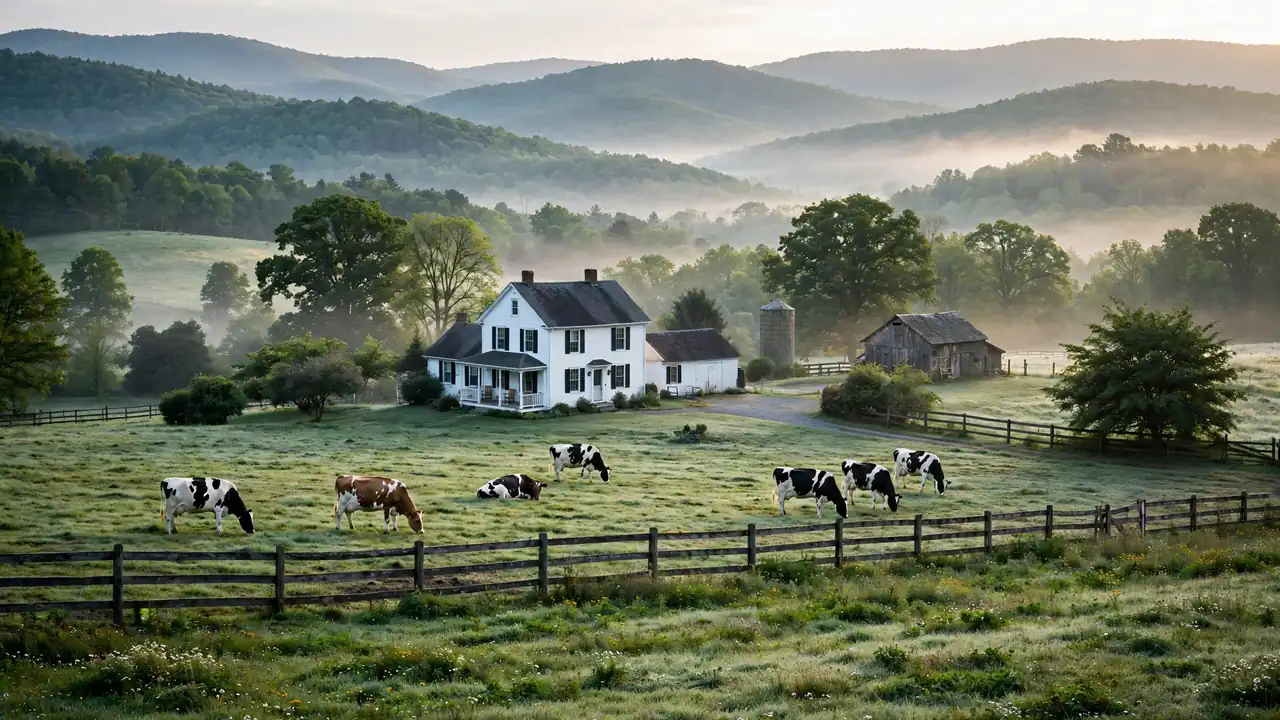
Farmland loans finance working agricultural land — crop fields, pasture, dairy farms, and orchards. Pennsylvania has a deep bench of farm lenders, led by the Farm Credit System, and farmland is often financed on longer terms than a homesite lot, with the farm’s income counted in the underwriting. If the land is enrolled in Clean and Green, tell your lender: the use-value assessment lowers the property tax bill, which helps the numbers, but a change of use after purchase can trigger rollback taxes, as explained in the Pennsylvania-specific section below. Beginning farmers may also qualify for USDA Farm Service Agency farm ownership loans, which are designed for eligible family farmers who cannot get commercial credit on reasonable terms.
Timber and recreational land loans
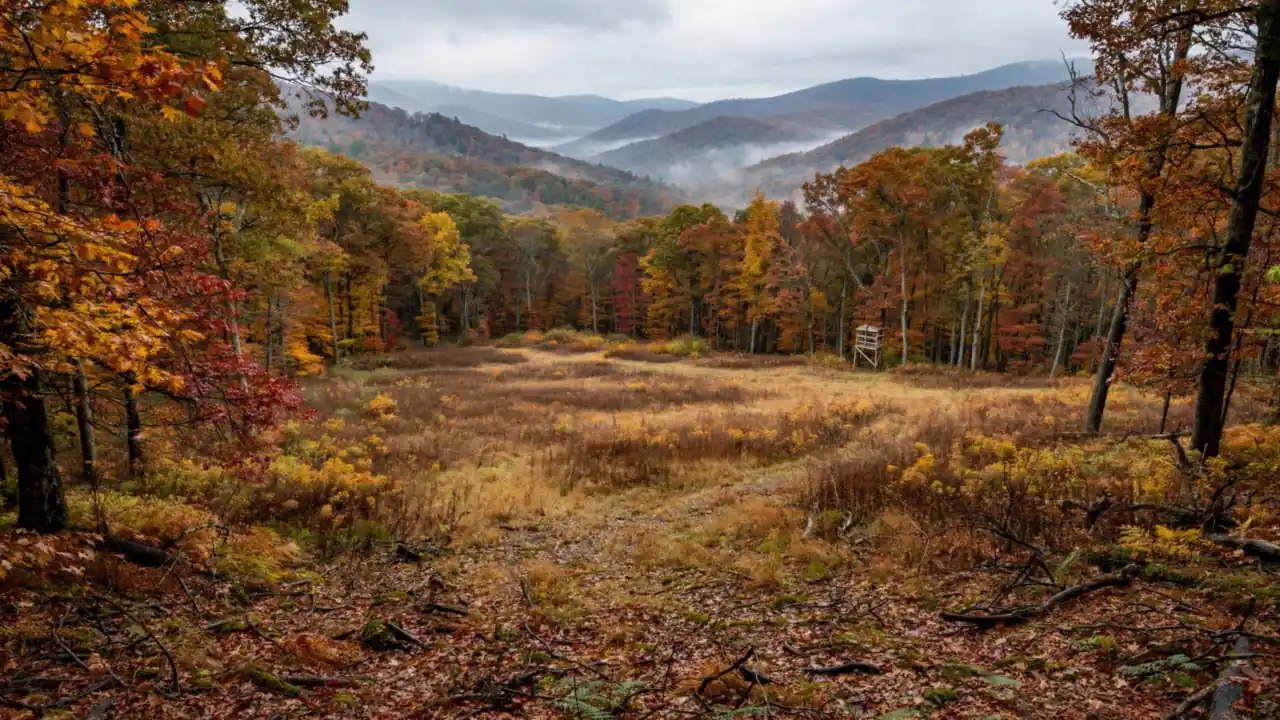
Timberland, hunting land, and recreational parcels are a large part of the Pennsylvania land market, from the Poconos to the Allegheny National Forest. Lenders treat these as higher risk because their value depends on timber, game habitat, and scenery rather than on comparable home sales, so down payments are larger and terms shorter. A timber cruise or a forest management plan can help the appraisal, and a lender that knows the region — a Farm Credit association or a local bank — is far more likely to finance a hunting parcel than a national mortgage lender is.
Lot loans for building a home
A lot loan lets you buy the land now and build later. Some Pennsylvania lenders, such as Traditions Bank and Community Bank, offer lot loans specifically for buyers who will build a residence on the land, even before construction starts, with a construction-to-permanent loan available when you are ready to build. This is a good fit if you found the right lot but need time to finalize plans, permits, and a builder. The alternative — buying the lot with cash and financing only the construction — avoids a land loan entirely, but it ties up your cash until the build starts.
Best Land Loan Lenders in Pennsylvania
The best land loan lender in Pennsylvania is the one that has financed parcels like yours, in your county, many times before. Land lending is local: a lender that understands Lancaster farmland, Pocono woodland, or Pittsburgh-area lots will underwrite faster and more fairly than one that does not. The three lenders below all finance land in Pennsylvania and publish land-specific loan programs. Compare at least two of them, and ask each the same questions about down payment, term, rate, fees, and timeline.
Horizon Farm Credit
Horizon Farm Credit offers land and lot loans across Pennsylvania, Maryland, Delaware, Virginia, and West Virginia. Its lot loans are designed for buyers purchasing land to build on, with typically 20% down and fixed terms up to 20 years, and you do not need to be a farmer to qualify. As part of the Farm Credit System, Horizon specializes in rural and agricultural land, so it is a strong first call for farmland, pasture, and large rural parcels as well as homesite lots. Ask about its land loan options and whether your parcel qualifies for a lot loan or a longer-term farm real estate loan.
Traditions Bank
Traditions Bank offers lot loans for undeveloped land where a residence will be built — even before construction begins — and construction-to-permanent loans for buyers ready to build. That makes it a good fit if you have found the right lot and want to secure it now while you finalize your building plans. Because Traditions is a local bank, its loan officers know the south-central Pennsylvania market, including the practical questions that matter on a lot purchase: zoning, perc testing, well and septic, and access.
Community Bank
Community Bank offers lot loans to buy now and build later, with down payments from around 20% on improved lots or around 35% on unimproved land, and loans up to $600,000. That published range makes it easy to see where you stand before you apply: if your lot already has utilities and access, you may qualify at the lower end; if it is unimproved, plan for the higher end. Community Bank’s construction loan program can then carry you from the lot purchase into the build.
Beyond these three, it is worth talking to other local community banks and credit unions in the county where you are buying, and to the USDA Farm Service Agency if you are buying farmland and qualify as a family farmer. Seller financing is another route some Pennsylvania buyers use, especially for raw or unusual parcels — but have a real estate attorney review the agreement and record it properly, because an informal land contract can create title problems when you later refinance or sell. Whichever lender you choose, get the offer in writing, compare the annual percentage rate and the total cost over the full term, and confirm what happens if the appraisal comes in below the purchase price.
How to Apply for a Land Loan in Pennsylvania
Applying for a Pennsylvania land loan follows the same broad path as any mortgage, with extra steps for the land itself. Here is the process in order, and what to watch for at each stage.
Step 1: Check your credit and set your budget
Pull your credit reports, correct any errors, and work out the maximum monthly payment you can afford — remembering that land loans carry higher payments per dollar borrowed than home loans, because the terms are shorter and the rates are higher. Decide how much cash you can put down and still keep reserves for closing costs, transfer tax, and the first year of property taxes. A realistic budget keeps you shopping in the land category you can actually finance.
Step 2: Get pre-approved
Talk to two or three Pennsylvania land lenders and get pre-approved before you make an offer. A land loan pre-approval is a lender’s conditional commitment to lend a specific amount, based on verified income, assets, debts, and credit, and it usually arrives within a few days once your file is complete. Pre-approval tells you your real budget, makes your offer stronger with sellers, and surfaces problems — a credit surprise, a debt-to-income issue, a missing document — while you still have time to fix them.
Step 3: Find land and do your due diligence
Once you know your budget, start looking — and investigate every parcel before you offer. Walk the land, confirm the boundaries, check road access and any easements, and confirm the zoning allows your intended use with our land zoning guide. Order or request a perc test if the parcel will need a septic system, and check whether the mineral rights convey with the land. Our land due diligence checklist covers the full list, from flood zones to survey records.
Step 4: Make an offer with a financing contingency
Make your offer contingent on financing and, where appropriate, on a satisfactory perc test and survey. The contingency protects your deposit if the loan falls through or the land fails a test. In competitive markets around Philadelphia or Pittsburgh, a pre-approval letter attached to the offer carries real weight with sellers. Agree on a closing timeline that gives the lender room to work — 45 to 60 days is realistic for most Pennsylvania land loans.
Step 5: Appraisal, survey, and title work
After you are under contract, the lender orders an appraisal and requires a survey and a title search. The appraisal is the step most likely to cause trouble on rural land: if there are few comparable sales nearby, the appraised value can come in below the purchase price, and the lender will only lend on the appraised value. If that happens, you can renegotiate the price, increase your down payment, or walk away under your financing contingency. Title work will also confirm whether the mineral rights are intact and whether any liens or easements affect the parcel.
Step 6: Close
Closing is when the transfer tax and closing costs are paid and the deed is recorded. Read our land loan closing process guide and our land closing costs guide before the closing date so the settlement statement holds no surprises. From application to closing, a straightforward Pennsylvania land loan typically takes 30 to 60 days; appraisals, surveys, title issues, and Clean and Green questions are the usual reasons it takes longer.
Estimate Your Pennsylvania Land Loan Payment
Your monthly payment depends on three numbers: the loan amount, the interest rate, and the term. The loan amount is the purchase price minus your down payment, so the down payment does double duty — it reduces the amount you borrow and it can improve the rate you are offered. Use our vacant land loan calculator to run the numbers for any parcel, and our guide to calculating a land loan if you want to see the formula step by step.
Start with the down payment, because it sets the loan amount. For a $150,000 parcel, the difference between the improved-lot and unimproved-land down payments is large:
| Down payment | Cash needed | Loan amount |
|---|---|---|
| 20% (improved lot) | $30,000 | $120,000 |
| 35% (unimproved land) | $52,500 | $97,500 |
Then consider the term. A 10-year loan has a higher monthly payment than a 20-year loan on the same amount, but you pay far less interest over the life of the loan and you build equity faster. A 20-year term — the longest commonly available on Pennsylvania lot loans — keeps the monthly payment lower but costs more in total interest. There is no universally right answer: match the term to your plans. If you will build and refinance into a home mortgage within a few years, a longer land loan term keeps payments low in the meantime. If you are buying farmland to hold for decades, a shorter term with a lower total cost may suit you better.
Remember that the loan payment is not your whole monthly cost. Add property taxes — which may be lower if the land is enrolled in Clean and Green — and any insurance the lender requires, such as flood insurance in a flood zone. Budget for the one-time costs too: the down payment, the realty transfer tax of about 2% in most Pennsylvania counties, appraisal and survey fees, and title and recording charges. Running the full picture through the calculator before you offer is what separates a comfortable purchase from a stretched one.
Pennsylvania-Specific Things to Know Before You Buy
These are the Pennsylvania rules that surprise out-of-state buyers most — and the ones that change the cost of your purchase.
Pennsylvania realty transfer tax
Pennsylvania charges a realty transfer tax on most real estate sales. The state rate is 1% of the sale price, and most counties and municipalities add about 1% more, for a total of about 2% in most counties. The local 1% is generally split between the municipality and the school district. Two places are much higher: Philadelphia, at about 4.578%, and Pittsburgh, at 5%. The buyer and the seller are jointly liable for the tax, and in practice they usually split it, so confirm in your agreement of sale who pays what. On a $200,000 purchase in most counties, the total transfer tax is about $4,000. Some transfers are exempt, including transfers between parent and child, between spouses, and between siblings. For the details, see the Cumberland County real estate transfer tax page and the Bucks County transfer tax page.
Clean and Green: Pennsylvania’s use-value tax program
Clean and Green, established by Act 319 of 1974, lets qualifying farmland, forestland, and open space be assessed for property tax on its use value — what the land is worth as farmland or forest — rather than its market value as development land. That can cut the tax bill substantially. Land qualifies with 10 or more contiguous acres, or with fewer than 10 acres if it can generate $2,000 or more per year in farm income. More than 12 million acres are enrolled in the program across Pennsylvania. If you buy enrolled land, the lower assessment usually continues as long as the use does not change — but changing the use triggers rollback taxes for the past 7 years, plus 6% simple interest per year. Before you buy enrolled land with plans to build, ask the county assessor what the rollback would cost, and read the Pennsylvania Department of Agriculture’s Clean and Green page for the full rules.
Mineral and gas rights are often severed
In much of Pennsylvania, the mineral rights — including oil and gas rights in the Marcellus Shale region — were separated from the surface rights long ago. That means you can buy the land without buying what lies beneath it, and the mineral owner may have the right to access the surface to extract those minerals. Before closing, check the deed and the title search to see whether the mineral rights convey with the land, and understand what a severed mineral estate means for your plans and for your loan. Our guide to mineral rights and land loans explains the questions to ask and the documents to request.
Wells, septic, and rural services
Much of Pennsylvania’s land for sale is outside public water and sewer service. If the parcel needs a well, budget for drilling and for water testing. If it needs a septic system, the perc test is the critical document — a failed perc test can mean the land cannot be built on at all, and lenders will not finance a building lot that cannot support a septic system. Get quotes for bringing in electric service too: running power a long distance to a rural parcel can cost thousands of dollars. Confirm all of this before you remove your contingencies, not after.
One last note for buyers looking near the state line: if you are comparing land in Pennsylvania with land across the border, our Delaware land loans guide covers the same topics for Delaware, where the transfer tax and the lender market are different. The comparison is worth doing before you commit to one side of the border.
Frequently Asked Questions
How much down payment do I need for a land loan in Pennsylvania?
Plan on at least 20% down for an improved lot in Pennsylvania. Horizon Farm Credit lot loans are typically 20% down, and Community Bank offers lot loans from about 20% down on improved lots or about 35% down on unimproved land. Raw, wooded, or recreational land usually requires a larger down payment, and the exact amount depends on the lender and the parcel.
What credit score do I need for a land loan in Pennsylvania?
There is no single minimum credit score that every Pennsylvania land lender uses. Lenders look for strong credit and a solid payment history, and borrowers with stronger credit get better rates and lower down payments. Before you apply, check your credit reports, fix any errors, and pay down revolving balances. Getting pre-approved will tell you exactly where you stand with a real lender.
What is the realty transfer tax in Pennsylvania?
Pennsylvania’s realty transfer tax is about 2% of the sale price in most counties: 1% state tax plus about 1% in local tax, with the local share generally split between the municipality and the school district. Philadelphia charges about 4.578% and Pittsburgh charges 5%. The buyer and the seller are jointly liable for the tax and usually split it. Transfers between parent and child, between spouses, and between siblings are exempt.
Can I get a land loan in Pennsylvania with no money down?
Almost never through a conventional lender, which will ask for at least 20% down on an improved lot. The main exception is USDA Farm Service Agency farm ownership loans, which are designed for eligible family farmers and can offer much lower down payments than commercial land loans. If you are buying farmland and cannot get commercial credit on reasonable terms, ask your local FSA office whether you qualify. Our no-money-down land loan guide explains the other limited options.
How long does it take to get a land loan in Pennsylvania?
A straightforward Pennsylvania land loan typically takes 30 to 60 days from application to closing. Pre-approval usually takes a few days once your file is complete. The appraisal, survey, title search, and perc test are the steps most likely to extend the timeline, especially on rural parcels with few comparable sales.
What is Clean and Green in Pennsylvania?
Clean and Green is Pennsylvania’s use-value tax program, established by Act 319 of 1974. It lets qualifying farmland, forestland, and open space be taxed on its use value rather than its market value. Land qualifies with 10 or more contiguous acres, or with fewer than 10 acres if it can generate $2,000 or more per year in farm income. Changing the use of enrolled land triggers rollback taxes for the past 7 years, plus 6% simple interest per year.
Do I need a perc test for a land loan in Pennsylvania?
Usually yes, if the parcel is not served by public sewer. Lenders want proof the land can support a septic system before they finance a building lot, and a failed perc test can stop a loan outright. Order the perc test early, before you remove your contingencies, so a bad result does not cost you your deposit.
Can I buy land in Pennsylvania and build later?
Yes. Lot loans from lenders such as Traditions Bank and Community Bank are designed for buying now and building later, and a construction-to-permanent loan is available when you are ready to build. Before you buy with plans to build, check the zoning, confirm the land passes a perc test, and find out whether the land is enrolled in Clean and Green, because changing its use can trigger rollback taxes.
By Jameel Noori, Founder & Developer · Reviewed by Jameel Noori, Founder & Lead Developer
About the author: Jameel Noori is the Founder & Developer of Land Loan Calculator. He writes practical guides to help buyers understand land financing, compare lenders, and estimate their payments before they buy.
Reviewed by: Jameel Noori, Founder & Lead Developer of Land Loan Calculator, reviewed this article for accuracy and completeness.
Disclaimer: This article is for informational purposes only and is not financial advice. Land loan rates and terms change frequently; confirm the current details with your lender before you apply.
