

Farm Credit Loan Calculator

Use this farm credit loan calculator to estimate what a Farm Credit System loan could cost you before you talk to a local association. Enter the purchase price, your down payment, the interest rate and the loan term, and the calculator works out your payment, your total interest and the patronage refund you might receive.
The Farm Credit difference is what sets this tool apart. Farm Credit associations are borrower-owned cooperatives, not ordinary banks. When an association earns a profit, its board may return part of it to borrowers as a patronage dividend, which lowers the real cost of the loan. Many Farm Credit loans also use annual or semi-annual payments timed to farm income, rather than a monthly payment that ignores harvest season.
Try the calculator below with the default example, then change the payment frequency or the patronage refund to see how each choice affects your yearly payment and your total interest. The results are estimates for planning, not a loan offer.
Step 1 · Enter your numbers
Farm Credit Loan Details
Farm Credit loans are often paid annually or semi-annually, timed to harvest and crop income.
Many Farm Credit associations return part of the interest you pay as patronage dividends. Enter the % of interest you expect back (0 if unsure).
Step 2 · Your estimate
Amortization Schedule — Principal, Interest & Patronage (Estimate)
All figures are estimates only — never guaranteed rates. Patronage dividends are not guaranteed and vary by association and year. Actual Farm Credit terms vary by association, property, and borrower. Not a loan offer.
How This Farm Credit Loan Calculator Works
The calculator starts with the price of the land or farm you want to buy. From that price, it subtracts your down payment to find the loan amount, then applies your interest rate and loan term to work out the payment and the total interest over the life of the loan.
Purchase Price. The full price you expect to pay for the property, before any down payment. Use a realistic price from a listing, an appraisal or a recent comparable sale.
Down Payment. Enter the percentage you plan to put down, and the calculator shows the dollar amount. A larger down payment means a smaller loan, a lower payment and less total interest. The default example uses 25% down.
Interest Rate. The annual rate charged on the loan. Farm Credit rates vary by association, loan type and market conditions, so check the current rate with your local association and test a higher rate too, so you know how your payment would change.
Loan Term. How many years you take to repay the loan. A longer term lowers each payment but raises the total interest. The default example uses 20 years, a common term for farmland loans.
Payment Frequency. This is the setting that makes a Farm Credit loan different. Choose Monthly if you want a regular monthly bill, Semi-Annual for two payments a year, or Annual for a single payment each year. Annual and semi-annual payments are often timed to follow harvest or livestock sales, when farm income actually arrives. Changing this setting changes the payment amount shown, but the loan amount and the interest rate stay the same.
Patronage Refund. This is your estimate of the patronage dividend your association might pay back, shown as a percentage of the interest you pay. The calculator multiplies that percentage by your total interest to estimate the refund, then subtracts it to show your net interest. Patronage is never guaranteed, and the actual amount, if any, is decided each year by the association's board. Use a conservative figure, or set it to zero to see your cost with no refund at all.
The results panel shows your payment for the frequency you chose, plus the loan amount, total interest, estimated patronage refund and net interest. The schedule below breaks the loan down period by period, showing how much of each payment goes to interest and how much reduces the balance.
What Is a Farm Credit Loan?
A Farm Credit loan is a loan from an association in the Farm Credit System, a nationwide network of borrower-owned cooperative lending institutions that serves farmers, ranchers, rural homeowners and agricultural businesses across the United States. The System was created by Congress more than a century ago to make sure rural America had a reliable source of credit, and it still exists for that purpose today.
Because the associations are cooperatives, their customers are also their owners. Borrowers typically buy a small amount of cooperative stock when they take out a loan, which makes them member-owners with a say in how the association is run. That structure is the reason patronage refunds exist: when the association does well, part of the earnings can come back to the people who borrowed from it.
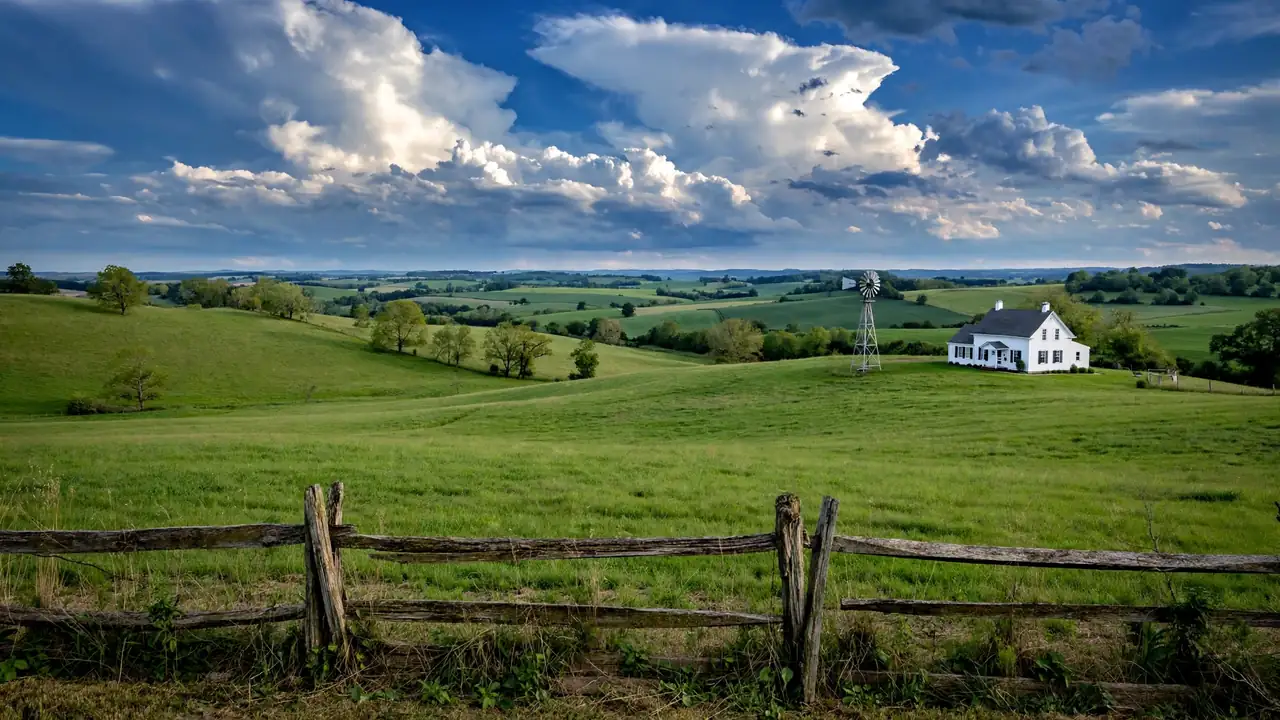
Farm Credit associations lend for many rural purposes. The most common are buying farmland and rural land, buying or building a farmhouse, refinancing an existing farm loan, buying equipment and covering operating costs such as seed, livestock and supplies. Some associations also finance rural homes for people who live in the country but do not farm.
One practical advantage is local knowledge. Farm Credit lenders work in agriculture every day, so they understand seasonal cash flow, crop cycles and land values in their area. That is why they are often willing to structure a loan with annual or semi-annual payments that match when a farm actually earns money, instead of insisting on a monthly schedule that fits a salaried borrower better.
There are limits, though. You must be eligible for the association that serves your area, the property must qualify, and the loan still has to be repaid from farm or household income. A Farm Credit loan is not a grant, and it is not automatically cheaper than a bank loan in every case.
How Patronage Dividends Lower Your Real Cost
Patronage is the feature borrowers ask about most, so it is worth working through with real numbers. Take the calculator's default example: a $250,000 farm purchase with 25% down. The down payment is $62,500, which leaves a loan of $187,500. At 7.25% interest over 20 years with annual payments, the payment comes to about $18,044 per year, and the total interest over the life of the loan is about $173,381.
Now add patronage. If the association paid a 15% patronage refund on the interest, about $26,007 of that interest would come back to the borrower over the life of the loan. Subtract it, and the net interest falls to about $147,374. That is a meaningful saving, and it is the reason many borrowers prefer a cooperative lender even when the headline rate looks similar to a bank's.

Three cautions belong with that example. First, patronage is never guaranteed: each association's board decides annually whether to pay a refund and how large it will be, based on earnings and financial condition. Second, the percentage varies by year and by association, so 15% is an illustration, not a promise. Third, some refunds are paid partly in cash and partly as cooperative equity redeemed later. For planning, run the calculator twice: once with your expected patronage rate, and once with zero.
Farm Credit Loan Requirements
Farm Credit associations lend to people who farm, ranch or live in rural areas, and to businesses connected to agriculture. The exact requirements vary by association, but most applications cover the same ground: proof of income and repayment ability, a credit history review, an appraisal of the property, and a down payment. Down payment requirements vary with the type of property and the risk of the loan, and raw land usually needs more money down than an operating farm with a home on it.
Before you apply, gather your tax returns, a balance sheet showing your assets and debts, and a realistic plan for how the property will generate income or fit your household budget. If you are buying land, read our guide to land loan requirements first, so you know which documents lenders usually ask for and which property issues can slow an application down.
Farm Credit vs. a Bank Land Loan
A bank and a Farm Credit association can both finance a land purchase, but they are built differently, and the difference shows up in cost, schedule and service. The table below sums up the main contrasts. For a general-purpose estimate without the patronage and annual-payment features, try our farm loan calculator, or start from the homepage land loan calculator for other land loan types.
| Feature | Farm Credit loan | Bank land loan |
|---|---|---|
| Ownership | Borrower-owned cooperative; borrowers are member-owners | Owned by shareholders; borrowers are customers |
| Patronage | Possible annual patronage refund, decided by the board; never guaranteed | No patronage; profit goes to shareholders |
| Payment schedules | Monthly, semi-annual or annual payments, often timed to farm income | Usually monthly payments on a fixed schedule |
| Who they serve | Farmers, ranchers, rural homeowners and agribusinesses | General borrowers, including non-farm buyers |
| Local expertise | Deep focus on agriculture, land values and seasonal cash flow | General lending knowledge; ag expertise varies by bank |
Neither option is right for every buyer. If you value patronage, annual payments and an agriculture-focused lender, a Farm Credit association is worth a close look. If you are buying rural land but do not farm, or you want a standard monthly mortgage, a bank may be simpler. Run both sets of numbers before you decide.
Farm Credit Loan Calculator FAQs
What is a Farm Credit loan?
A Farm Credit loan is a loan from a borrower-owned cooperative association in the Farm Credit System. These associations lend to farmers, ranchers, rural homeowners and agricultural businesses, and their borrowers are also their member-owners.
Who qualifies for a Farm Credit loan?
Eligibility depends on the association and the loan, but in general you must farm, ranch, live in a rural area or run an agriculture-related business in the area the association serves. You will also need to show income, a credit history and a property that meets the association's appraisal and eligibility rules.
How does patronage work on a Farm Credit loan?
When a Farm Credit association earns a profit, its board may return part of it to borrowers as a patronage dividend, usually based on the amount of interest each borrower paid. The refund is never guaranteed, and the percentage changes from year to year. Use the Patronage Refund field in the calculator to estimate how a refund would lower your net interest.
Do Farm Credit loans require annual payments?
No. Annual payments are common because they match farm income, but many associations also offer semi-annual and monthly payments. Choose the schedule that fits your cash flow, and use the Payment Frequency setting in the calculator to compare the payment amounts.
How much down payment does Farm Credit require?
It varies by association, property type and loan risk. Raw land usually requires a larger down payment than an operating farm with a home, and a stronger application can mean a smaller down payment. The calculator's default of 25% is a common planning figure, not a rule that applies to every loan.
What credit score do I need for a Farm Credit loan?
There is no single published minimum that applies to every association, because each one sets its own credit standards and looks at the whole application, including income, debts and the property. A stronger credit history usually means better terms, so check your credit and talk to your local association early if you are unsure where you stand.
Can I buy raw land with a Farm Credit loan?
Yes, in many cases. Farm Credit associations commonly finance farmland and rural land, including raw land, as long as the property qualifies and the appraisal supports the loan. Expect a larger down payment and a careful review of the land's use, access and value compared with a loan on an operating farm.
How is a Farm Credit loan different from a regular farm loan?
The main differences are ownership and patronage. A Farm Credit loan comes from a borrower-owned cooperative that may return part of its earnings to you as a patronage refund, and it often offers annual or semi-annual payments timed to farm income. A regular farm loan from a bank has no patronage and usually follows a standard monthly schedule.
By Jameel Noori, Founder & Developer, Land Loan Calculator
About the author: Jameel Noori is the Founder & Developer of Land Loan Calculator. He writes practical, U.S.-focused guides on land financing, loan math, and buyer strategy.
Reviewed by: Jameel Noori, Founder & Lead Developer of Land Loan Calculator, reviewed this article for accuracy.
Disclaimer: This article is for informational purposes only and is not financial advice. Land loan rates and terms vary by lender, property, and market conditions. Consult a licensed loan professional before making financing decisions.