
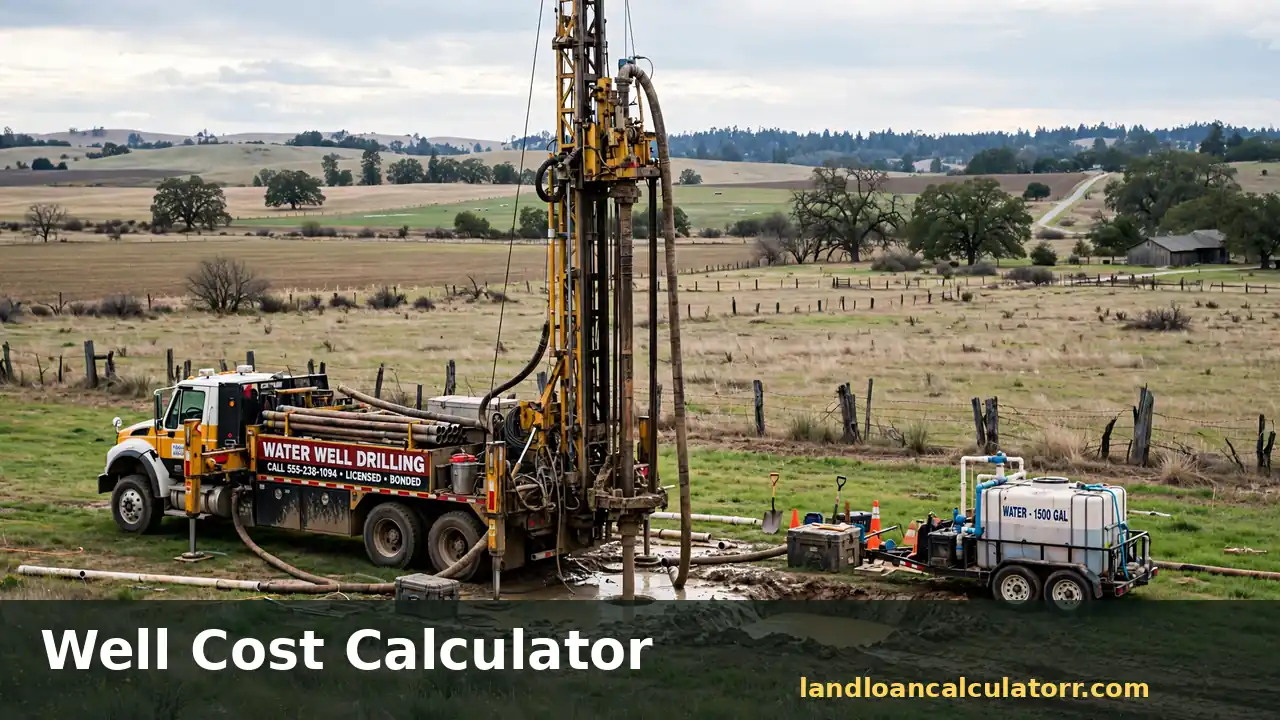
Well Cost Calculator: Estimate Drilling Costs

A drilled well typically costs $5,500–$30,000+ depending mostly on depth and geology. Use this well cost calculator to estimate drilling, pump and hookup costs for your land before you buy or build, so you can budget for water alongside the purchase price.
Well Cost Calculator
Estimate Your Water Well Cost
Most residential wells run 100–400 ft. Depth is the biggest cost driver because drilling is priced per foot.
Estimated Total Well Cost
$16,900
200 ft well · Est. payment $157/mo if financed
Drilling + Casing
$11,000
Pump, Tank + Treatment
$3,100
Electrical, Trenching + Permits
$2,800
Total Cost per Foot of Depth
$85
Cost per Year (25-Year Well Life)
$676/yr
Loan Amount
$12,675
Est. Monthly Payment
$157
Total Interest
$6,183
Estimates use typical U.S. drilled-well cost ranges. Actual quotes depend on local geology, depth to water, driller availability and state permit rules. Get at least two licensed driller quotes before you buy land that needs a well.
How Much Does It Cost to Drill a Well?
Typical total costs rise with depth. As a rough guide, a 100-foot well often totals $6,000–$12,000, a 200-foot well $12,000–$20,000, and a 400-foot well $20,000–$30,000 or more, once the pump, tank and hookups are included. Shallow wells in easy ground sit at the low end; deep wells in hard rock sit at the high end.
Drilling itself is usually priced per foot, and the well cost calculator uses typical ranges of $45 per foot for sand and gravel, $55 per foot for mixed soil and sedimentary rock, and $75 per foot for hard rock or granite. Local rates vary, so treat these as planning figures and confirm them with drillers in your county.
Depth dominates the bill because every extra foot adds drilling time, casing, and often more pump capacity. Geology matters next: hard rock drills slowly and wears equipment faster, while sand and gravel drill faster but may need more casing and screening to keep the borehole stable. The depth to usable water, not the depth you hope for, is what you pay for.
What Else Adds to Well Cost Beyond Drilling?
Drilling is usually only part of the project. The pump is the next big item: a standard submersible pump is the most common choice for a home, a constant-pressure system costs more but gives steadier pressure, and a solar pump system costs the most up front but can suit off-grid land. Add a pressure tank and controls, and the system can deliver water at steady pressure without the pump cycling constantly.
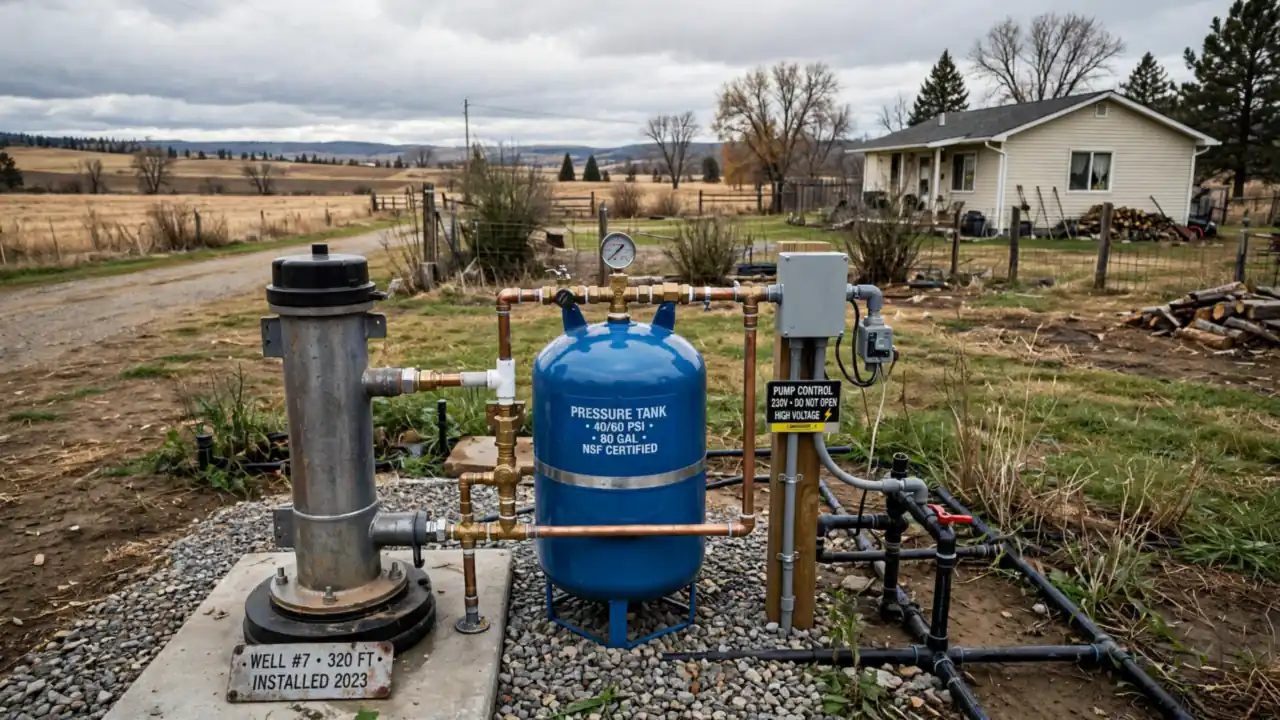
Beyond the pump, budget for water treatment if tests show hardness, iron or bacteria, for electrical work to power the pump, for trenching and the water line to the house, and for permits and water testing. These items are easy to overlook, yet together they commonly add several thousand dollars. Always get the driller's quote in writing, item by item, so you can see what is included and what is not.
How to Use This Well Cost Calculator
Start with Well Depth, then choose Ground Conditions to set the drilling rate per foot. Next, choose Casing, Pump Type and Water Treatment from the dropdowns, and adjust the Pressure Tank, Electrical Hookup, Trenching and Permits figures to match local quotes. Finally, set the Down Payment, Interest Rate and Loan Term if you plan to finance the well.
The results update as you change each input. The headline total is the estimated all-in well cost, broken down into drilling and casing, pump and treatment, and electrical, trenching and permits. You will also see the total cost per foot, the cost per year over a 25-year well life, the loan amount and the estimated monthly payment. The default inputs give a $16,900 total, which is a useful starting point before you replace the defaults with local prices.
Well vs. City Water vs. Hauled Water
A private well has a high up-front cost but no monthly water bill, and you control your own supply. The trade-off is that you own the maintenance: the pump, tank, treatment and testing are your responsibility, and a pump replacement can cost a few thousand dollars.
City water usually costs far less up front when a connection is available, but you pay a monthly bill and you depend on the utility's supply and rules. Hauled water avoids drilling altogether, yet it means ongoing delivery charges, a storage tank, and careful rationing in dry periods. For most rural land buyers, a well is the most practical long-term option when city water is not available at the boundary.
Financing a Well With Your Land Purchase
Wells are often rolled into land-and-improvement financing rather than paid for separately. If you are buying land and planning to drill, use a land loan calculator to model the combined purchase and improvement cost, and a septic system cost calculator to budget for the other major off-grid system at the same time. Lenders will usually want contractor quotes, permits and a clear scope of work before they approve improvement funds.
Ask your lender early whether the well cost can be included in the loan, how draws are released, and whether the loan requires a completed well and a passing water test before closing. Getting those answers before you drill avoids a finished well that your financing was never set up to cover.
Well Cost Calculator FAQs
How much does it cost to drill a well per foot?
Drilling alone typically costs about $45 per foot in sand and gravel, $55 per foot in mixed soil and sedimentary rock, and $75 per foot in hard rock or granite. Casing, the pump and hookups are usually extra, so the all-in cost per foot is higher.
What is the average cost of a residential well?
A drilled residential well typically costs $5,500–$30,000 or more all-in, with many homes landing in the $12,000–$20,000 range for a 150- to 250-foot well with a standard pump and hookups. Depth and geology move the final figure more than any other factor.
How deep does a well need to be?
A well must reach a reliable aquifer, which varies by location. Most residential wells run 100–400 feet deep, but the right depth depends on the local water table, geology and regulations. The USGS groundwater wells basics explain how wells tap groundwater, and nearby well records and local drillers can give a realistic depth range for your area.
Does a well add value to land?
Often, yes. A permitted well with good yield and clean water tests makes raw land buildable and more attractive to buyers, especially where city water is unavailable. It rarely adds dollar-for-dollar value, though, and a low-yield or poor-quality well can hurt value.
How long does drilling a well take?
Drilling itself often takes one to three days for a typical residential well, depending on depth and geology. Permits, pump installation, trenching, electrical work and water testing can extend the full project to one to two weeks.
Can I finance a well with a land loan?
Often, yes. Many lenders allow well costs to be rolled into land-and-improvement financing or a construction loan, provided you supply quotes, permits and a clear scope of work. Confirm the terms with your lender before drilling, since draw schedules and testing requirements vary.
What is a dry well and who pays if drilling fails?
A dry well is a borehole that does not produce enough usable water. Who pays depends on your contract: many drillers charge per foot drilled even if the well comes up dry, while others offer a reduced rate or a second attempt. Get the dry-hole terms in writing before drilling starts.
Do I need a permit to drill a well?
In most states and counties, yes. Permit rules, setbacks and testing requirements vary by location, and licensed drillers often handle the paperwork. Confirm the requirements with your local authority before work begins.
By Jameel Noori, Founder & Developer, Land Loan Calculator
About the author: Jameel Noori is the Founder & Developer of Land Loan Calculator. He writes practical, U.S.-focused guides on land financing, loan math, and buyer strategy.
Reviewed by: Jameel Noori, Founder & Lead Developer of Land Loan Calculator, reviewed this article for accuracy.
Disclaimer: This article is for informational purposes only and is not financial advice. Land loan rates and terms vary by lender, property, and market conditions. Consult a licensed loan professional before making financing decisions.