

Ag Loan Calculator

This ag loan calculator estimates payments for agricultural loans, including farm real estate, operating, equipment and livestock loans. Enter your loan amount, interest rate and term, choose a loan type preset, and see your estimated payment right away.
The presets reflect how farm lending actually works: real estate loans run long, operating loans are short and seasonal, and equipment and livestock loans sit in between. You can also switch between annual, monthly and other payment frequencies, so the result matches your cash flow.
Use the ag loan calculator below to compare options before you talk to a lender. A longer term lowers each payment but raises total interest, while a shorter term does the opposite. Seeing both numbers side by side helps you choose a loan your farm can carry in a good year and a lean one.
Step 1 · Enter your numbers
Ag Loan Details
Long-term financing for farmland and farm real estate, usually 15–30 years.
Ag loans are often repaid annually after harvest, or semi-annually for livestock operations.
Step 2 · Your estimate
Amortization Schedule — Principal & Interest (Estimate)
All figures are estimates only — never guaranteed rates. Actual ag loan terms vary by lender, commodity prices, and borrower. Not a loan offer.
How This Ag Loan Calculator Works
Start by choosing a loan type. Each preset loads typical rate and term defaults for that kind of ag loan, so you do not have to guess where to begin. You can then change any figure to match a quote you have received or a scenario you want to test.
Next, enter the amount you plan to borrow, the annual interest rate and the loan term. The calculator then works out your regular payment and shows how much of the total you will pay in interest over the life of the loan.
Finally, choose a payment frequency. Many farm loans are paid annually, timed to harvest income, but monthly and other schedules are available too. Switching frequency changes the payment amount and the way interest builds up, so compare frequencies before you commit.
The ag loan calculator also shows a payment schedule, so you can see how each payment is split between interest and principal over time. Early payments are mostly interest; later payments pay down more principal. That schedule is useful when you are planning cash flow across seasons.
What Is an Ag Loan?
An ag loan is an umbrella term for financing used in farming and agriculture. It covers loans for land, buildings, equipment, livestock, seed, feed and day-to-day operating costs. Farmers use ag loans to buy, expand, modernize or keep a farm running through the season.
Ag loans come from several kinds of lenders. Farm Credit associations specialize in agricultural lending and understand farm cash flow. Community banks lend locally and often know the borrower and the land. The USDA Farm Service Agency (FSA) helps farmers who may not qualify for commercial credit, and equipment dealers finance tractors and machinery directly.
What each loan pays for depends on its type. A real estate loan buys farmland or farm buildings. An operating loan pays for the inputs and labor of a growing season. An equipment loan buys machinery, and a livestock loan buys animals or covers their care. The ag loan calculator above lets you compare these types with realistic starting figures.
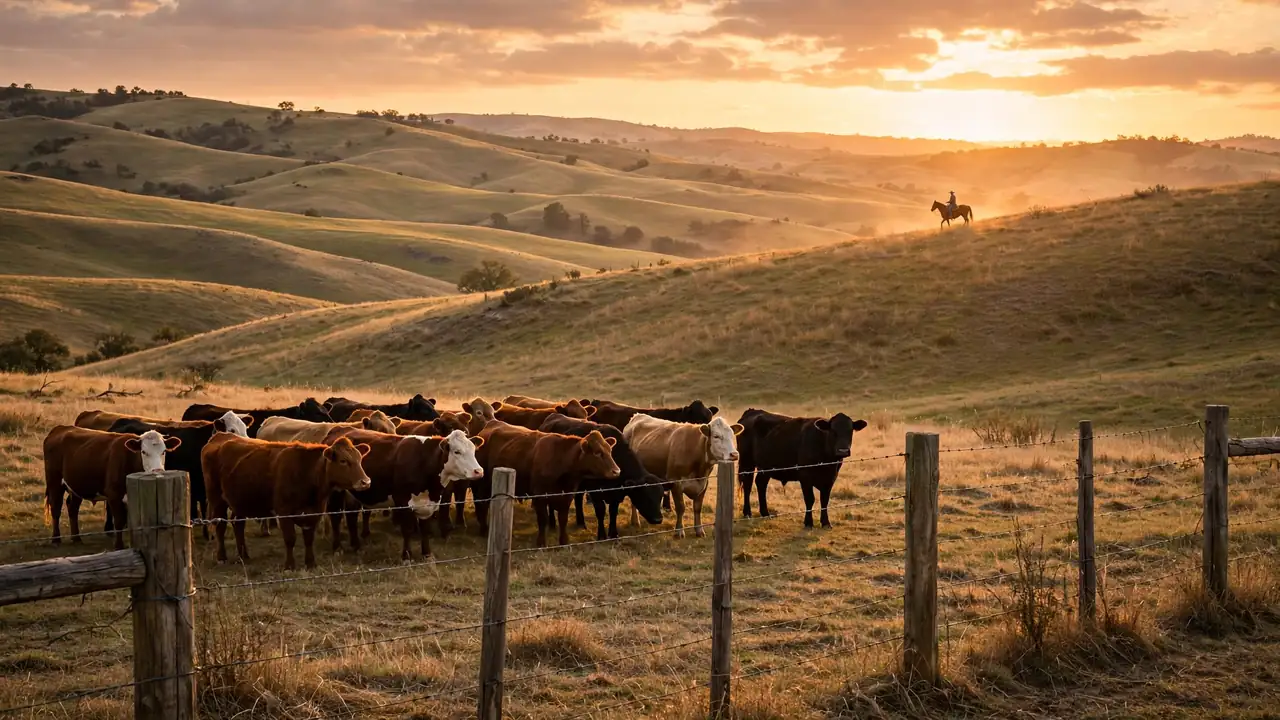
Types of Ag Loans
The four main types of ag loans differ in purpose, term and collateral. Short loans match short-lived assets, while land loans run for decades because land holds its value and produces income for generations.
| Loan type | What it pays for | Typical term | Usual collateral |
|---|---|---|---|
| Real estate | Farmland, farm buildings and land improvements | 15–30 years | The land itself |
| Operating | Seed, fertilizer, fuel, labor and other seasonal costs | 1–5 years | Crops, inventory or a lien on farm assets |
| Equipment | Tractors, harvesters, implements and vehicles | 3–10 years | The equipment purchased |
| Livestock | Cattle and other animals, feed and care | 1–7 years | The livestock, sometimes with other farm assets |
Real Estate Ag Loans
Real estate ag loans finance the purchase or improvement of farmland and farm buildings. Terms are long, often 15 to 30 years, and the land itself usually secures the loan. Because payments stretch over many years, even a small rate change has a large effect on total interest. If you are buying farmland specifically, try the farm loan calculator for long-term amortizing payments.
Operating Ag Loans
Operating loans cover the costs of a single season or a few years: seed, fertilizer, chemicals, fuel, repairs and hired labor. They are often repaid from the sale of that season's crop or livestock, so terms are short and payments may be timed to harvest.

Equipment Ag Loans
Equipment loans buy tractors, combines, planters and other machinery. Terms usually match the useful life of the machine, commonly 3 to 10 years, and the equipment itself is the collateral. Dealers, banks and Farm Credit associations all offer this type of financing.
Livestock Ag Loans
Livestock loans buy breeding stock, feeder animals or dairy herds, and may also cover feed, veterinary care and transport. Terms depend on the animal's productive life, often 1 to 7 years, and the herd itself usually secures the loan.
Worked Example
Take a $150,000 farm real estate ag loan at 7% over 25 years with annual payments. Using the ag loan calculator defaults, that loan costs about $12,872 per year, with about $171,789 in total interest over the full term. The long term keeps each yearly payment manageable, but the interest adds up to more than the amount borrowed.
Now take the same $150,000 as a 5-year operating loan at 7.75%. That loan costs about $37,321 per year. The yearly payment is nearly three times higher, yet the loan is finished in five years and total interest is far lower. The comparison shows the central trade-off in farm borrowing: term matters more than rate.
Try both scenarios in the ag loan calculator above. Change the term first, then the rate, and watch how the payment and total interest move. A small rate improvement helps, but shortening or lengthening the term changes the payment far more. Match the term to the life of what the loan buys: land can carry a long term, while a seasonal input loan should not.
Where to Get an Ag Loan
Farm Credit associations are a natural first stop for many farmers. They lend only to agriculture, so their staff understand crop cycles, livestock markets and the timing of farm income. If you are comparing Farm Credit options, try the farm credit loan calculator to estimate payments on that type of loan.
Community banks are another strong option, especially for farmers who already bank locally. A local lender may know your operation, your land and your repayment history, and can often move faster on smaller loans. Compare their quotes with the calculator before you sign.
The USDA Farm Service Agency (FSA) offers direct and guaranteed loans for farmers who cannot get commercial credit on reasonable terms, including beginning farmers. If you are exploring that route, use the FSA loan calculator to estimate what an FSA loan might cost.
Equipment dealers also finance machinery, often with promotional rates or seasonal payment plans. Dealer financing can be convenient, but check the total cost, not just the headline rate, and compare it with a bank or Farm Credit quote. For land purchases specifically, our land loan calculator can help you estimate payments on the land portion of a purchase.
Ag Loan Requirements
Lenders want evidence that the farm can repay the loan. Farm experience matters: a track record of running a similar operation reassures a lender, while beginning farmers may need a stronger plan or an FSA guarantee. A written business plan that shows expected income, costs and how the loan will be repaid strengthens any application.
Cash-flow coverage is the key number. Lenders compare your expected farm income, after operating costs and living expenses, with your loan payments. A loan that leaves little margin in a poor year is risky for both sides. Use the calculator to test a low-income year as well as an average one, and run the ag loan calculator again with the lender's actual rate and term before you apply.
Collateral secures most ag loans: land for real estate loans, equipment for equipment loans, and livestock or crops for operating and livestock loans. Lenders also review credit history, so check your credit report before applying and clear up any errors. For a fuller checklist, see our guide to land loan requirements, which covers documents, down payments and lender expectations.
Ag Loan Calculator FAQs
What is an ag loan?
An ag loan is financing for farming and agriculture. It can pay for land, buildings, equipment, livestock, seed, feed and operating costs, and it is offered by Farm Credit associations, banks, the USDA FSA and equipment dealers.
What can an ag loan be used for?
Ag loans can be used to buy farmland, build or improve farm buildings, purchase tractors and machinery, buy livestock, and cover seasonal costs such as seed, fertilizer, fuel and labor.
How long are ag loan terms?
Terms depend on the loan type. Real estate loans often run 15 to 30 years, equipment loans 3 to 10 years, livestock loans 1 to 7 years, and operating loans 1 to 5 years, usually repaid from the season's income.
What interest rate can I expect on an ag loan?
Rates vary by lender, loan type, term, collateral and credit history. The worked example on this page uses 7% for a real estate loan and 7.75% for an operating loan, but your quote may differ. Use the ag loan calculator to test different rates.
Do ag loans require a down payment?
Many ag loans require a down payment, especially for land and equipment, though the amount varies by lender and loan program. Some FSA loans for beginning farmers have lower down payment requirements than commercial loans.
Can I pay an ag loan annually?
Yes. Many farm loans offer annual payments timed to harvest income, which suits farms that earn most of their revenue once or twice a year. The calculator lets you compare annual payments with monthly and other frequencies.
What is the difference between an ag loan and a farm loan?
There is no real difference: the terms are used interchangeably. “Ag loan” and “farm loan” both describe financing for agricultural purposes, from buying land to funding a growing season.
How do I qualify for an ag loan?
You generally need farm experience or a solid business plan, enough cash flow to cover payments, suitable collateral and a reasonable credit history. Beginning farmers who do not meet commercial standards may qualify for FSA assistance.
By Jameel Noori, Founder & Developer, Land Loan Calculator
About the author: Jameel Noori is the Founder & Developer of Land Loan Calculator. He writes practical, U.S.-focused guides on land financing, loan math, and buyer strategy.
Reviewed by: Jameel Noori, Founder & Lead Developer of Land Loan Calculator, reviewed this article for accuracy.
Disclaimer: This article is for informational purposes only and is not financial advice. Land loan rates and terms vary by lender, property, and market conditions. Consult a licensed loan professional before making financing decisions.