
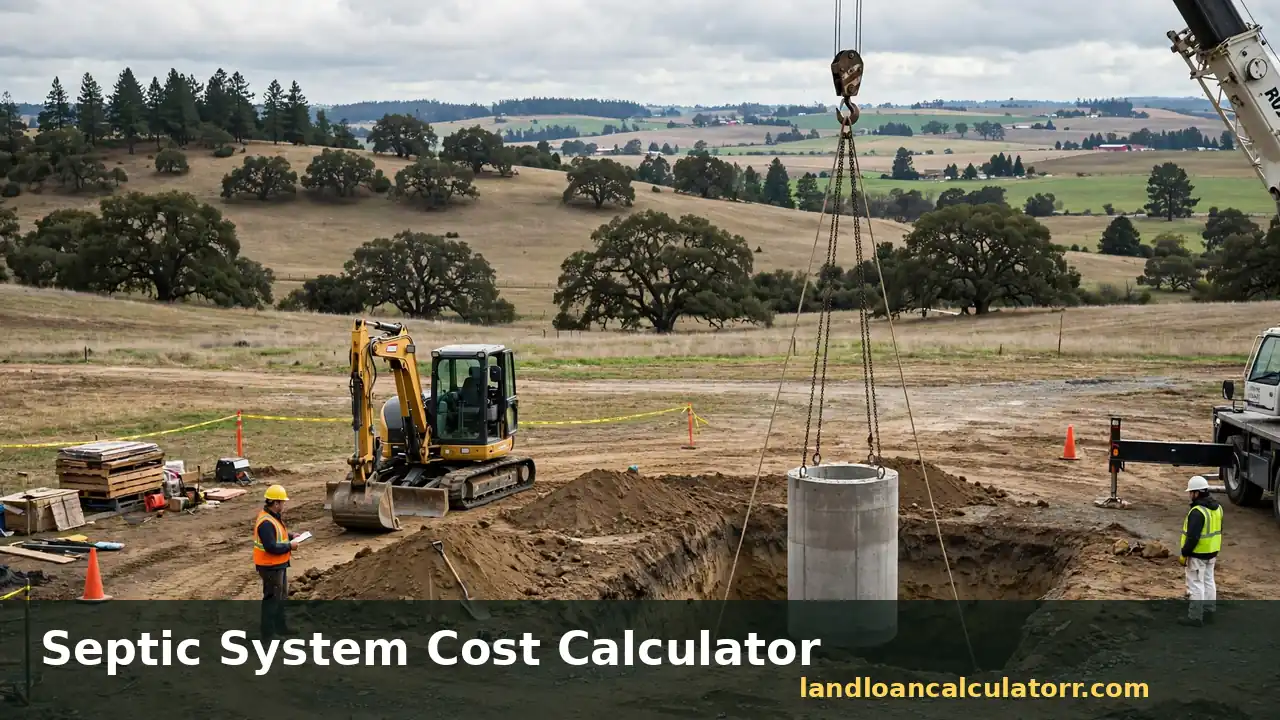
Septic System Cost Calculator: Estimate Installation

Most rural land has no sewer line, so a septic system is a required cost of building — and its price depends heavily on your soil’s perc results. This septic system cost calculator estimates installation by system type, bedrooms, soil conditions and tank choice, plus maintenance and financing. Whether you are buying raw land, planning a new home, or replacing a failing system, it helps you budget before you get installer quotes. Use it to compare conventional, chamber, sand filter, aerobic and mound systems, understand what drives the price up or down, and see the long-term cost of ownership, not just the upfront installation bill.
Septic System Cost Calculator
Estimate Your Septic System Cost
Septic systems are sized by bedrooms, not bathrooms. More bedrooms need a bigger tank and drain field.
Estimated Total Installed Cost
$13,400
Tank size 1,250 gal · Est. payment $125/mo if financed
System Cost (Adjusted for Soil + Tank)
$12,000
Pump, Permits + Perc Test
$1,400
Recommended Tank Size
1,250 gal
Cost per Bedroom
$4,467
Yearly Maintenance
$150/yr
10-Year Cost of Ownership
$14,900
Loan Amount
$10,050
Total Interest
$4,903
Estimates use typical U.S. installed cost ranges. Actual quotes depend on soil and perc results, local codes, tank access and installer rates. A perc test and county permit are required almost everywhere before installation.
How to Use This Septic System Cost Calculator
Start with the septic system cost calculator defaults, then adjust each input to match your property. The total updates as you change options, so you can compare systems and see the 10-year ownership cost and financing estimate before you talk to an installer.
- Pick your system type, from a conventional system to a mound system.
- Set bedrooms, because septic systems are sized by bedrooms, not bathrooms.
- Choose your soil and perc conditions, from good soil to poor, engineered soil.
- Pick a tank material and add a pump if your drain field is uphill.
- Add permits and perc test costs for your county.
- Review the total, recommended tank size, 10-year ownership cost and financing estimate.
Septic System Costs by Type
Installed septic system costs vary by system, soil and site, but these typical ranges are a useful starting point for budgeting. A conventional system is usually the least expensive, while engineered systems for difficult soil cost considerably more.
- Conventional septic system: about $7,000–$18,000 installed.
- Chamber system: about $8,000–$19,000 installed.
- Sand filter system: about $12,000–$22,000 installed.
- Aerobic treatment unit (ATU): about $13,000–$25,000 installed.
- Mound system: about $15,000–$30,000 or more installed.
What Affects Septic System Cost?
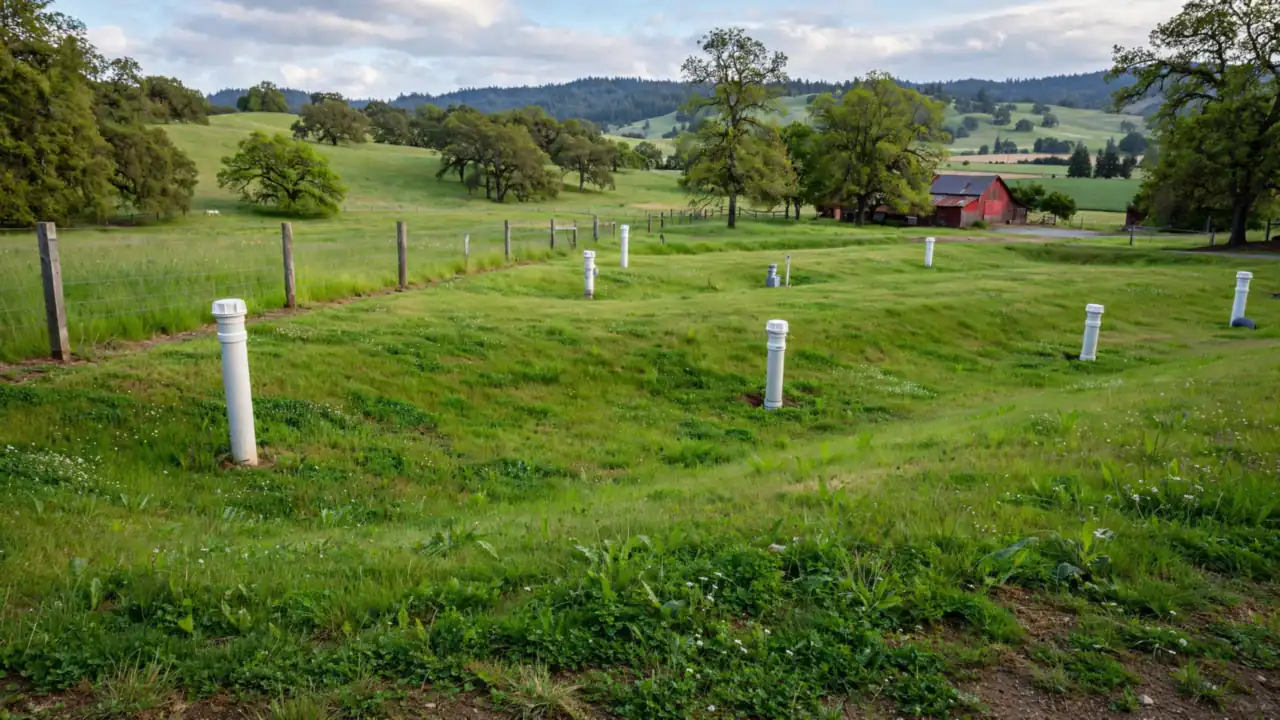
Two properties with the same house size can get very different septic quotes. Soil and site conditions, the system your county requires, and access for excavation all affect the final price.
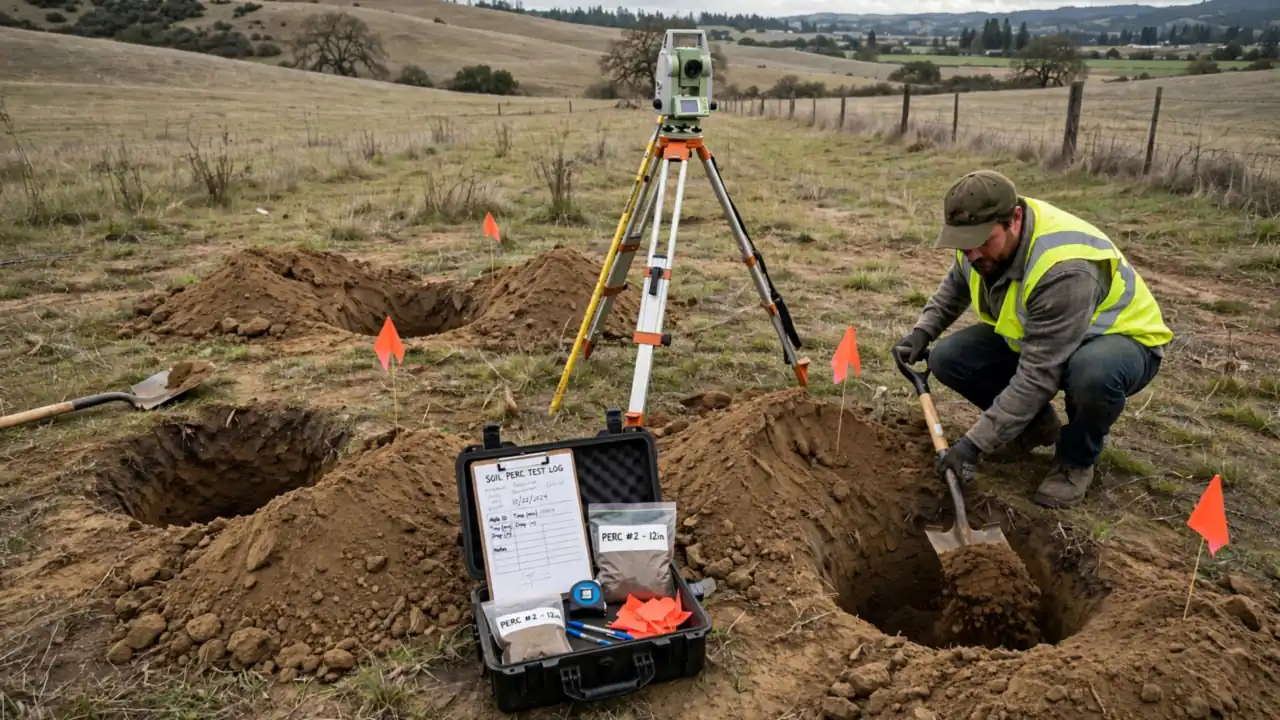
- Perc results and soil: how quickly soil absorbs water determines drain field size and whether an engineered system is needed. A perc test is the key first step.
- System type the county requires: local health departments approve systems based on soil, groundwater and setbacks.
- Tank size by bedrooms: more bedrooms require a larger tank and drain field.
- Site access for excavation: steep, rocky, wooded or hard-to-reach sites cost more to dig and install.
- Local permit rules: permit, inspection and design fees vary by county and can add hundreds or thousands of dollars.
Financing a Septic System
A new septic system is often rolled into a construction loan or a land and improvement loan, rather than paid for as a separate project. If you are still budgeting the full build, use the land development cost calculator to estimate site work, utilities and other development costs alongside the septic system.
For the land purchase itself, the land loan calculator can help you estimate monthly payments, down payment and total interest. For general guidance on septic care and maintenance, see the U.S. Environmental Protection Agency's Septic Systems page.
Septic System Cost Calculator FAQs
How much does a septic system cost to install?
A typical septic system costs about $7,000 to $30,000 or more installed, depending on system type, soil conditions, tank size and local permit costs. Conventional systems are usually at the lower end, while mound and other engineered systems are at the higher end.
What is the cheapest septic system?
A conventional septic system is usually the cheapest option, typically about $7,000 to $18,000 installed, when soil passes a perc test easily and the site allows a standard drain field.
What happens if my land fails a perc test?
If land fails a perc test, a standard system may not be approved. You may need an engineered system such as a mound or sand filter system, additional soil testing, a different drain field location, or in some cases, the lot may not be buildable as planned. These options cost more than a conventional system.
What size septic tank do I need for a 3-bedroom home?
A 3-bedroom home typically needs a 1,250-gallon septic tank, which is the default in this septic system cost calculator. Local codes vary, so confirm the required size with your county health department.
How long does a septic system last?
With regular pumping and maintenance, a septic system can last 25 to 40 years or more. Concrete tanks and well-maintained drain fields tend to last longest, while pumps and aerobic units need more frequent servicing.
Can I finance a septic system?
Yes. A septic system can often be financed as part of a construction loan or land and improvement loan, or with a personal or home improvement loan, depending on the lender and whether a home is already on the property.
Do I need a permit to install a septic system?
Yes, in almost every county you need a permit, an approved design and inspections before and during installation. A perc test is usually required before a permit is issued.
How often does a septic tank need pumping?
Most septic tanks need pumping every 3 to 5 years, depending on household size, tank size and use. Regular pumping helps prevent drain field failure and costly repairs.
By Jameel Noori, Founder & Developer, Land Loan Calculator
About the author: Jameel Noori is the Founder & Developer of Land Loan Calculator. He writes practical, U.S.-focused guides on land financing, loan math, and buyer strategy.
Reviewed by: Jameel Noori, Founder & Lead Developer of Land Loan Calculator, reviewed this article for accuracy.
Disclaimer: This article is for informational purposes only and is not financial advice. Land loan rates and terms vary by lender, property, and market conditions. Consult a licensed loan professional before making financing decisions.