
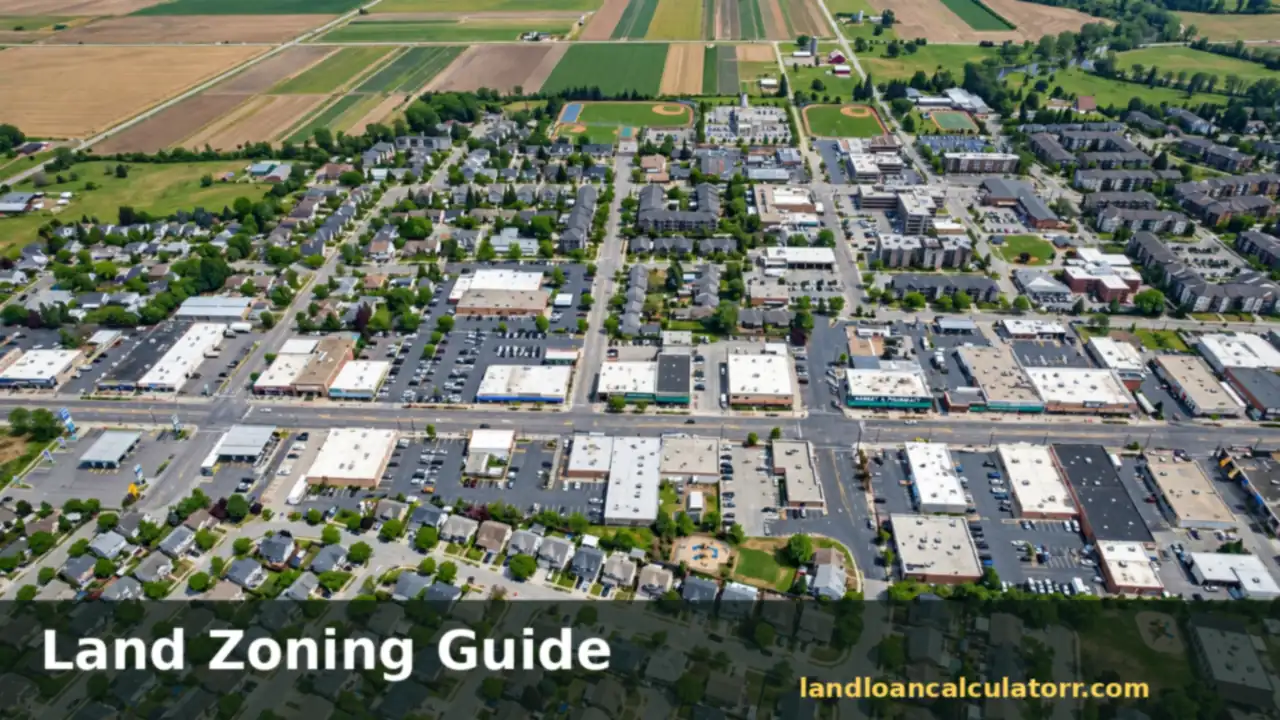
Land Zoning: Types, Rules & How to Check Before You Buy

Land zoning decides what you can legally do with a parcel of land. It determines whether you can build a home on it, farm it, run a business from it, or split it into smaller lots. Before you fall in love with a piece of ground, check its zoning, because the rules attached to that land will shape everything you plan to do with it.
Lenders care about zoning for the same reason buyers should. Zoning affects value, marketability, and permitted use. If the zoning does not match your intended use, a lender may question the appraisal, add conditions, or decline the loan altogether. That is why zoning belongs near the top of your buying checklist, not as an afterthought once you are already under contract.
This guide explains land zoning in plain language: what it is, the main types you are likely to meet, how to check a specific parcel, the rules that affect buyers most, and what happens if you want to change a zoning designation.
What Is Land Zoning?
Land zoning is a set of local government rules that control how land in a particular area may be used. A city or county divides its territory into districts, and assigns each district a set of permitted uses, building standards, and restrictions. The rules are written in a zoning ordinance, and the district boundaries are drawn on a zoning map.
Think of the zoning map as the picture and the ordinance as the rulebook. The map tells you which district a parcel sits in, often shown by a code such as R-1, A-1, or C-2. The ordinance then explains what that code means: what you may build, how large a lot must be, how far a building must sit from the property line, and whether animals, businesses, or extra dwellings are allowed.
Within any district, uses generally fall into three groups. Permitted uses are allowed by right, as long as you meet the other rules. Conditional uses may be allowed only with extra approval, often after a hearing and with conditions attached. Prohibited uses are simply not allowed in that district.
Not every place is zoned. Zoning is mainly a city and county power, and some rural counties choose not to zone land outside city limits at all. Much of rural Texas, for example, has no county zoning, although cities within those counties may still zone land inside their boundaries, and deed restrictions, floodplain rules, and state laws can still apply. Never assume a parcel is unzoned. Always confirm it with the local planning office.
The Main Types of Land Zoning
Exact codes vary by city and county, but most systems use the same broad families. Learning them helps you read a zoning map quickly and spot a mismatch before you spend time or money on a parcel that does not fit your plans.
Residential (R)
Residential zoning is for housing. Codes such as R-1, R-2, and R-3 usually describe density, with lower numbers often meaning larger lots and fewer homes per acre. Single-family districts allow one house per lot, while multifamily districts allow duplexes, townhouses, or apartments, subject to lot size, setbacks, and height limits.
Agricultural (A or AG)
Agricultural zoning is for farming, ranching, and related rural uses. It typically allows crops, livestock, barns, and one farmhouse per parcel. Minimum lot sizes are usually much larger than in residential districts, sometimes 5, 10, 20, or more acres, which helps preserve farmland and keeps housing density low.
Commercial (C)
Commercial zoning is for shops, offices, restaurants, hotels, and services. Codes such as C-1 for neighborhood commercial and C-2 for general commercial reflect intensity. Commercial districts usually add parking, signage, and landscaping standards that do not apply to homes.
Industrial (I or M)
Industrial zoning, sometimes labeled M for manufacturing, is for warehouses, factories, workshops, and distribution centers. Light industrial districts allow quieter uses such as storage and assembly, while heavy industrial districts allow manufacturing that may produce noise, dust, or truck traffic.
Mixed-Use
Mixed-use zoning allows more than one kind of use in the same building or district, often homes above shops or offices beside apartments. These districts are common in town centers, where the goal is a walkable area that stays active during the day and evening. Height, density, and parking rules still apply.
Recreational and Open Space
Recreational and open-space zoning covers parks, trails, playgrounds, nature preserves, and public land. Private building is usually very limited in these districts, and in some cases it is not allowed at all. If the parcel itself carries this designation, it may not be a buildable homesite.
Other codes include PUD for planned unit developments, which allow a flexible mix of uses under one approved plan, and overlay districts, which add extra rules on top of the base district, such as floodplain, historic, or airport overlays. The letters alone are never enough, because two counties can use the same letter for different rules.
| Zoning type | Common codes | Typical uses | What buyers should check |
|---|---|---|---|
| Residential | R-1, R-2, R-3 | Single-family homes, duplexes, apartments | Minimum lot size, setbacks, dwelling limits |
| Agricultural | A-1, AG, A | Farming, ranching, barns, farmhouse | Minimum acreage, livestock rules, home limits |
| Commercial | C-1, C-2 | Shops, offices, restaurants, services | Parking, signage, allowed business types |
| Industrial | I-1, I-2, M-1, M-2 | Warehouses, workshops, manufacturing | Outdoor storage, noise, truck access |
| Mixed-Use | MU, MXD | Homes above shops, live-work units | Which uses may share the site |
| Recreational / Open Space | OS, REC, P | Parks, trails, preserves | Whether private building is allowed at all |
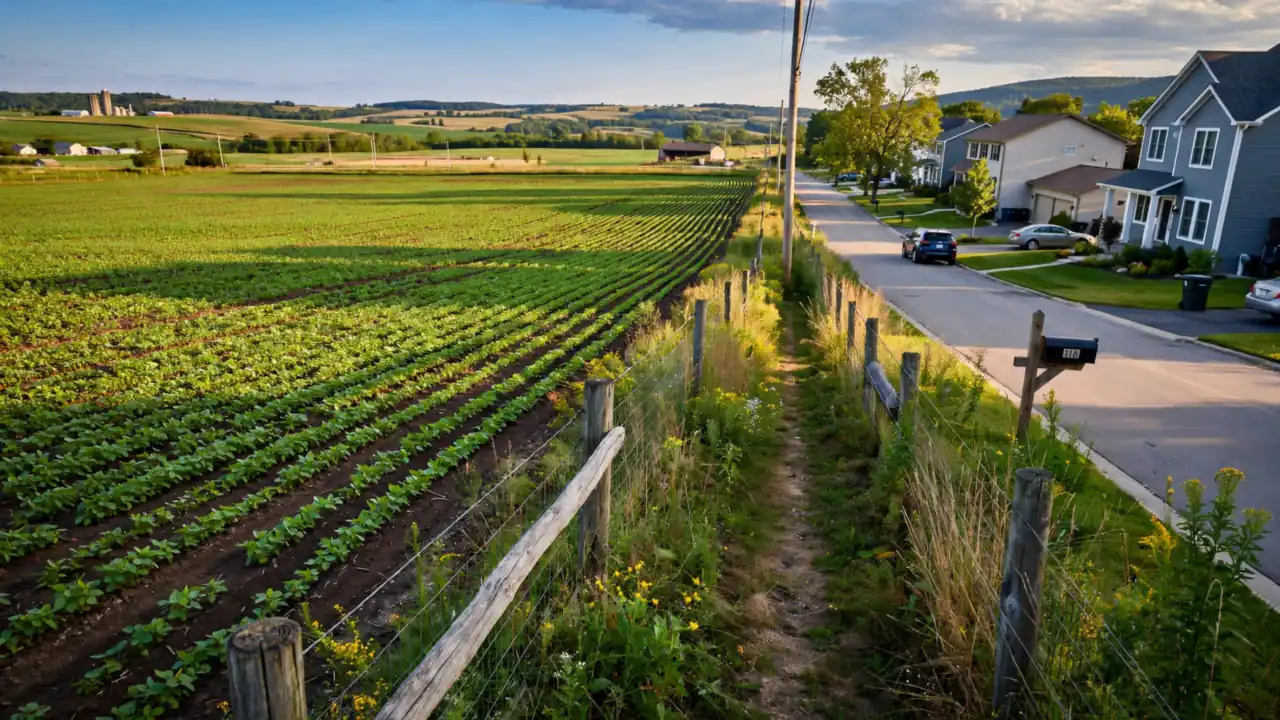
The contrast matters. Agricultural land may allow animals, barns, and wide-open fields, but it may not allow you to split a 20-acre parcel into four homesites. Residential land may allow a home, but it may forbid livestock, a farm stand, or a workshop.
How to Check the Zoning of a Parcel
Checking land zoning is a practical, step-by-step job. Do it before you make an offer if you can, and certainly before you remove contingencies or close.
- Start with the county or city GIS zoning layer. Most counties and cities publish an online geographic information system, or GIS, map. Search for the county name plus zoning map, enter the parcel number or address, and turn on the zoning layer.
- Call the planning or zoning office. Confirm what the map shows, because maps can lag behind recent changes. Ask for the district name, the permitted uses, and whether any variance, conditional use, or violation is on file. Write down the name of the person you speak with and the date.
- Ask for a zoning verification letter. For a small fee, many planning offices will put the zoning, permitted uses, and any known restrictions in writing. Lenders and appraisers often value this letter.
- Read the ordinance for your district. Look up the rules for setbacks, minimum lot size, frontage, height, and dwelling rules, plus accessory buildings, home businesses, and animals.
- Check the overlays. A parcel can sit in a normal district and still be affected by a floodplain overlay, a historic district, an airport noise zone, a hillside rule, or an environmental buffer. Overlays add rules on top of the base zoning.
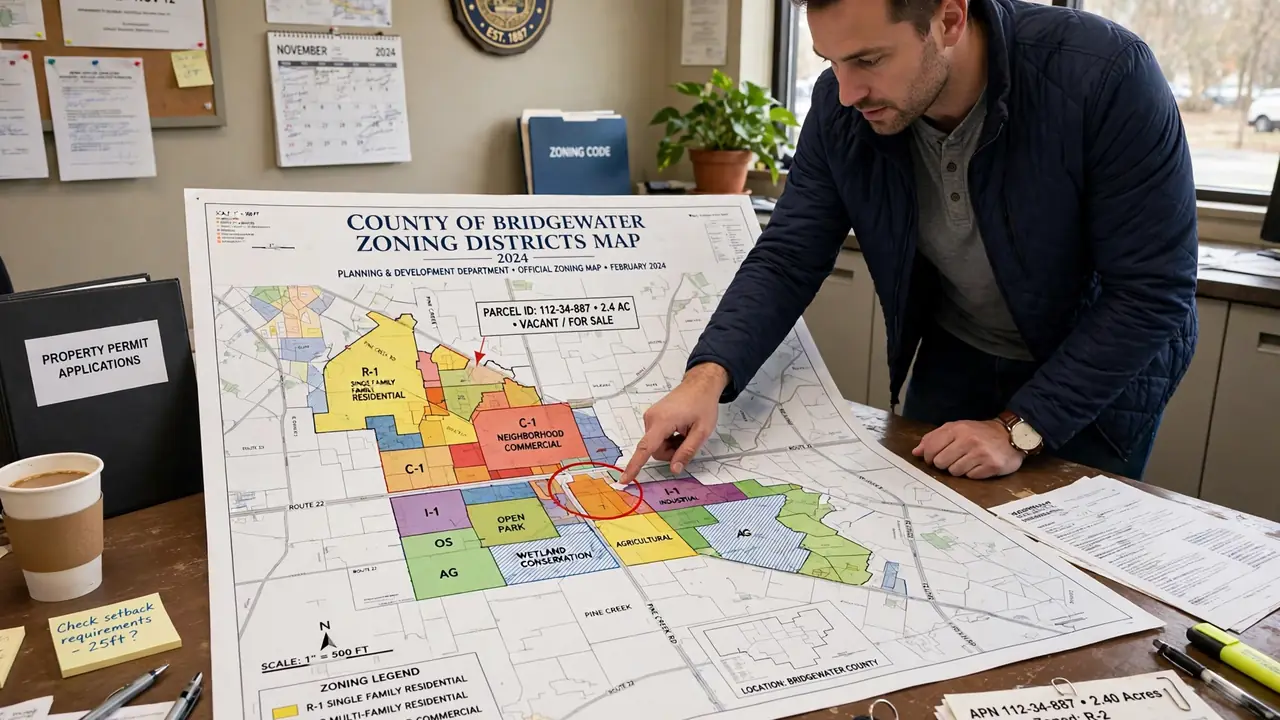
For flood risk specifically, check the official flood maps as part of the overlay step. The FEMA Flood Map Service Center lets you look up a property and see its mapped flood zone, which matters for building, insurance, and lending even when the base zoning looks straightforward.
Keep copies of everything you find: map screenshots, ordinance pages, emails, and the verification letter. If a seller or agent tells you a use is allowed, ask them to point to the ordinance section that allows it.
Zoning Rules That Affect Land Buyers Most
Zoning codes are long, but a handful of rules decide most buying outcomes. Work through this list for any parcel you are serious about.
Minimum lot size and frontage. Many districts require a minimum lot area and a minimum width where the lot meets the road. A parcel that looks large can still fail if it is too narrow, too steep, or split by a stream or easement.
Setbacks. Buildings must sit a set distance back from property lines, roads, and sometimes waterways. On a small or oddly shaped lot, setbacks can leave only a small building envelope.
Single-dwelling rules. Many districts allow only one primary dwelling per lot. A second home, rental unit, or caretaker cottage may need a separate lot or a conditional-use permit, or may not be allowed at all.
Accessory dwellings. Guest houses, garage apartments, and accessory dwelling units are treated differently from place to place. Some districts allow them by right, some only with approval, and some forbid them.
Manufactured and mobile home rules. Some districts allow manufactured homes, some allow them only if they meet age, foundation, and appearance standards, and some forbid mobile homes entirely. Confirm the exact standard in writing before you buy.
Livestock and farm-animal rules. Agricultural districts usually allow animals, but may still set minimum acreage, fencing, and setbacks from neighbors. Residential districts often allow only small pets, or a limited number of chickens with a permit.
Home-business limits. Rules may cover customers visiting the site, employees, signage, parking, outdoor storage, and noise. A business that seems small to you may still need a conditional-use permit or a commercial district.
Subdivision rules. Splitting land is governed by both zoning and subdivision rules. Minimum lot size, road frontage, and access all affect whether a split is possible. If splitting is part of your plan, read our guide to subdividing land alongside the zoning ordinance, and confirm the split with the planning office first.
Can You Change Land Zoning?
Sometimes, yes, but never count on it. Rezoning is a public, political process, not a simple form. You usually apply to the planning office, pay a fee, and present a case for why the new district fits the area plan and neighboring uses. Staff review the application, a planning commission holds a public hearing, and an elected body makes the final decision. Neighbors can support or oppose the change, and the timeline is measured in months, not weeks.
A variance is different from a rezoning. A variance asks for relief from a specific rule, such as a setback or a height limit, because of a hardship tied to the land itself. It does not change the district or allow a prohibited use, and it is not granted simply because a project would be more profitable with it.
A conditional-use permit is the middle path. It lets a use that is listed as conditional in the district go ahead, often with conditions on hours, parking, screening, or size. The golden rule for buyers is simple: never buy land counting on a rezone. Buy based on what the zoning allows today, and treat any future change as a bonus, not as the plan.
Zoning, Your Land Loan, and Your Plans
Lenders verify that the zoning matches the intended use. If you tell a lender you will build a home, but the parcel is zoned only for farming with no dwelling allowed, the loan file has a problem. The lender may require a zoning letter, a different loan product, a larger down payment, or may decline the application.
Appraisers look at zoning too. A parcel that cannot legally be used as the buyer intends may be worth less, or may be compared with a different kind of property. A mismatch between the appraisal, the zoning, and the borrower’s plan can delay closing or change the loan amount.
Fold zoning into your wider due diligence. Work through our land due diligence checklist so zoning sits alongside title, access, utilities, soil, flood risk, and survey checks. When you are still searching, our guide on how to find land for sale can help you shortlist suitable parcels, and you can run the numbers with our land loan calculator once you have a realistic plan and price.
Land Zoning FAQs
How do I find out how land is zoned?
Start with the county or city GIS zoning map, then confirm with the planning or zoning office. For a written record, request a zoning verification letter stating the district, permitted uses, and any overlays or violations on file.
What does agricultural zoning allow?
Agricultural zoning typically allows farming, ranching, barns, and related farm uses, plus one farmhouse per parcel. Exact rules on acreage, animals, farm stands, and extra dwellings vary by county.
Can I build a house on agricultural land?
Often yes, but not always. Many agricultural districts allow one dwelling per parcel if minimum acreage, setbacks, and access rules are met. Some allow no dwelling at all, or only a dwelling tied to farm use.
What is a zoning variance?
A variance is permission to depart from a specific zoning rule, such as a setback, because of a hardship tied to the land itself. It does not rezone the land or allow a prohibited use, and it usually requires a hearing and approval.
Can zoning change after I buy land?
Yes. A city or county can rezone an area, add an overlay, or change its ordinance, although existing lawful uses are often allowed to continue as nonconforming uses. Do not buy on the assumption that a favorable change will happen.
What is the difference between zoning and deed restrictions?
Zoning is a government rule that applies to a district. Deed restrictions, also called covenants, are private rules recorded against a property or subdivision. Both can limit use, and the stricter rule usually controls in practice, so check both.
Does zoning affect land loan approval?
Yes. Lenders check that zoning matches the intended use, because a mismatch can affect value, marketability, and legal use. A parcel zoned for a different use than the one in the loan application may face conditions, a lower appraisal, or denial.
Can I put a mobile home on residential land?
It depends on the district. Some residential districts allow manufactured homes that meet age, foundation, and appearance standards, while others forbid mobile homes entirely. Confirm the exact rule with the planning office before you buy or place a home.
By Jameel Noori, Founder & Developer, Land Loan Calculator
About the author: Jameel Noori is the Founder & Developer of Land Loan Calculator. He writes practical, U.S.-focused guides on land financing, loan math, and buyer strategy.
Reviewed by: Jameel Noori, Founder & Lead Developer of Land Loan Calculator, reviewed this article for accuracy.
Disclaimer: This article is for informational purposes only and is not financial advice. Land loan rates and terms vary by lender, property, and market conditions. Consult a licensed loan professional before making financing decisions.
