
Land Appraisal: How Vacant Land Gets Valued

A vacant land appraisal is a professional opinion of what a piece of undeveloped land is worth in the current market. Unlike a home appraisal, there is no house to inspect — the appraiser values the land itself: its size, shape, location, access, zoning, utilities, and what it could be used for. If you are buying, selling, or borrowing against raw land, the appraisal number is the figure lenders, buyers, and tax authorities will take seriously.
In this guide, you will learn how appraisers value vacant land in 2026: the five valuation methods they use, what they inspect on site, what raises or lowers the value, typical appraisal costs, how to prepare, and — critically for borrowers — how the appraised value affects your land loan approval.

Table of Contents
- What Is a Vacant Land Appraisal?
- Why Does Vacant Land Need an Appraisal?
- How Land Appraisal Differs From a Home Appraisal
- The 5 Methods Appraisers Use to Value Vacant Land
- 1. Sales Comparison Approach (the primary method)
- 2. Income Capitalization Approach
- 3. Cost Approach (with extraction and allocation)
- 4. Subdivision Development Method (residual method)
- 5. What Appraisers Do When There Are No Comps
- Highest and Best Use: The Foundation of Every Appraisal
- What Appraisers Actually Look At: Value Factors
- Physical factors
- Legal factors
- Location and access
- Utilities and environmental factors
- Water and mineral rights
- The Land Appraisal Process, Step by Step
- How Much Does a Vacant Land Appraisal Cost in 2026?
- Land Appraisal and Your Loan Approval: What Borrowers Must Know
- Lender Appraisal vs. Private Appraisal
- How to Prepare Your Land for an Appraisal
- 10 Things That Lower a Land Appraisal Value
- What to Do If Your Appraisal Comes Back Low
- Land Appraisal vs. Tax Assessment vs. Land Survey
- How Long Is a Land Appraisal Valid?
- How to Choose a Land Appraiser
- Frequently Asked Questions (FAQs)
- How much does a land appraisal cost?
- How long does a land appraisal take?
- Is a land appraisal required for a land loan?
- What happens if the land appraisal comes in lower than the purchase price?
- Can I use a tax assessment instead of an appraisal for a loan?
- Is a land appraisal the same as a land survey?
- How long is a land appraisal good for?
- Can I dispute a land appraisal?
What Is a Vacant Land Appraisal?
A vacant land appraisal is an independent, expert estimate of a parcel’s market value — the price it would most likely sell for between a willing buyer and a willing seller, assuming both are informed and under no pressure to act. Appraisals are performed by licensed or certified real estate appraisers who follow the Uniform Standards of Professional Appraisal Practice (USPAP), the national rulebook set by the Appraisal Foundation.
The finished product is a written appraisal report (usually 15–25 pages) documenting the property, the appraiser’s research, the methods used, comparable sales, and a final reconciled value opinion. Lenders treat it as the authoritative value of the collateral — it is not a negotiation starting point.
Why Does Vacant Land Need an Appraisal?
There are five common reasons a vacant parcel gets appraised:
- Buying: confirms you are not overpaying, and gives you leverage if the number comes in below the asking price.
- Selling: supports a realistic listing price so the parcel does not sit unsold for months.
- Getting a land loan: nearly all lenders require an appraisal before funding. The appraised value — not the purchase price — caps the loan amount. See our guide on land loan requirements for how the appraisal fits into underwriting.
- Tax purposes: property tax appeals, estate settlement, and charitable donations of land (the IRS requires a qualified appraisal for donated-property deductions above $5,000).
- Investment analysis: tells investors what a parcel is truly worth before they commit capital.
How Land Appraisal Differs From a Home Appraisal
Appraising empty land is a different discipline from appraising a house. With a home, the appraiser anchors the value to the structure — square footage, bedrooms, condition, upgrades — and adjusts from there. With vacant land there is no building, so value comes from what the land is and what it can become:
- Fewer comparable sales: homes turn over constantly; rural parcels can sell rarely, so finding recent, similar sales takes more research.
- Highest and best use dominates: the same 10 acres could be a homesite, a farm field, or a future subdivision — each with a different value.
- Physical and legal attributes carry the weight: topography, soil quality, road frontage, zoning, utilities, and easements replace “kitchen condition” and “bathroom count” as the value drivers.
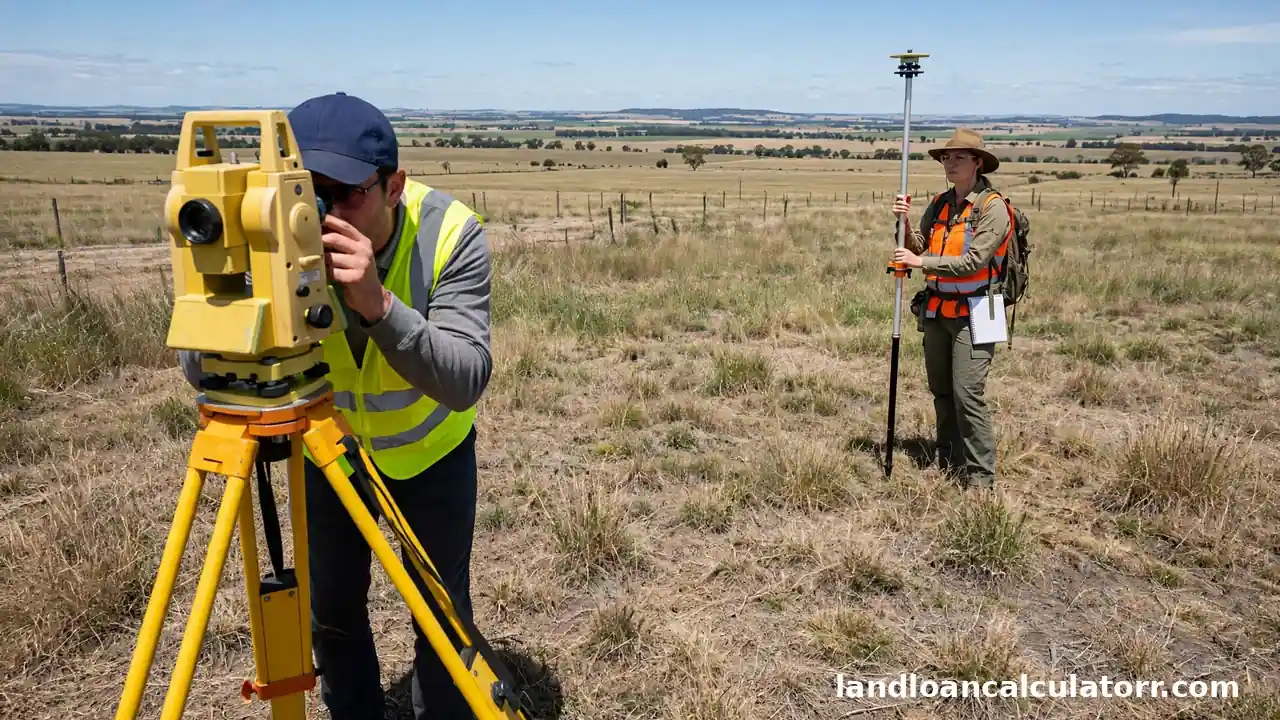
The 5 Methods Appraisers Use to Value Vacant Land
Appraisers choose from several recognized valuation methods, and often cross-check with more than one. Here are the five that matter for vacant land:
1. Sales Comparison Approach (the primary method)
This is the workhorse of land valuation. The appraiser finds recent sales of similar parcels (comparables or “comps”) and adjusts their sale prices for differences from your property. Adjustments cover location, acreage, shape, topography, zoning, road access, utilities, and sale date. Sales are usually normalized to a price per acre or price per square foot so parcels of different sizes can be compared. After adjusting each comp, the appraiser reconciles them into a single value opinion. This method dominates whenever decent comps exist.
2. Income Capitalization Approach
Used for land that produces income — farmland, timberland, or parcels leased for agriculture, hunting, or billboards. The appraiser projects the land’s net operating income and converts it to value with a capitalization rate (value = income ÷ cap rate). If comparable farmland leases for $150 per acre per year and the market cap rate is 4%, the indicated value is about $3,750 per acre. Farm and recreational buyers should read our recreational land loans guide for how income-producing land is financed.
3. Cost Approach (with extraction and allocation)
The cost approach is less useful for raw land on its own, but it supports two techniques appraisers rely on when pure land comps are scarce:
- Extraction: the appraiser takes a sale of an improved property, subtracts the depreciated cost of its buildings, and isolates the land value left over.
- Allocation: the appraiser applies a known land-to-total-property-value ratio from the market (for example, land typically represents 25% of total value in an area) to estimate the land’s share of an improved sale.
4. Subdivision Development Method (residual method)
When the land’s best use is development — say, a 40-acre parcel suitable for a housing subdivision — the appraiser works backward: estimate the gross sellout value of the finished lots, then subtract development costs, marketing costs, profit margin, and time discount. What remains is the residual land value. This is how developers and lenders value land with serious development upside.
5. What Appraisers Do When There Are No Comps
In rural or unique markets, there may be no recent sales of anything similar. Appraisers then widen the search: older sales adjusted for market change, comps from a wider radius, pending sales and listings (used as supporting evidence, not primary value), and the income or residual methods above. A lender-facing appraisal with thin comps simply takes longer — which is one reason rural land purchases can take weeks to close. See how long land loan approval takes for the full timeline.
Highest and Best Use: The Foundation of Every Appraisal
Before applying any method, the appraiser determines the property’s highest and best use — the reasonably probable use that produces the highest value. It must pass four tests:
- Legally permissible: allowed by zoning, land-use regulations, and deed restrictions.
- Physically possible: the land’s size, shape, topography, and soil can support it.
- Financially feasible: it can generate a reasonable return or utility.
- Maximally productive: of all feasible uses, it produces the greatest value.
The analysis considers the land as vacant and, where relevant, as an interim use (for example, farmed now while awaiting development). This is why two identical-looking parcels can appraise very differently: one is zoned for single-family homes, the other for agriculture only.
What Appraisers Actually Look At: Value Factors
Physical factors
- Size: value per acre typically declines as parcels get larger — the first acre is worth more per unit than the fiftieth.
- Shape: regular, rectangular parcels are most usable; odd or narrow shapes (flag lots, triangles) are discounted.
- Topography and terrain: flat, buildable land beats steep slopes, ravines, or rocky ground.
- Soil quality and percolation: fertile soil matters for farmland; a passing perc test matters anywhere a septic system is needed. A failed perc test can crush value because the land cannot support a home.
Legal factors
- Zoning and land-use rules: what the parcel can be used for today — and whether rezoning is plausible.
- Easements and deed restrictions: a utility easement, access easement for a neighbor, or restrictive covenants can limit use and value.
- Title and legal access: a landlocked parcel with no legal road access is worth dramatically less; check the title report and survey before you buy.
Location and access
Proximity to roads, highways, towns, schools, and employment centers — and whether the parcel sits in a growth corridor — drives demand. Road frontage (how many feet touch a public road) is separately measured; more frontage means easier access and subdivision potential.
Utilities and environmental factors
- Utilities on or near the site: water, sewer, and electric at the property line can save tens of thousands in extension costs.
- Wetlands and flood zones: federally protected wetlands restrict development, and FEMA flood-zone designation adds insurance costs and risk.
- Contamination: a prior industrial or agricultural chemical use can trigger a Phase I environmental site assessment; contamination destroys value.
Water and mineral rights
In many western states, water rights (riparian vs. prior appropriation regimes) and mineral, oil, gas, or timber rights are severable from the land and carry real value. An appraisal should state exactly which rights convey with the parcel — a parcel stripped of its mineral rights can appraise far lower than one with them intact.

The Land Appraisal Process, Step by Step
- Engagement and document gathering (1–2 days): the appraiser collects the deed, legal description, survey, title report, zoning documentation, tax records, soil or perc test results, and any environmental reports.
- Site visit (1–3 hours): the appraiser walks the property, photographs it, notes topography, access, utilities, and surroundings. Field visits are standard for land; drive-by or desk appraisals (using GIS, satellite imagery, and tax data) are cheaper but most land lenders require an on-site inspection.
- Research and analysis (several days): comp research, highest-and-best-use analysis, method application, and adjustments.
- Report delivery (7–21 days total): the written report with the reconciled value opinion goes to the client — typically the lender in a loan transaction.
How Much Does a Vacant Land Appraisal Cost in 2026?
Typical 2026 ranges in the U.S.:
- Residential lot or small parcel: roughly $300–$600
- Rural or agricultural land: roughly $750–$3,000, depending on size, complexity, and travel distance
- Commercial, large acreage, or specialized parcels: $2,000–$5,000+
Cost drivers include parcel size, how remote the land is, the scarcity of comps, and whether special analysis (subdivision development method, environmental review) is needed. The buyer or borrower usually pays — in a loan transaction the appraisal fee is typically part of closing costs. For the full picture of what you pay at settlement, see our breakdown of land closing costs. Note that lenders order their own appraisal; an appraisal you commissioned independently for your own information is rarely accepted for underwriting.
Land Appraisal and Your Loan Approval: What Borrowers Must Know
This is the part that surprises first-time land buyers. In a land loan, the lender lends against the appraised value, not the purchase price. If you agree to buy 10 acres for $100,000 but the appraisal comes in at $85,000, and the lender’s maximum loan-to-value (LTV) is 80%, you can borrow $68,000 — not $80,000. You must either:
- Make up the difference in cash (the “appraisal gap”) at closing,
- Renegotiate the price with the seller, or
- Walk away — if your contract has an appraisal contingency.
That is why an appraisal contingency clause is essential in your purchase contract. Also note: because land lenders take more risk than home lenders, they usually require a full field appraisal (not a desktop valuation) and may order a review appraisal second opinion on larger loans. Your land loan rate and terms are set only after the appraised value is final.
Lender Appraisal vs. Private Appraisal
- Lender-ordered appraisal: protects the lender’s collateral position. The lender chooses the appraiser, manages the process, and uses the report for underwriting. Required for almost every land loan.
- Private appraisal: commissioned by a buyer or seller for decision-making — setting a listing price, negotiating, estate planning, or tax filings. More flexible in scope and cheaper (a restricted-use report costs less than a full lender report), but a lender will not accept it in place of its own.
How to Prepare Your Land for an Appraisal
You cannot inflate value, but you can make sure the appraiser sees the property at its best:
- Provide documents upfront: deed, survey, title report, zoning letter, perc test results, well/septic records, and any environmental clearances. An appraiser who has to hunt for documents bills for the time.
- Ensure access: unlock gates, clear paths, and mark boundary lines so the inspection is not cut short.
- Highlight development potential: point out utility locations, recent nearby improvements, approved permits, and any relevant plans — without telling the appraiser what value to reach.
- Research comps yourself: knowing recent nearby sales helps you discuss the report intelligently afterward.
10 Things That Lower a Land Appraisal Value
- Failed perc test: if the soil cannot support a septic system, residential use — and value — collapses.
- Landlocked with no legal access: no road frontage and no recorded access easement.
- Restrictive zoning: agricultural-only or conservation zoning where buyers wanted homesites.
- Wetlands or flood-zone designation: limits buildable area and adds insurance cost.
- Contamination or environmental flags: prior chemical, fuel, or industrial use.
- Steep slopes or severe terrain: little flat, buildable area.
- Missing utilities: no water, sewer, or electric within economical reach.
- Heavy easements: power lines, pipelines, or access easements that shrink usable area.
- Clouded title: boundary disputes or unresolved liens.
- Overly large, remote parcels with no comps: scarcity of sales plus distance discounts.
What to Do If Your Appraisal Comes Back Low
A low appraisal is a data point, not a verdict. Your options:
- Request a reconsideration of value (ROV): submit better comparable sales the appraiser may have missed, with evidence they are truly comparable. Lenders have a formal ROV process.
- Order a second appraisal: you can hire your own appraiser for a second opinion — though the lender is not obligated to use it.
- Renegotiate: ask the seller to lower the price to the appraised value. Sellers often agree, since the next buyer’s lender will see the same number.
- Increase your down payment: cover the gap in cash if the deal still makes sense.
- Dispute genuine errors: if the report has factual mistakes (wrong acreage, missed road frontage, incorrect zoning), document them and ask for a correction.
Land Appraisal vs. Tax Assessment vs. Land Survey
Buyers confuse these three constantly:
- Appraisal: a licensed professional’s opinion of market value, usually for lending or a transaction. The Consumer Financial Protection Bureau explains how appraisals differ from inspections and why lenders rely on them.
- Tax assessment: the county’s value used to compute property taxes — often below market value, and not a substitute for an appraisal. See our guide to how much land you can afford for how taxes feed into ownership cost.
- Survey: measures and maps the property’s boundaries, acreage, and encroachments — it locates the land but does not value it. Typical pricing is covered in our land survey cost guide.
How Long Is a Land Appraisal Valid?
Most lenders consider a land appraisal valid for 6–12 months. If the market moves sharply or the transaction stalls beyond that window, the lender can require an update or a new appraisal — at your cost. A market shift, new zoning decision, or a nearby infrastructure project can all trigger re-appraisal.
How to Choose a Land Appraiser
- License and certification: verify the appraiser is licensed or certified in the state where the land sits, and experienced with vacant land specifically — residential home appraisers without land experience routinely undervalue rural parcels.
- USPAP compliance: ask whether reports follow USPAP standards (they should).
- Local market knowledge: rural land values are hyper-local; an appraiser from three counties away may miss the right comps.
- Questions to ask: How many vacant-land appraisals have you done this year? What approach will you emphasize for my parcel type? What is the turnaround time and fee? Can you share a redacted sample report?
To estimate what the loan on your parcel might cost once the appraised value is in, run the numbers with our vacant land loan calculator.
Frequently Asked Questions (FAQs)
How much does a land appraisal cost?
A vacant land appraisal typically costs $300–$600 for a residential lot and $750–$3,000+ for rural or agricultural parcels in 2026. Commercial land and complex rural tracts can exceed $5,000. The buyer or borrower usually pays as part of closing costs.
How long does a land appraisal take?
Expect 7–21 days total: a 1–3 hour site visit, several days of comp research and analysis, and report preparation. Rural parcels with scarce comparable sales can take longer — which can extend the loan timeline.
Is a land appraisal required for a land loan?
Yes, in almost every case. Land lenders order their own appraisal to verify the collateral value before funding. Federal rules require appraisals for most federally related transactions above the federal thresholds (currently $400,000 for residential and $500,000 for commercial transactions), but land lenders typically require one regardless of loan size because land is higher-risk collateral.
What happens if the land appraisal comes in lower than the purchase price?
The lender will only lend against the appraised value, not the purchase price. You can pay the difference in cash, ask the seller to lower the price, request a reconsideration of value with better comps, or exit the deal if your contract includes an appraisal contingency.
Can I use a tax assessment instead of an appraisal for a loan?
No. A county tax assessment is for calculating property taxes and is often below market value. Lenders require an independent appraisal performed to USPAP standards by a licensed appraiser.
Is a land appraisal the same as a land survey?
No. An appraisal estimates market value; a survey maps boundaries, acreage, and encroachments. Lenders commonly require both — the appraisal values the land, the survey proves what you are buying.
How long is a land appraisal good for?
Most lenders accept an appraisal for 6–12 months. After that — or if market conditions change significantly — the lender may require an update or a new appraisal before closing.
Can I dispute a land appraisal?
Yes. You can request a reconsideration of value through your lender by submitting better comparable sales or correcting factual errors in the report. You can also order your own second appraisal, though the lender is not required to use it.
By Jameel Noori, Founder & Developer, Land Loan Calculator
About the author: Jameel Noori is the Founder & Developer of Land Loan Calculator. He writes practical, U.S.-focused guides on land financing, loan math, and buyer strategy.
Reviewed by: Jameel Noori, Founder & Lead Developer of Land Loan Calculator, reviewed this article for accuracy.
Disclaimer: This article is for informational purposes only and is not financial advice. Land loan rates and terms vary by lender, property, and market conditions. Consult a licensed loan professional before making financing decisions.
