
Timberland Loans: Financing Forest & Timber Land

Short answer: A timberland loan is a land loan secured by forest land, and most lenders want 25–50% down, charge 7–10% interest from traditional farm lenders (higher from private lenders), and underwrite both the bare land and the standing timber. Because timber takes years to mature, expect longer terms (10–25 years) and careful scrutiny of timber value, access, and harvest plans. This guide walks through how these loans work, what they cost, and how to qualify.
Table of Contents
What Is a Timberland Loan?
A timberland loan is a financing product used to buy or refinance forest and timber land — parcels whose value comes partly from the soil and partly from the trees growing on it. Unlike a residential mortgage, the collateral includes a living, marketable asset (merchantable timber) that can be harvested and sold to service the debt.
Timberland loans are commonly used for:
- Buying wooded acreage as a long-term investment
- Acquiring land for commercial forestry operations (pulpwood, sawlogs, biomass)
- Refinancing an existing timber tract to free up cash
- Dual-purpose properties — timber plus recreational land (hunting, fishing, cabin use)
- 1031 exchanges from one timber property into another (see our 1031 exchange for land guide)
The U.S. has roughly 765 million acres of forestland, and private owners hold a large share of commercial timberland — making timber financing a distinct niche within farm and land lending.
How Timberland Loans Differ from Regular Land Loans
On a standard land loan, the lender underwrites bare dirt plus comparable sales. On a timberland loan, three extra layers enter the picture:
- Timber valuation: A timber cruise (forest inventory survey) estimates merchantable volume by species and product class. This value is added to the land’s “bare” value.
- Harvest timing: Lenders match loan terms to realistic harvest schedules — a 15-year-old loblolly pine stand in the U.S. South may be thinned in 3–5 years and clearcut later.
- Collateral rules: Many timber lenders prohibit harvesting without approval, because cut timber is literally the collateral walking off the property. Some private lenders (e.g., Damen Capital) explicitly require borrowers to route timber-sale proceeds against the loan balance.
- Longer growth cycles: Hardwood stands in the Northeast or Midwest can take 40–80 years to fully mature, so lenders favor amortizing terms over short bridge loans.
These differences explain why few conventional banks offer timberland loans — most lending comes from the Farm Credit System, rural banks with forestry desks, and specialized private lenders.
Typical Timberland Loan Terms
Terms vary by lender and region, but 2026 market norms look like this:
- Down payment: 25–50% of the appraised value (higher for remote or poorly stocked tracts). Farm Credit lenders often lend around 65–70% LTV on well-stocked tracts; private lenders typically cap at 50–65%.
- Interest rates: 7–10% at institutional ag lenders (Farm Credit, rural banks); 12–16% at private/hard-money lenders, often interest-only for 12–24 months.
- Terms: 10–25 years amortizing at institutional lenders; 1–3 years at private lenders (bridge-style).
- Loan minimums: institutional lenders often start around $50,000–$200,000; private land-investor lenders fund as little as $30,000.
- Fees: origination 1–2%, appraisal, and sometimes an exit fee on private loans.
Before you apply, review the general land loan requirements — credit, income documentation, and down-payment expectations follow similar patterns.
How Lenders Value Timberland
Timberland appraisal has two components: the bare land value and the timber value.
Bare Land Value
Appraisers use comparable sales of similar wooded tracts in the county, adjusted for soil quality, topography, road access, and distance to mills. Remote tracts without deeded access are discounted heavily — some lenders won’t finance them at all.
The Timber Cruise
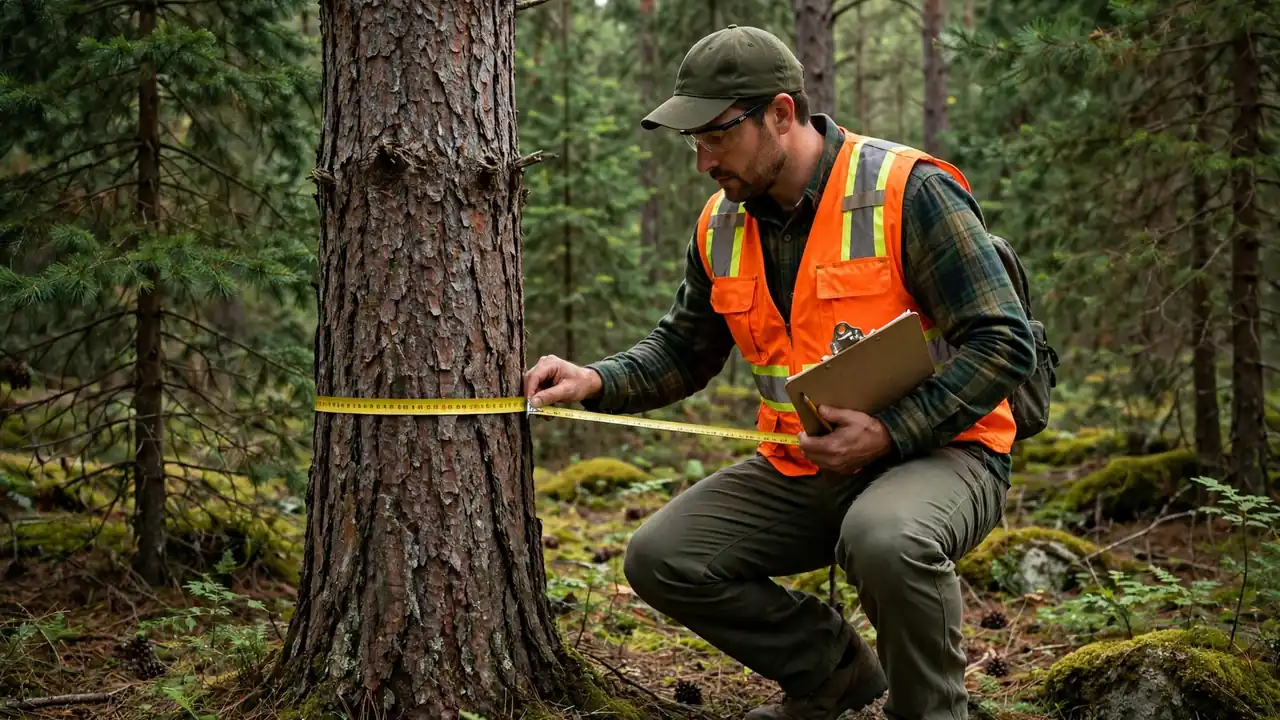
A licensed forester walks the tract and measures a sample of trees, producing an estimate of:
- Species mix (pine vs. hardwood, and product classes: pulpwood, chip-n-saw, sawlogs)
- Volume in tons or board feet
- Age classes and growth stage (seedling, sapling, poletimber, sawtimber)
- Current stumpage prices in the local market
Harvest Income Projections
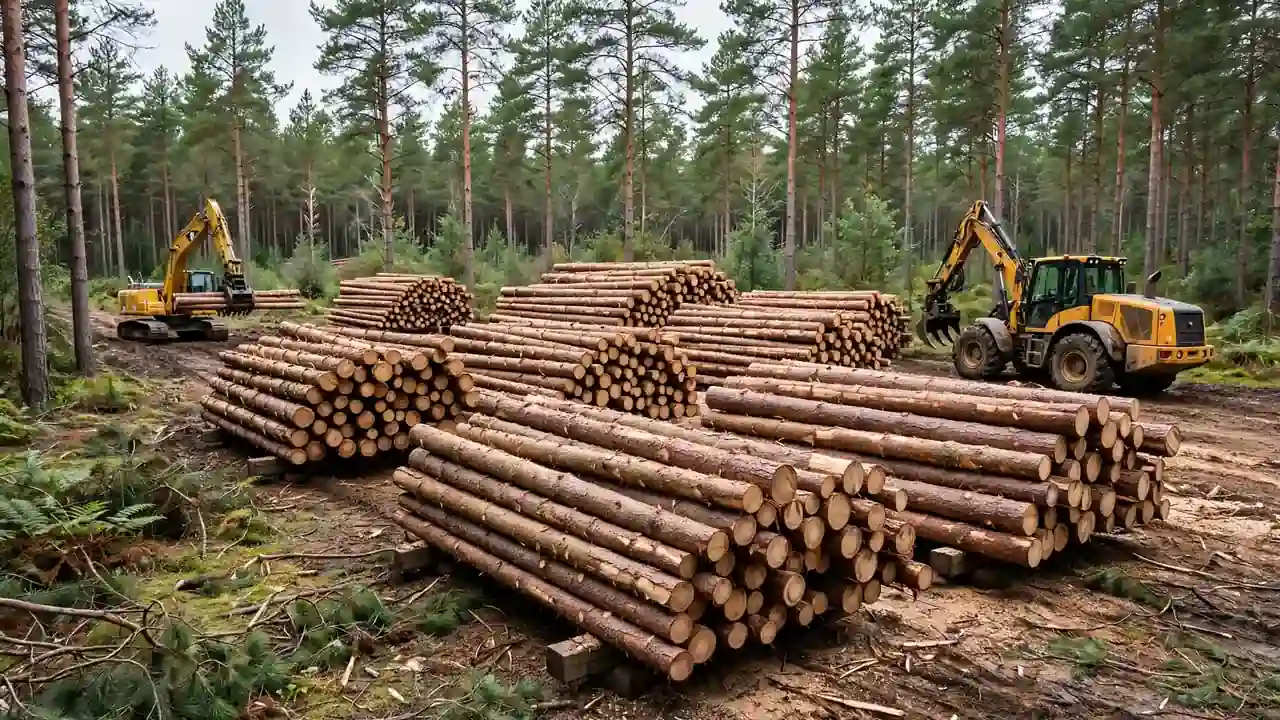
Institutional lenders project realistic harvest schedules — thinnings, partial cuts, or final harvest — and discount that cash flow against the loan. A tract with mature, merchantable timber can support a larger loan than bare cutover land, because the borrower can generate income to service debt.
Types of Timberland Financing
Timberland Purchase Loans
The standard product: a first-lien loan to buy forest land, typically amortized over 10–25 years at a Farm Credit institution or rural bank.
Refinancing
Owners refinance to lower their rate, pull out equity for equipment or land improvements, or restructure around a planned harvest.
Operating Lines of Credit
Specialized forestry lenders (such as Farm Plus Financial) offer lines of credit for reforestation, road building, fire lanes, site preparation, and other forestry work — useful between harvests when cash flow is thin.
USDA and Government-Backed Programs
The USDA runs programs relevant to forestry borrowers: Farm Service Agency (FSA) farm ownership loans can finance timberland as part of a farm, and the Timber Production Expansion Guaranteed Loan Program (TPEP) guarantees loans for sawmills and wood-processing facilities (see the USDA Forest Service for forestry programs). Compare federal vs. private options in our USDA loans vs. land loans breakdown.
Where to Get a Timberland Loan
- Farm Credit System institutions (e.g., regional Farm Credit associations) — the most common source; licensed foresters on staff, competitive rates, 10–30 year terms.
- Rural community banks with agricultural lending desks — good for local tracts where the bank knows the market.
- Specialized private lenders (e.g., Farm Plus Financial, Damen Capital) — faster closes (as little as 7 days), smaller minimums, but higher rates and lower LTVs.
- Seller financing — common in rural markets; the seller acts as lender, often with flexible down payments.
Expect closing costs on top of the down payment: appraisal/cruise fees, title search, survey, and recording fees typically add 2–5% of the purchase price.
Qualification Requirements
- Credit score: 680+ preferred at institutional lenders; private lenders are more flexible but price for risk.
- Down payment: 25–50% in cash (some private lenders reach 100% financing with cross-collateral — pledging another free-and-clear property).
- Debt-to-income ratio: generally under 40–45% including the new payment.
- Forestry experience or a forester on retainer: not always required, but it strengthens applications — lenders want to know the timber will be managed, not strip-cut.
- A realistic management plan: harvest schedule, reforestation commitments, and income projections.
- Property criteria: most lenders require legal deeded access, and many exclude tracts that are mostly wetland or flood zone.
What Does a Timberland Loan Cost? Worked Example
Here is a realistic payment example for a $300,000 timberland purchase with 40% down ($120,000), financed at 8% over 15 years:
- Loan amount: $180,000
- Monthly payment: $1,720.17
- Total interest over 15 years: $129,631.28
- Total cost: $309,631.28 in loan payments plus your $120,000 down payment
A single thinning or partial harvest on a well-stocked southern pine tract can yield $50,000–$150,000+, which is why many buyers plan a harvest early in the loan term to pay down principal aggressively. Model your own numbers with our land loan calculator before making an offer.
Taxes and Insurance Considerations
- Timber sale taxes: Income from timber harvests is generally taxed as capital gains (not ordinary income) when the owner has held the timber for more than one year — a meaningful advantage over many other income types. The IRS also allows a depletion allowance that reduces taxable timber income.
- Property taxes: Many states offer forestry or “current use” tax programs that assess timberland at its timber-growing value rather than market value — cutting annual taxes substantially, but usually requiring a commitment to keep the land in forestry.
- Insurance: Lenders rarely require it, but timber fire and casualty insurance exists; in high fire-risk regions (parts of the West and Southeast), price it into your annual costs.
- Conservation programs: USDA programs such as CRP, EQIP, and conservation easements can pay for reforestation, wildlife habitat, and stream buffers — offsetting management costs.
Tax treatment of timber is technical — confirm specifics with a CPA experienced in forestry before you buy.
Risks to Understand Before Borrowing
- Price volatility: Stumpage prices swing with housing demand and mill capacity. A harvest planned for this year may pay 20–30% less than last year’s estimate.
- Fire, storms, and pests: A wildfire or hurricane can destroy the very collateral securing your loan. Southern pine beetle and other pests can devalue stands quickly.
- Long, illiquid cycles: Young stands produce no income for years. Make sure you can service the debt from other income — not projected harvests.
- Access and market risk: A tract 60 miles from the nearest mill is worth less per ton than one 10 miles away; haul costs eat into every harvest.
- Regulatory changes: Endangered-species restrictions, wetland rules, and county harvest ordinances can limit what you cut and when.
How to Apply: Step-by-Step
- Get pre-qualified — know your budget and down payment before touring tracts.
- Find the tract — work with a rural land broker; verify deeded access and boundaries.
- Order a timber cruise — hire an independent licensed forester (independent of the seller) to inventory the timber.
- Check zoning, wetlands, and flood maps — most timber lenders exclude flood-prone or wetland-dominant tracts.
- Apply to 2–3 lenders — at least one Farm Credit institution and one alternative, to compare rates and terms.
- Complete appraisal and underwriting — typically 30–60 days at institutional lenders, as little as 7–14 days at private lenders.
- Close and record — budget for land closing costs, then record the deed and any conservation or management-plan filings.
Frequently Asked Questions (FAQs)
What credit score do I need for a timberland loan?
Most institutional lenders (Farm Credit, rural banks) prefer scores of 680 or higher. Private lenders may work with lower scores but typically charge higher rates and require larger down payments.
How much down payment is needed for timberland?
Expect 25–50% down at most lenders. Well-stocked tracts with mature merchantable timber may qualify for lower down payments; bare cutover or remote tracts require more equity.
What is a timber cruise, and do I need one?
A timber cruise is a professional forest inventory measuring tree species, volume, and value. Most timber lenders require one (or commission their own) because standing timber is part of the collateral.
Can I harvest timber while I have a loan on the land?
Usually yes — but with conditions. Many lenders require prior approval for any harvest and may direct timber-sale proceeds against the loan balance, since the timber secures the loan.
Are timberland loan rates higher than regular land loan rates?
At Farm Credit institutions and rural banks, rates are comparable to other land loans (roughly 7–10% in 2026). Private and hard-money timber lenders charge more (12–16%), typically interest-only with 1–3 year terms.
Can you get a USDA loan for timberland?
Possibly. FSA farm ownership loans can finance timberland as part of a farm operation, and USDA’s Timber Production Expansion Guaranteed Loan Program supports sawmills and wood-processing facilities. Check current eligibility with your local USDA office.
How is timber income taxed?
Timber sale income held over a year is generally taxed as capital gains rather than ordinary income, and owners can claim a depletion allowance. Confirm your situation with a forestry-savvy CPA.
How long does it take to close a timberland loan?
Institutional lenders typically take 30–60 days (timber appraisal takes time). Specialized private lenders can close in 7–14 days, at higher cost.
