

How Escrow Works on a Land Purchase

Escrow in a land purchase is a neutral, third-party process in which an escrow officer or title company holds the buyer’s earnest money and the transaction documents until every condition in the purchase agreement is met. Only when title is clear, contingencies are removed, and financing is ready does escrow release the funds, record the deed, and transfer ownership of the land to the buyer. For financed land purchases, escrow typically takes 30 to 45 days; all-cash purchases can close in as little as 7 to 21 days.
Buying land feels different from buying a house — there is no building to inspect, and the value sits in the soil, the survey lines, the zoning, and the road access. That is exactly why escrow matters for land buyers. It keeps your deposit safe while you verify that the parcel is really what the seller claims it is, and it keeps the seller protected until your money is actually in hand. This guide walks through every stage of land purchase escrow, what it costs, who does what, and what can go wrong.
- What Is Escrow in a Land Purchase?
- How Escrow Works on a Land Purchase, Step by Step
- Who Is Involved in a Land Escrow?
- Earnest Money in a Land Purchase
- Land-Specific Due Diligence During Escrow
- How Long Does Escrow Take on Land?
- How Much Does Escrow Cost?
- Escrow vs. Title Company vs. Closing Attorney
- What Happens If Escrow Falls Through?
- Escrow After Closing: Your Mortgage Escrow Account
- Land Escrow Checklist for Buyers
- Frequently Asked Questions (FAQs)
What Is Escrow in a Land Purchase?
Escrow is an arrangement where a neutral third party — usually an escrow company, a title company, or in some states a closing attorney — holds money and documents on behalf of the buyer and seller until the purchase agreement’s conditions are satisfied. Neither side can access the funds early, and the escrow holder follows only the written instructions both parties signed.
For land, escrow plays a bigger protective role than many buyers expect. A house purchase has an appraisal and a home inspection that catch most problems. A vacant parcel’s problems hide in public records: an old lien, an unclear boundary, a missing easement for road access, or zoning that forbids the home you plan to build. Escrow gives you a protected window to uncover those issues before your money becomes the seller’s money.
Two meanings of “escrow” buyers should not confuse
Land buyers meet the word escrow twice, and they are two different accounts:
- Purchase escrow (transaction escrow): the temporary account that holds your earnest money and closing funds from contract to closing day. This guide is mainly about this one.
- Mortgage escrow account: the long-term account your lender or servicer keeps after closing, collecting a slice of each monthly payment to pay property taxes and insurance on your behalf. The Consumer Financial Protection Bureau explains how this account works and why lenders require it.
How Escrow Works on a Land Purchase, Step by Step
Step 1 — Offer accepted and escrow opens
Escrow opens when the buyer and seller sign the purchase agreement and deliver it to the escrow or title company. The escrow officer creates a file, assigns an escrow number, and uses the contract as the binding instructions for the whole transaction. The officer then orders a preliminary title report and sends opening documents to both sides.
Step 2 — Deposit earnest money
Within the deadline in the contract — often 1 to 3 business days after acceptance — the buyer deposits earnest money into the escrow trust account. The funds sit in trust and are later credited toward the down payment and closing costs. If the buyer cancels inside an active contingency period, the money generally comes back; if the buyer walks away after contingencies are removed, the seller may keep it, depending on the contract.
Step 3 — Title search and preliminary report
The title company researches the property’s ownership history and prepares a preliminary title report. It lists the legal owner, recorded liens, easements, mineral-rights reservations, and any other matters affecting the parcel. Reviewing this report is the buyer’s chance to spot title defects early, while there is still time to cure them or cancel.
Step 4 — Due diligence and inspections
During escrow, the buyer completes the investigations the contract allows: survey, zoning confirmation, access and easement checks, utility availability, perc test for septic, flood-zone status, and appraisal. Land due diligence deserves more attention than a house inspection because problems like no legal road access or an unbuildable lot are expensive to fix after closing. See the land due diligence checklist.
Step 5 — Loan processing and appraisal
If the purchase is financed, the lender orders an appraisal to confirm the parcel’s value supports the loan amount, and underwriting reviews the buyer’s documents. Land loans often take longer to underwrite than home mortgages because fewer comparable sales exist, so the financing contingency deadline in a land contract deserves extra room. See land loan requirements and land loan pre-approval.
Step 6 — Contingency removal
Once the buyer is satisfied with the title report, inspections, appraisal, and financing, they sign a written contingency removal. This is the point of no return in most contracts: after contingencies are removed, backing out usually costs the earnest money. Never let a contingency deadline pass without understanding what you are giving up — ask the escrow officer or your agent before signing.
Step 7 — Closing, recording, and disbursement
At closing, the buyer signs the loan documents and wires the remaining funds, the seller signs the deed, and the escrow officer prepares the settlement statement. The deed is recorded with the county, ownership officially transfers, and escrow disburses the funds: seller proceeds, loan payoff if any, commissions, and recording fees. The buyer leaves closing as the recorded owner of the land.
Who Is Involved in a Land Escrow?

- Buyer: deposits earnest money, orders inspections, secures financing, reviews disclosures, and removes contingencies by the contract deadlines.
- Seller: provides disclosures and documents, clears title issues, and signs the deed at closing.
- Escrow officer: receives and holds funds, prepares settlement statements, coordinates payoffs and recording, and disburses money at closing.
- Title company: issues the preliminary title report, resolves title defects, and issues title insurance policies at close.
- Lender: orders the appraisal, clears underwriting conditions, and funds the loan at closing.
- Real estate agent or attorney: negotiates terms, tracks contingency deadlines, and reviews documents — especially important for land, where contract details vary widely by state.
Earnest Money in a Land Purchase
Earnest money on land typically ranges from 1% to 3% of the purchase price, though the exact amount is negotiable and set in the purchase agreement. On a $100,000 parcel, that means roughly $1,000 to $3,000 held in escrow. The deposit shows the seller the buyer is serious, and it is credited toward the purchase at closing.
Three rules protect buyers:
- The money must go into the escrow trust account — never directly to the seller.
- The contract should state exactly when the deposit becomes non-refundable.
- If a contingency fails — bad title, failed perc test, denied financing — the buyer can usually cancel and recover the deposit, as long as cancellation happens inside the contingency period and in writing.
For seller-financed land deals, escrow works differently: the seller may hold the deed until the contract is paid off, so buyers should confirm in writing how the deed, title insurance, and tax payments are handled during the contract term. See the land contract calculator.
Land-Specific Due Diligence During Escrow
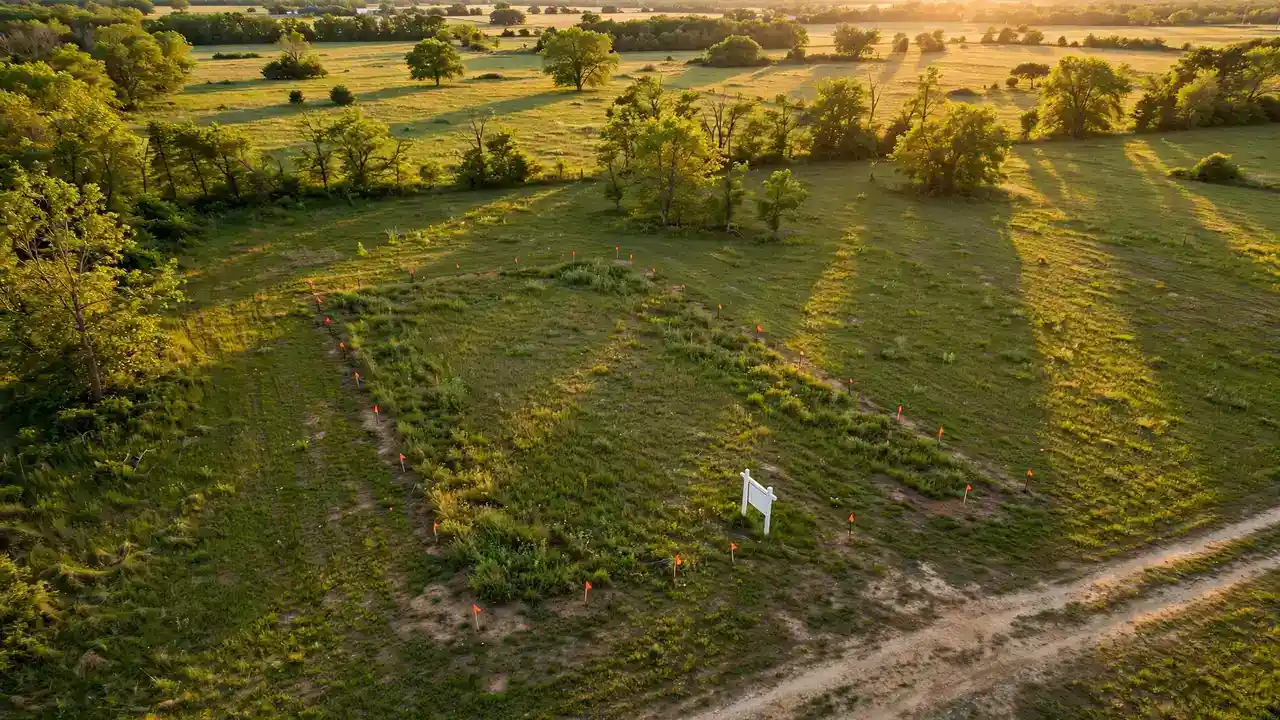
A land escrow checklist goes beyond a house purchase. Before contingency removal, verify:
- Survey and boundaries: a current survey confirms the acreage and boundary lines match the listing. See the land survey cost guide.
- Legal access: confirm a recorded easement or public road frontage — landlocked parcels can be nearly unusable.
- Zoning and buildability: confirm the zoning allows your intended use and that setbacks, minimum lot size, and HOA rules do not block your plans.
- Utilities: check water, sewer or septic, electric, and internet availability and connection costs.
- Perc test and septic: many rural parcels need a passing perc test before a septic system — and a loan — is possible. See the perc test guide.
- Flood zone and wetlands: floodplain or wetland designations can restrict building and raise insurance costs.
- Mineral and timber rights: confirm whether mineral, water, or timber rights transfer with the sale or were severed by a prior owner.
- Appraisal: land appraisals rely on comparable vacant-land sales, which can be scarce; a low appraisal may force renegotiation or extra cash at closing.
How Long Does Escrow Take on Land?
Financed land purchases commonly take 30 to 45 days from accepted offer to recorded deed. All-cash purchases with documents ready can close in 7 to 21 days. Land deals, however, run longer than house deals more often, for three reasons: surveys take scheduling time, title searches on rural parcels can surface old or unclear records, and land-loan underwriting moves slower when comparable sales are thin.
Common delays include unresolved title defects, a survey that reveals a boundary dispute, a failed perc test, an appraisal below the purchase price, and lender conditions that arrive late. Building a 45-day escrow instead of a 30-day one is often the cheapest insurance a land buyer can buy.
How Much Does Escrow Cost?
Escrow fees are part of overall closing costs, which for buyers generally run 2% to 5% of the purchase price. The major line items include the loan origination fee, appraisal fee, title insurance premiums, escrow fees, recording fees, and prepaid items such as property taxes and insurance. Who pays the escrow fee itself is set by the contract and local custom — in some markets the buyer pays, in others the seller pays, and often the parties split it.
The Closing Disclosure (for financed purchases) or settlement statement breaks out every fee, so review it at least three business days before signing — federal rules require the Closing Disclosure that early for most mortgage loans. If any fee looks unfamiliar, ask the escrow officer to explain it before closing day. See the land closing costs guide.
Escrow vs. Title Company vs. Closing Attorney
In many western states, a dedicated escrow company runs the closing. In other states, the title company handles both title and escrow duties. In several eastern states, a closing attorney conducts the settlement instead. The labels differ, but the function is the same: a neutral party holds funds and documents and releases them only when the contract conditions are met. Some states also require attorneys at closing or license escrow agents individually, so local practice — not a national template — governs your transaction.
What Happens If Escrow Falls Through?
Not every escrow reaches closing. Deals collapse over low appraisals, financing denials, unresolvable title defects, or inspection findings the parties cannot agree on. What happens next depends on the contract:
- Buyer cancels inside a contingency: earnest money is generally refunded.
- Buyer cancels after contingency removal: the seller may keep the earnest money as liquidated damages, if the contract says so.
- Seller fails to perform: the buyer can usually recover the deposit and, in some contracts, pursue other remedies.
- Mutual cancellation: both parties sign cancellation instructions and escrow returns the funds as directed.
If the parties disagree about who gets the earnest money, the escrow holder typically holds the funds until both sides sign a release or a court decides — which is why clear contingency language matters more than any handshake.
Escrow After Closing: Your Mortgage Escrow Account
After closing, the transaction escrow closes and a different escrow account begins if you have a mortgage. Your lender or servicer collects a portion of each monthly payment for property taxes and insurance, then pays those bills on your behalf. The CFPB explains that this account helps you pay these expenses monthly instead of facing one or two large bills a year. Federal rules also cap the cushion your servicer can hold — no more than one-sixth of estimated annual escrow disbursements, roughly two months of payments — and require an annual escrow statement. Your total monthly payment with these items is often quoted as PITI: principal, interest, taxes, and insurance.
Land Escrow Checklist for Buyers
- Confirm the escrow holder’s name, file number, and wiring instructions in writing — and verify wiring instructions by phone before sending funds, since wire fraud targets closings.
- Deposit earnest money on time, into the trust account only.
- Read the preliminary title report line by line; question every lien, easement, and reservation.
- Order the survey, perc test, and zoning confirmation early — they are the slowest items.
- Track every contingency deadline in writing; remove contingencies only when satisfied.
- Review the Closing Disclosure or settlement statement before signing day.
- Confirm the deed is recorded and you receive the recorded copy and title policy after closing.
Frequently Asked Questions (FAQs)
What is escrow in a land purchase?
Escrow is a neutral arrangement in which a third party holds the buyer’s earnest money and the transaction documents until all conditions in the purchase agreement are met, then releases the funds and records the deed to transfer ownership.
How long does escrow take when buying land?
Financed land purchases typically take 30 to 45 days, while all-cash purchases can close in 7 to 21 days. Surveys, title issues, and land-loan underwriting are the most common reasons land escrows run longer.
How much earnest money do I need for a land purchase?
Earnest money on land is typically 1% to 3% of the purchase price, set by negotiation in the purchase agreement. The deposit is held in the escrow trust account and credited toward the purchase at closing.
Do I get my earnest money back if the land deal falls through?
Usually yes, if you cancel inside an active contingency period and in writing — for example, after a failed perc test, a title defect, or a financing denial. After contingencies are removed, the seller may keep the deposit under the contract’s terms.
Who pays escrow fees on a land purchase?
It depends on the contract and local custom. Buyers often pay lender-related fees and portions of title and escrow fees, while sellers often pay commissions and the owner’s title policy in some markets. The settlement statement shows exactly who pays each fee.
Is escrow required when buying land with cash?
Cash buyers are not forced by a lender to use escrow, but using one is still strongly recommended: it protects the deposit, verifies title, and ensures the deed is properly recorded before funds are released to the seller.
What is the difference between escrow and title insurance?
Escrow is the process that holds funds and documents until closing conditions are met. Title insurance is a policy that protects the buyer and lender against past title defects, such as unknown liens or ownership claims, discovered after closing.
What happens to escrow after closing?
The transaction escrow closes at recording. If you financed the purchase, your lender opens a separate mortgage escrow account that collects part of each monthly payment to pay property taxes and insurance on your behalf.
By Jameel Noori, Founder & Developer, Land Loan Calculator
About the author: Jameel Noori is the Head of Content & Land Finance Research at Land Loan Calculator. He writes practical, U.S.-focused guides on land financing, loan math, and buyer strategy.
Reviewed by: Jameel Noori, Founder & Lead Developer of Land Loan Calculator, reviewed this article for accuracy.
Disclaimer: This article is for informational purposes only and is not financial advice. Land loan rates and terms vary by lender, property, and market conditions. Consult a licensed loan professional before making financing decisions.
