
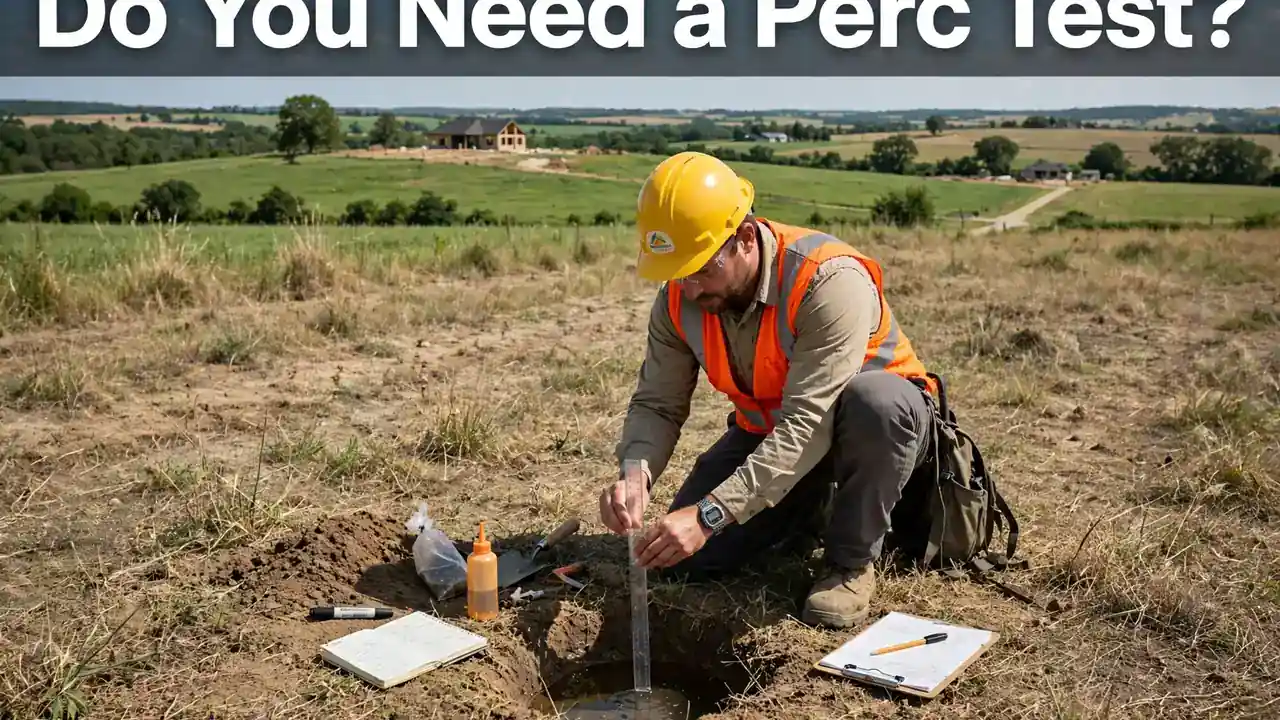
Do You Need a Perc Test? Septic Rules for Land Loans

Yes — if you are buying land without municipal sewer service and you plan to build, you almost certainly need a perc test. A perc test (percolation test) measures how fast soil absorbs water, and that result decides whether the land can support a septic system. Most lenders will not approve a land loan or a construction loan on unsewered land without proof the lot can handle wastewater, and most county health departments will not issue a septic permit without a passing test. In short: no perc, no house — at least not with a conventional septic system. The test typically costs $300 to $2,000, takes one to two days of fieldwork, and can save you from buying a parcel that cannot legally be built on. For a perc test land loan, that result is often the deciding document.
This perc test land loan guide covers what a perc test is, when lenders require one, how it works, what the results mean, costs, validity, what to do if land fails, and how to protect your purchase with a perc test contingency.
In This Guide
- What Is a Perc Test?
- Do You Need a Perc Test for a Land Loan?
- How a Perc Test Works, Step by Step
- Reading Your Perc Test Results
- How Much Does a Perc Test Cost?
- How Long Is a Perc Test Good For?
- What Happens If Land Fails a Perc Test?
- Perc Test Land Loan Approval
- The Perc Test Contingency: Protect Your Purchase
- Perc Test vs. Site Evaluation: An Important Difference
- Do You Need a Perc Test If You Already Have a Septic System?
- Perc Test Checklist Before You Order
- Frequently Asked Questions (FAQs)
- Sources and Further Reading
What Is a Perc Test?
A perc test, short for percolation test, is a soil drainage test performed at the proposed septic drain-field location. A licensed soil scientist, engineer, or septic professional — often under the supervision of the county health department — digs one or more test holes, fills them with water, and measures how quickly the water level drops. The result is expressed in minutes per inch (MPI): the number of minutes it takes water to fall one inch through the soil. That single number matters because a septic system works by filtering wastewater through soil. If water drains too slowly, effluent can pool on the surface or back up into the home. If it drains too fast, wastewater can reach groundwater before the soil has filtered it. Either extreme can fail the test and block a standard septic installation. A perc test is not a general soil quality check and it is not a survey. It answers one narrow, high-stakes question: can this specific spot on this parcel safely absorb wastewater from a home? For a perc test land loan, lenders and health departments both rely on that single result.
Do You Need a Perc Test for a Land Loan?
It depends on sewer access, your loan type, and your building plans — but for most rural land buyers, the answer is yes. No municipal sewer plus you plan to build: Yes. Expect your lender and your county to require it. Municipal sewer available at the lot line: Usually no perc test is needed, because wastewater will go to the public system. Confirm sewer availability and connection fees in writing instead. Buying with a construction loan or construction-to-permanent loan: Yes, almost always. The lender is financing a future home, so buildability must be proven before closing. Buying raw land with a land-only loan and no immediate build plans: Sometimes not required at closing, but many lenders still ask for it, and a future buyer or builder will. Getting it done before you buy is still the safer move. USDA, VA, or FHA-backed financing: Expect stricter septic and water rules than a conventional loan, including health-department approval of the septic system and, for existing homes, water-quality testing. Cash purchase, recreational use only, no building planned: A perc test may not be legally required, but skipping it can still hurt resale value. If you are unsure, ask two people before you sign anything: your lender (“Do you require a perc test or septic approval for this parcel?”) and your county health department (“What does this parcel need for a septic permit?”). Their answers, not a seller’s assurances, decide the deal. A perc test land loan file is rarely complete without that written, passing result.
How a Perc Test Works, Step by Step
Procedures vary by county, but the process usually follows these steps:
- Contact the county health department. Find out who may perform the test, how many holes are required, what depths are tested, and whether a permit or fee applies. Some counties require the health department itself to witness the test.
- Hire a qualified professional. Look for a licensed soil scientist, environmental engineer, or septic installer who regularly works in that county. Local experience matters — passing rates, soil types, and seasonal water-table rules differ sharply from one county to the next.
- Pick the test site. Tests are done where the drain field would actually go, not just anywhere convenient on the lot. If the first spot fails, another area of the parcel may still pass, which is why lot size and layout matter.
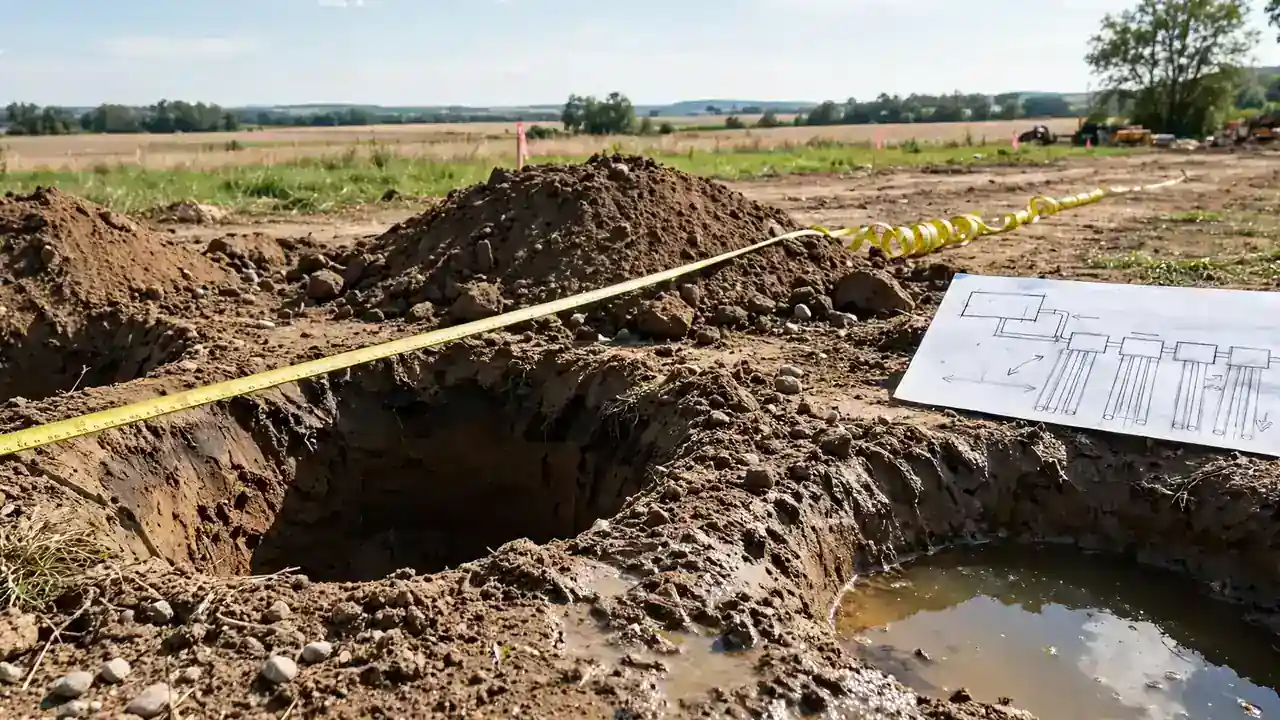
- Dig and prepare the holes. Holes are typically 12 inches or more in diameter and dug to the proposed drain-field depth, often 12 to 48 inches below grade. In some jurisdictions a deeper backhoe pit (8 to 10 feet) is also required to check soil layers and the seasonal water table.
- Pre-soak and measure. Holes are filled with water and allowed to soak, often overnight, so the soil is saturated. The tester then measures the drop in water level over set intervals and calculates the percolation rate in minutes per inch.
- Get the written report. A passing result is usually recorded with the health department and may support a septic permit application. Keep the report with your closing documents — your lender, builder, and future buyers will all want to see it.
The fieldwork itself usually takes one to two days, though scheduling, permits, and the written report can stretch the total timeline to a few weeks. Build that time into your purchase contract.
Reading Your Perc Test Results
Results are judged against your county’s standards, not a single national pass mark, but the commonly cited range for a conventional septic system is a percolation rate of about 1 to 30 minutes per inch: Faster than 1 minute per inch: Water drains too quickly for adequate filtration. The county may require a larger drain field, a sand filter, or another engineered design. 1 to 30 minutes per inch: Generally acceptable for a standard gravity-fed septic system, subject to other site factors such as setbacks, slope, and water-table depth. Slower than 30 minutes per inch: Water drains too slowly. A conventional system is usually not approved, and an engineered alternative — or a different drain-field location — is needed.
A perc rate alone does not guarantee a permit. Setback distances from wells, property lines, waterways, and the home itself, plus soil depth to bedrock or the water table, all factor into the health department’s decision. Read the full report, not just the headline rate, and ask the tester to explain any conditions attached to the result.
How Much Does a Perc Test Cost?
A standard perc test typically costs $300 to $2,000, with many buyers reporting $750 to $1,750 for a straightforward test. The final price depends on: County requirements: More holes, deeper pits, or health-department witnessing add labor and fees. Site access and terrain: A remote, steep, or heavily wooded lot costs more to test than a flat, accessible one. Backhoe work: If a deep test pit is required, equipment rental or hire adds to the bill. Additional soil work: Some counties now require a full site evaluation or soil morphology study instead of, or in addition to, a traditional perc test. That can push costs higher but gives a more complete picture. Who pays? Usually the buyer, as part of due diligence — just like an appraisal or a vacant land appraisal. In a seller’s market, however, sellers sometimes pay for a perc test upfront to make the parcel more marketable, and the cost is always negotiable. Whatever you agree, put it in writing in the purchase contract, along with who schedules the test and what happens if it fails. Compared with the cost of the land itself, a perc test is cheap insurance. An engineered septic system can cost $15,000 to $50,000 or more, and an unbuildable lot can lose 30 to 50 percent of its value. Spending under $2,000 to learn which outcome you face is one of the best investments in any land purchase.
How Long Is a Perc Test Good For?
Passing perc test results are typically valid for two to five years, depending on the county. After that, the test usually must be repeated before a septic permit is issued, because soil conditions, water tables, and regulations can change. A failed test does not “expire” in the same way — the drainage problem persists unless site conditions genuinely change. Practical takeaway: do not rely on a seller’s five-year-old perc report without checking its date and validity with the health department. If you are buying land you will not build on for several years, confirm in writing how long the result will remain valid, and budget for a retest if your build timeline slips past that window.
What Happens If Land Fails a Perc Test?
A failed perc test is serious, but it is not always the end of the road. Your options, in rough order of cost and complexity, are:
- Test another location on the parcel. Soil varies across a lot. A second drain-field site, sometimes on higher ground, may pass where the first failed.
- Install an engineered septic system. Mound systems, sand filters, aerobic treatment units, and other engineered designs can work on soils that fail a conventional test. Expect $15,000 to $50,000 or more, plus ongoing maintenance and a more involved permit process.
- Reduce the home’s wastewater load. A smaller home with fewer bedrooms produces less wastewater and may qualify for a system design that a larger home would not. Discuss this with your septic designer before giving up on the parcel.
- Renegotiate or walk away. If no affordable system is possible, the land may be worth far less as a building site. This is exactly why a perc test contingency belongs in your contract: it lets you renegotiate the price or exit the deal and recover your earnest money if the land cannot perk.
You can still sell land that does not perk, but you must disclose the limitation, and buyers will price it accordingly — typically 30 to 50 percent below comparable perking land. Never hide a failed test from a buyer or a lender; the disclosure risk is far worse than the price adjustment.

Perc Test Land Loan Approval
Lenders care about perc tests because they care about collateral value. A parcel that cannot support a home is worth less and is harder to resell if the loan defaults, so lenders treat septic feasibility as part of credit risk — not as paperwork. What this means in practice: Land-only loans: Some lenders require a perc test before approval on unsewered land; others require it only before a construction loan is issued. Ask upfront so a late-stage septic surprise does not delay closing. Construction loans: Expect a perc test or septic approval as a condition of approval, alongside the appraisal, survey, and title work. Our land loan pre-approval guide lists the documents lenders typically request. Government-backed loans: USDA, VA, and FHA programs generally impose stricter septic and water standards, including health-department approval. If you are using one of these programs, see our USDA vs land loan comparison and our VA land loan guide. Appraisal impact: An appraiser valuing unsewered land will consider septic feasibility. A passing perc test supports value; a failed or missing test can reduce the appraised value and change your loan-to-value ratio. Review the full land loan requirements before you apply so no single document catches you off guard. If your lender does not require a perc test, get one anyway when you plan to build. Lender requirements are a floor, not a recommendation — and the cost of discovering a septic problem after closing falls entirely on you. In a perc test land loan, that appraisal and approval link is why a passing result carries so much weight.
The Perc Test Contingency: Protect Your Purchase
The single most important contract clause for unsewered land is the perc test contingency. In plain terms, it says: this purchase depends on the land passing a perc test (and, ideally, receiving septic approval) within a set number of days. If it does not, you can renegotiate or cancel and recover your earnest money. A strong contingency clause should specify: Who orders and pays for the test, and by what date. What counts as passing — a perc rate within the county’s acceptable range, or actual septic permit approval, which is stronger. How many test locations may be tried, and who pays for retests. The deadline for results, with enough time for scheduling, fieldwork, and the written report. Your remedies if it fails — price renegotiation, seller-funded engineered system, or cancellation with earnest money returned. Have a local real estate attorney or experienced land agent review the clause. State and county rules differ, and a generic contingency that works in one jurisdiction may be unenforceable in another. Pair the perc contingency with the other checks in your due diligence: a current land survey cost estimate, title work, zoning confirmation, and a full review of land closing costs so no fee surprises you at the table. A perc test land loan should not close on unsewered land without that contingency in place.
Perc Test vs. Site Evaluation: An Important Difference
Many buyers are surprised to learn that some counties no longer rely on the traditional perc test at all. Instead, they require a site evaluation (sometimes called a soil evaluation) in which a licensed soil scientist examines soil texture, structure, color, depth to bedrock or water table, and other characteristics, and then designs a septic system for that specific soil profile. The practical differences for buyers: A site evaluation is usually more detailed — and sometimes more expensive — than a classic perc test. It may be performed in any season, while some counties restrict traditional perc testing to wetter months when the water table is high. The result is a system design recommendation, not just a pass/fail rate. Ask your county health department which method it uses before you hire anyone. Hiring a tester who performs the wrong test for your jurisdiction wastes time and money, and a lender or permit office may not accept the result. That distinction matters for a perc test land loan, because a lender may accept one method and not the other.
Do You Need a Perc Test If You Already Have a Septic System?
If you are buying land with an existing, permitted septic system, you generally do not need a new perc test — but you should still have the existing system inspected. A septic inspection checks the tank, drain field, and overall condition, and lenders for existing homes often require it when an appraiser flags concerns. If you plan to expand the home, add bedrooms, or replace the system, the county may require fresh soil testing for the new design. Similarly, if you are buying land purely as a recreational or investment holding with no building plans, a perc test is optional — but remember that the next buyer may want one, and a passing result on file is a genuine selling point. For help estimating what you can afford overall, start with our land loan calculator.
Perc Test Checklist Before You Order
Use this checklist so nothing is missed:
- Confirm with the county health department: test method, hole count, depths, permits, and fees.
- Hire a tester licensed or approved in that county, with local soil experience.
- Put a perc test contingency in the purchase contract, with a realistic deadline.
- Agree in writing who pays, and what happens if the test fails.
- Test at the actual proposed drain-field location.
- Get the written report and file it with your loan and closing documents.
- Check the result’s validity period against your building timeline.
- If it fails, get quotes for engineered systems before deciding to renegotiate or walk away.
- Confirm setbacks, well locations, and easements with the health department and your surveyor.
Frequently Asked Questions (FAQs)
Do I need a perc test to get a land loan?
Often, yes — especially if the land has no municipal sewer service and you plan to build. Many lenders require a perc test or septic approval before approving a land loan or construction loan on unsewered land. Government-backed programs such as USDA, VA, and FHA loans tend to have the strictest septic rules. Ask your lender early so a septic issue does not delay closing. That is the usual starting point for a perc test land loan.
How much does a perc test cost?
A standard perc test typically costs $300 to $2,000, with many buyers paying $750 to $1,750. County requirements, site access, backhoe work, and additional soil studies can push the price higher. The buyer usually pays, but the cost is negotiable and should be stated in the purchase contract.
What is a good perc test result?
For a conventional septic system, a percolation rate of about 1 to 30 minutes per inch is generally considered acceptable, though exact standards vary by county. Faster than 1 minute per inch drains too quickly for filtration, and slower than 30 minutes per inch drains too slowly — both may require an engineered system or a different drain-field location.
How long does a perc test take?
Fieldwork usually takes one to two days, but scheduling, permits, and the written report can extend the total process to a few weeks. Build this timeline into your purchase contract’s contingency deadline.
How long is a perc test valid?
Passing results are typically valid for two to five years, depending on the county. After that, a retest is usually required before a septic permit is issued. Always confirm the validity period with your county health department, especially if you will not build right away.
What happens if land fails a perc test?
A failed test means a conventional septic system cannot be installed at that location. Options include testing another spot on the parcel, installing an engineered system such as a mound or sand filter ($15,000 to $50,000 or more), reducing the home’s size, or renegotiating or cancelling the purchase under a perc test contingency.
Who pays for a perc test, the buyer or the seller?
Typically the buyer pays as part of due diligence, but sellers sometimes pay upfront to make a parcel more attractive, especially in a seller’s market. Either way, put the agreement in writing in the purchase contract.
Do I need a perc test if the land has city sewer?
Usually no. If municipal sewer service is available at the lot line, wastewater goes to the public system and no septic test is needed. Confirm sewer availability, connection fees, and any capacity requirements in writing with the utility before you close.
Sources and Further Reading
For authoritative guidance on septic systems and soil treatment, see the U.S. Environmental Protection Agency’s septic systems resources at https://www.epa.gov/septic — including how septic systems work and how to maintain them. Your county health department remains the final authority on local perc test rules, passing rates, and permit requirements.
By Jameel Noori, Founder & Developer, Land Loan Calculator
About the author: Jameel Noori is the Founder & Developer of Land Loan Calculator. He writes practical, U.S.-focused guides on land financing, loan math, and buyer strategy.
Reviewed by: Jameel Noori, Founder & Lead Developer of Land Loan Calculator, reviewed this article for accuracy.
Disclaimer: This article is for informational purposes only and is not financial advice. Land loan rates and terms vary by lender, property, and market conditions. Consult a licensed loan professional before making financing decisions.
