

How to Make Money From Land: 12 Proven Ways

Vacant land can earn money while it appreciates — through leases, storage, events and more. If you own a parcel that is sitting empty, you do not have to wait for a sale to see a return from it. This guide walks through 12 proven ways to make money from land, from passive farm leases to active businesses, so you can compare options that fit your land, your time and your tolerance for hands-on work.
There is no single best option for every owner. A small lot near a growing town may suit storage or parking, while larger rural acreage may suit farming, grazing or hunting. Returns vary widely by region, parcel size, land quality and local demand, so verify demand and rules locally before you invest time or money.
Leasing Your Land: A Proven Way to Make Money From Land (Ways 1–4)
Leasing is often the most passive route to income from land. You keep ownership, someone else uses the land for an agreed purpose, and you receive rent under a written agreement. A written lease should spell out the term, payment dates, permitted uses, maintenance responsibilities and what happens at renewal or termination. For a sense of how lease math works, try the land lease calculator, and compare general benchmarks in our guide to land lease rates.
1. Farm or Crop Lease
A farm or crop lease lets a farmer grow crops on your land in return for rent, often paid per acre per year or as a share of the crop. It suits owners of productive cropland who want relatively passive income without farming themselves, especially absentee owners. The effort level is low once a reliable tenant and a clear lease are in place, although you still need to check the land occasionally and keep records. The main caveat is that soil quality, water, field size and local farm demand vary widely by region, so rent and tenant interest will vary too, and a crop-share arrangement means your income can rise or fall with yields and prices.
Before signing, compare fixed cash rent with flexible leases. The University of Minnesota Extension guide to flexible land rental agreements explains how those arrangements share risk between landlord and tenant.
2. Hunting Lease
A hunting lease gives a hunter or hunting group seasonal or annual access to your land for hunting, usually for a fee paid in advance. It suits rural owners with woodland, brush, water or game habitat who do not want a year-round tenant and are comfortable with visitors on the property during hunting seasons. Effort is low to moderate, mainly around screening lessees, setting boundaries and safety rules, and checking the land after the season. The main caveat is liability and safety: require a written lease, clear rules on firearms, guests, vehicles and fires, and discuss insurance with your insurer before anyone hunts.
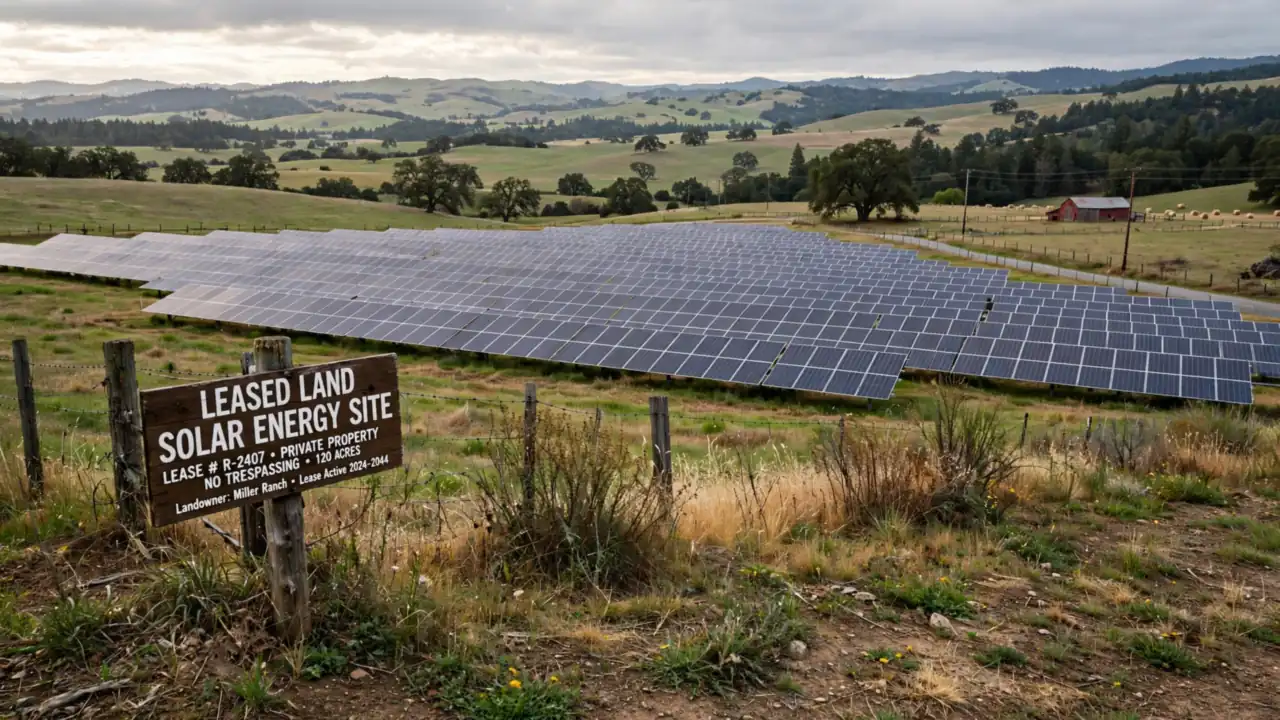
3. Solar Lease
A solar lease lets a developer install solar panels on your land, usually under a long-term agreement, in return for rent. It suits owners of larger, relatively flat parcels near grid connections where a developer is actively seeking sites, rather than owners who expect to attract a developer on their own. Effort is low for the landowner after signing, but the negotiation is serious and deserves legal review because terms can run for decades. The main caveat is commitment: a long lease can limit other uses, affect resale and involve decommissioning questions, so do not sign without independent advice. A dedicated solar land lease guide is coming, and this section is intentionally brief.
4. Grazing or Livestock Lease
A grazing lease lets a livestock owner use your pasture for cattle, sheep or other animals, usually for a seasonal or annual fee. It suits owners of pasture or mixed grassland who want the land kept grazed and maintained without running livestock themselves. Effort is low to moderate, because fencing, water, stocking rates and pasture condition still need attention, and the lease should say who maintains fences and water points. The main caveat is that overgrazing can damage pasture and soil, so set a sensible stocking rate, rest periods and maintenance duties in writing, and check the land regularly.
Renting Space and Access (Ways 5–8)
Not every income idea needs a farm tenant. If your land has road access, a flat area or a useful location, renting space or access can be simpler and shorter term than a multi-year lease. These ideas often suit owners near towns, highways, lakes or event venues, and they usually need more day-to-day management than a farm lease. Returns vary widely by region and by how visible, secure and accessible the site is.
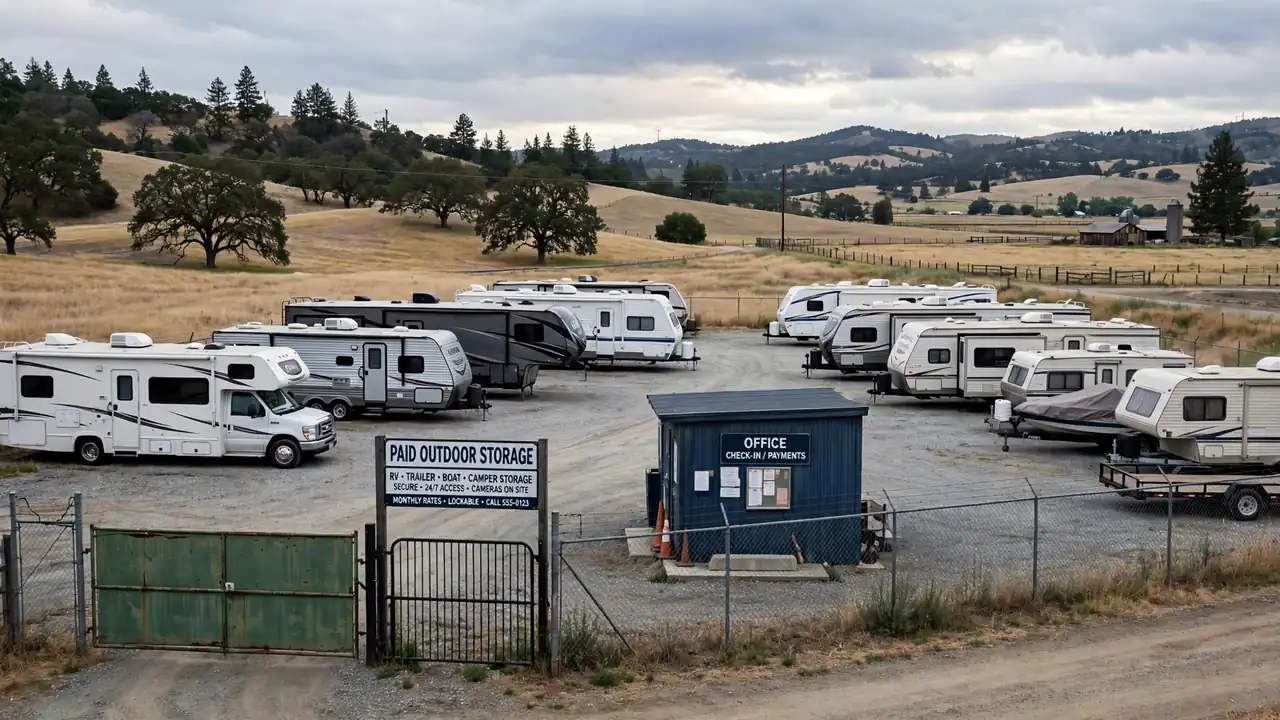
5. RV, Boat or Vehicle Storage
Vehicle storage rents fenced or open space to owners of recreational vehicles, boats, trailers or work vehicles that need a secure place between uses. It suits owners with a flat, accessible lot near a town or highway, and it can work on land that is too small or awkward for farming. Effort is moderate, because you will need to manage bookings, access, payments and security, and keep the surface usable in wet weather. The main caveat is zoning and neighbour impact: check local rules first, provide clear access and boundaries, and consider insurance for vehicles stored on your land.
6. Parking for Events or Contractors
Event or contractor parking rents a field or lot for short periods, such as a nearby festival, sports event, market or construction project. It suits owners near venues or worksites who can offer safe, clearly marked parking without disrupting neighbours or blocking roads. Effort is moderate to high on event days, because you will need to direct traffic, manage entry and exit, and clean up afterwards, even though income is short term. The main caveat is safety and liability: agree terms in writing, set hours and vehicle limits, and confirm insurance cover for public use before you open the gate.
7. Billboard Lease
A billboard lease lets an advertising company place a sign on your land beside a road with strong traffic, usually under a multi-year agreement. It suits owners of roadside land where zoning allows signage and where traffic counts make the location attractive to advertisers. Effort is low after installation, although you will need to negotiate terms, access for maintenance and what happens if the sign is removed. The main caveat is that zoning allows billboards only in certain places, permits and sign rules can be strict, and a lease may limit other uses of that part of the land.
8. Cell Tower Lease
A cell tower lease lets a telecom company place a tower or antenna on your land, usually under a long-term agreement with rent and renewal terms. It suits owners whose land fills a coverage gap for a carrier, which is why this option is rare and cannot be created simply by offering a site. Effort is low for the landowner after signing, but the agreement deserves careful legal review because it can run for decades and affect future development. The main caveat is the long commitment and the small chance of being selected, so treat this as a welcome opportunity if it arises, not as a plan you can rely on.
Active Income Ideas (Ways 9–12)
Active ideas can suit owners who enjoy running a business on their land, but they also demand more time, capital and compliance work. Before you choose one, be realistic about how often you can visit, what skills you have, and what permits, staff and insurance the business will need. Returns vary widely by region, season and execution, and active uses carry more operational risk than a simple lease.
9. Timber Harvest
A timber harvest sells mature trees from woodland under a managed plan, sometimes as a one-off harvest and sometimes as part of a longer rotation. It suits owners of established woodland who are willing to take a long-term view and work with a professional forester. Effort is low to moderate for the owner, because the forester typically plans the harvest, marks trees and oversees the work, but you still need to understand the contract and the site impact. The main caveat is sustainability: harvest only with a professional plan, protect soil, water and young trees, and check tax and replanting rules before you agree to any sale.
10. Events and Weddings Venue
An events venue hires out attractive land, and sometimes a barn or open shelter, for weddings, parties and gatherings. It suits owners of scenic, accessible land near towns who enjoy hosting and can invest in facilities, parking, toilets and sound management. Effort is high, because bookings, suppliers, setup, cleanup and guest safety all need hands-on management, and demand is often seasonal. The main caveat is regulation and neighbour impact: check zoning, noise, parking, alcohol and temporary-structure rules, and arrange liability insurance before your first booking.
11. Campground or Glamping Sites
A campground or glamping site rents pitches, cabins, yurts or bell tents to visitors who want to stay on or near nature. It suits owners of attractive rural land near trails, lakes or tourist routes who can provide water, waste facilities, access and a safe, welcoming site. Effort is high, especially in peak season, because cleaning, bookings, guest communication and site maintenance are ongoing. The main caveat is that planning, sanitation, fire safety and insurance requirements can be demanding, so start small, check local rules, and test demand before building extensive facilities.
12. Sell or Lease Mineral or Water Rights Where You Own Them
Where you own mineral or water rights, you may be able to sell or lease those rights separately from the surface land, depending on your title and local law. This suits only owners who actually hold those rights and whose land has a resource another party wants to use, so it will not apply to most parcels. Effort is low after an agreement is signed, but the due diligence is demanding and the stakes are high. The main caveat is legal complexity: get independent legal review before signing anything, confirm exactly what rights you own, and understand how extraction or water use could affect the surface, neighbours and future sale value.
Before You Start: Zoning, Insurance and Taxes
Check zoning and deed restrictions first, before you advertise any use or sign a lease. Zoning decides whether farming, storage, events, camping or signage are allowed on your parcel, and deed restrictions can add further limits. A quick call to the local planning office can save you from building a business that is not permitted on your land.
Arrange liability insurance for public-facing uses, and review cover for any use that brings visitors, vehicles or animals onto your land. A farm lease, a storage lot and a wedding venue do not carry the same risks, so tell your insurer exactly what you plan to do. Income from land is generally taxable, so keep records of rent, expenses and agreements, and consult a tax professional about your own situation; this guide gives no rates or thresholds.
Financing land to hold for income is a separate decision. If you are still buying land, or thinking about borrowing to hold a parcel while you build an income stream, use the land loan calculator to model payments before you commit. A parcel that only just covers its loan payment leaves little room for vacancies, repairs or a slow first season.
FAQs
What is the most passive way to make money from land?
A farm lease or a long-term lease, such as grazing or a billboard lease, is usually the most passive route. Once a reliable tenant and a clear written agreement are in place, the owner mainly monitors the land and collects rent.
How much can you make leasing land to a farmer?
It varies widely by region, soil quality, water, parcel size and local farm demand. Productive cropland near strong farm markets will usually command more interest than marginal ground, so compare local leases before you set a rent.
Is a solar lease a good deal for landowners?
It can be, but only with careful review. Solar leases are long term, so rent, escalation, renewal, decommissioning and land-restoration terms matter as much as the headline payment. Get independent legal advice before signing.
Do I need insurance to rent out my land?
Yes, in practical terms. Liability insurance is especially important for public-facing uses such as storage, parking, events and camping, and it is wise for hunting and grazing leases too. Confirm cover before visitors arrive.
Can I make money from land I am still paying off?
Often, yes, provided your loan and any deed restrictions allow the use you have in mind. Rent can help cover loan payments, but check your loan terms first and keep a buffer for vacancies and maintenance.
What zoning do I need for RV storage on my land?
That depends on your local zoning code, which varies by county and municipality. Some areas allow outdoor storage in agricultural or commercial zones, while others restrict it or require a permit, screening and setbacks.
Is income from land taxed?
Generally, yes. Rental and business income from land is usually taxable, although the exact treatment depends on the type of income, your expenses and your tax situation. Consult a tax professional for advice on your own circumstances.
What is the fastest way to earn from vacant land?
Short-term parking or storage can start quickly where demand and zoning allow, because they need little construction. A farm, hunting or grazing lease can also start within a season if a tenant is already looking nearby.
By Jameel Noori, Founder & Developer, Land Loan Calculator
About the author: Jameel Noori is the Founder & Developer of Land Loan Calculator. He writes practical, U.S.-focused guides on land financing, loan math, and buyer strategy.
Reviewed by: Jameel Noori, Founder & Lead Developer of Land Loan Calculator, reviewed this article for accuracy.
Disclaimer: This article is for informational purposes only and is not financial advice. Land loan rates and terms vary by lender, property, and market conditions. Consult a licensed loan professional before making financing decisions.
