

Land Lease Rates: What to Charge for Leasing Your Land

What should you charge to lease your land? Land lease rates vary by land type and location: for U.S. farmland in 2026, the USDA reports average cash rents of $160 per acre for cropland ($244 irrigated, $146 non-irrigated) and $16.50 per acre for pasture. Hunting leases typically run $8–$50 per acre, with a national median around $30. Your fair rate depends on land type, soil quality, water access, and local demand — this guide shows you 7 proven methods to set a rate tenants will actually pay.
Leasing is one of the simplest ways to make vacant land pay for itself. Many landowners use annual lease income to cover property taxes and a share of their loan payments while the land appreciates. But price it too high and your acres sit idle; too low and you leave money on the table for years. Below is the current market data plus the methods professional farm managers use to price leases. And if you are financing the purchase, our land loan calculator shows how lease income offsets your monthly payments, while our guide is land a good investment covers the bigger return picture.
Table of Contents
2026 USDA Average Lease Rates
Start with the national benchmarks, then adjust for your county. The USDA National Agricultural Statistics Service publishes county-level cash rent data every summer — it is the most trusted starting point in the industry. The USDA’s Land Values 2026 Summary, released July 31, 2026, puts average U.S. cropland value at $6,020 per acre.
Cropland cash rents
| Land type | 2026 average | Change vs 2025 |
|---|---|---|
| All cropland | $160/acre | −$1 |
| Irrigated cropland | $244/acre | unchanged |
| Non-irrigated cropland | $146/acre | −$1 |
The highest-rent states in 2026: California ($331), Hawaii ($280), Iowa ($271), Illinois ($261), and Washington ($234). The Corn Belt premium reflects high soil productivity — Iowa cropland averaged over $10,700 per acre in land value, supporting rents near $270 per acre. Source: USDA National Agricultural Statistics Service (NASS), Land Values 2026 Summary.
Pasture and grazing rents
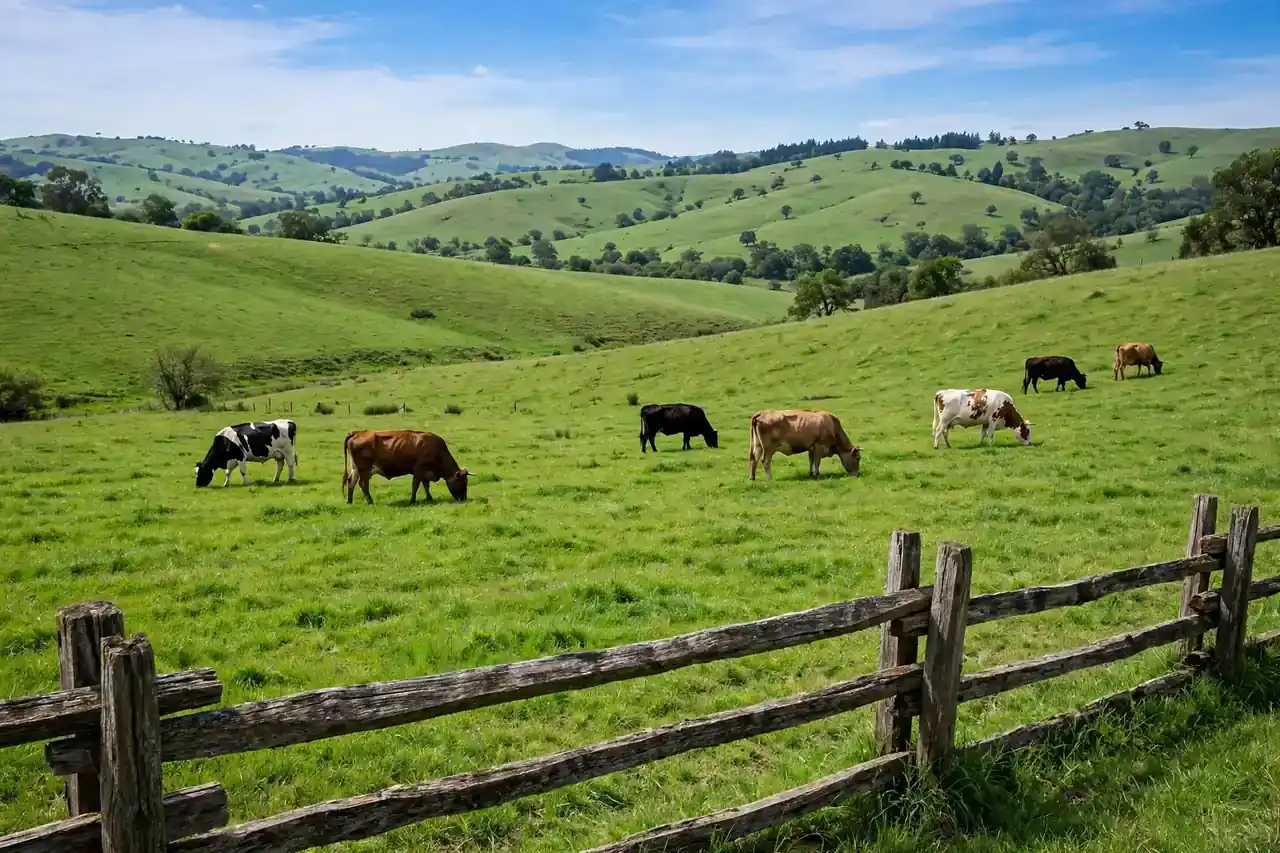
Pastureland averaged a record $16.50 per acre nationally in 2026. Rates vary enormously by region and carrying capacity — well-watered pasture in the Midwest can command several times the national average.
Hunting lease rates
Hunting leases follow their own market: $8–$50+ per acre annually across most of the country. A 2026 dataset of 2,195 active listings (HLRBO) found a national median lease price of $3,420 per year, or about $30 per acre, with regional medians of $32 (Midwest), $29 (South), and $39 (Northeast). Prime Midwestern whitetail ground typically brings $15–$30 per acre; Georgia’s average is around $15 per acre.

7 Proven Methods to Set Your Land Lease Rate
1. Use county-level USDA and extension averages
Your county extension office, agricultural lenders, and farm managers track what similar ground actually rents for. This is the simplest and most defensible method — and the one tenants expect you to know. Check the USDA NASS cash-rent survey for your county, then adjust up or down for your parcel’s specifics.
2. Percentage of land value (the “fair return” method)
A common rule of thumb sets annual rent at 2–3.5% of the land’s market value. USDA 2026 data puts cropland at $6,020 per acre against $146 non-irrigated cash rent — a gross cash yield of roughly 2.4% before taxes and insurance. For pasture, 1.5–2% of market value is typical. This method works best when land values are stable; when values surge faster than farm income, it can overprice the lease.
3. Percentage of gross crop revenue (flexible lease)
Iowa State research shows flexible cash leases commonly set rent at 25–40% of gross crop revenue, with the 2016–2025 average near 30% for corn and 40% for soybeans. This shares price and yield risk with the tenant and captures upside in strong years. Set a floor (minimum rent) so a disaster year does not wipe out your income.
4. Crop-share arrangements
The classic 50/50 crop share splits the crop and key input costs (seed, fertilizer, chemicals) between owner and tenant, while the tenant supplies labor and machinery. Share the same percentage of costs and income — or adjust input shares to hit your target split. Crop shares require more owner involvement but keep you connected to the operation’s performance.
5. Forage-value method (pasture and hay ground)
Estimate your pasture’s forage production and price it at roughly 25% of current hay prices for pasture and 35% for hay fields. At $135/ton hay with 1–1.5 tons of forage per acre, that implies $33.75–$50.63 per acre. Alternatively, price grazing by animal-unit-month (AUM) based on local rates.
6. Comparable lease method
Ask neighbors, farm managers, and land brokers what similar ground nearby rents for. No method beats local comps — two parcels in the same county can differ 50% or more on soil, drainage, field size, and access. Collect at least 3–5 comparable leases before setting your number.
7. Budget/residual method
Build a simple budget: estimated crop revenue minus all non-land production costs leaves the residual available for rent. This shows the maximum a tenant can pay while still earning a living — a reality check that keeps good tenants from walking away. Use it alongside (not instead of) the market methods above.
Best practice: run at least three of these methods and triangulate. When all three land in the same range, you have a defensible number for negotiations.
Lease Types: Which Structure Fits Your Land?
Fixed cash rent
One set payment per acre per year. Simple, predictable, and the most common arrangement for absentee owners. You take no production risk — but you also miss the upside in boom years.
Crop share
Shared risk, shared reward, shared decisions. Best when you want to stay involved or the tenant is cash-constrained.
Flexible cash lease
A base rent plus a bonus when revenue exceeds an agreed trigger (for example, 90% of current cash rent as the base, with the owner taking a share of revenue above costs). Popular with owners who are reluctant to lower fixed rents in uncertain markets.
Pasture and grazing leases
Priced per acre or per animal-unit-month, often seasonally. Watch fencing, water, and stocking-rate clauses — overgrazing destroys the asset you are renting.
Hunting and recreational leases
Short-term (1–3 years), usually paid upfront. You keep farming or timber rights; the tenant gets hunting access under your rules. Rates track game quality and exclusivity more than acreage. If you are financing recreational ground, see our guide to recreational land loans.
Commercial ground leases
For development-adjacent land: long terms (25–99 years), rent often set as a percentage of land value with scheduled escalations. An entirely different animal from agricultural leases — get a commercial real estate attorney before signing one.
9 Factors That Raise or Lower Your Rate
- Soil quality and productivity — check your parcel’s NCCPI score in the USDA Web Soil Survey; it sets the rent ceiling.
- Irrigation and water rights — irrigated ground rents near $244/acre nationally vs. $146 for dryland; water rights are a separate, valuable asset.
- Location and local demand — Corn Belt and specialty-crop regions command premiums.
- Field size and shape — large, rectangular, accessible fields rent better than small odd-shaped parcels.
- Drainage and improvements — tile drainage, fencing, and outbuildings add value.
- Lease term length — multi-year leases justify slightly lower annual rates in exchange for security.
- Who pays what — property taxes, insurance, maintenance, and input-cost splits shift the fair rent.
- Government payments — spell out who receives farm program payments in the lease.
- Conservation requirements — cover crops, buffer strips, and tillage restrictions can lower the rate a tenant will accept.
What to Put in a Written Land Lease
A handshake lease is a lawsuit waiting to happen. Every lease should be in writing and cover: the exact legal description and acreage; rent amount, due dates, and late-payment terms; lease length and renewal/termination notice (most states require written notice months ahead); who pays property taxes, insurance, and maintenance; permitted and prohibited uses; conservation and input requirements; hunting and subleasing rights; liability and insurance requirements; and how disputes are resolved. University extension services publish free farm-lease checklists — start from one of those, not a blank page.
How Lease Income Fits Your Land Financing
If you financed your purchase, lease income can meaningfully offset your carrying costs. Example: 40 acres of non-irrigated cropland at the 2026 national average of $146/acre generates $5,840 per year — often enough to cover property taxes and a solid share of annual loan payments while the land itself appreciates. Many owners treat the lease as the “tax and insurance fund” and let equity growth do the heavy lifting. Run your numbers through a land financing calculator to see how lease income changes your monthly out-of-pocket cost — and review how vacant land property tax is calculated in your state so the lease rate you set actually covers them.
Frequently Asked Questions (FAQs)
What is a fair price to lease land per acre?
Fair land lease rates depend on land type and location. In 2026, U.S. cropland averaged $160/acre (USDA), pasture $16.50/acre, and hunting leases $8–$50/acre with a national median near $30/acre. Use county-level USDA data and at least two of the pricing methods above to set your rate.
How do I calculate a land lease rate?
Run three methods and triangulate: (1) your county’s USDA average cash rent, (2) 2–3.5% of the land’s market value, and (3) 25–40% of expected gross crop revenue for flexible leases. When all three point to the same range, you have a defensible rate.
What is the difference between cash rent and crop share?
Cash rent is a fixed payment per acre — simple and predictable. Crop share splits the crop and input costs (typically 50/50), so owner and tenant share both the risk and the upside of each season.
Can I lease land I still owe money on?
Generally yes, but check your loan terms first. Some land loans restrict leasing or require lender notification. Lease income can help cover your loan payments and property taxes, but confirm your mortgage allows it before signing a lease.
Do I pay taxes on land lease income?
Yes — lease income is taxable rental income reported to the IRS. You can deduct related expenses such as property taxes, insurance, and maintenance. Cash-rent landowners who do not materially participate generally avoid self-employment tax on the rent. Consult a tax professional for your situation.
Should a land lease be in writing?
Always. A written lease should state the acreage, rent, payment dates, term, termination notice, who pays taxes and insurance, permitted uses, and conservation requirements. Many states require written notice several months before terminating an agricultural lease.
How long should a land lease be?
One to three years is typical for farmland, giving both sides flexibility as markets change. Longer terms (5+) can secure a reliable tenant and justify a slightly lower rate; shorter terms let you reprice sooner in rising markets.
Who pays property tax on leased land?
Usually the landowner pays property taxes unless the lease says otherwise. Factor the tax bill into your minimum acceptable rent — see our guide on how vacant land property tax is calculated.
By Jameel Noori, Founder & Developer, Land Loan Calculator
About the author: Jameel Noori is the Founder & Developer of Land Loan Calculator. He writes practical, U.S.-focused guides on land financing, loan math, and buyer strategy.
Reviewed by: Jameel Noori, Founder & Lead Developer of Land Loan Calculator, reviewed this article for accuracy.
Disclaimer: This article is for informational purposes only and is not financial advice. Land loan rates and terms vary by lender, property, and market conditions. Consult a licensed loan professional before making financing decisions.
