
11 Mistakes to Avoid When Buying Land With a Loan

Buying land with a loan goes wrong most often for avoidable reasons: buyers skip pre-approval, accept the first lender’s rate, buy without a current survey, or sign a loan with a balloon payment they cannot refinance. The fix is simple in principle: get pre-approved, compare at least three lenders, verify the land itself (survey, soil, utilities, zoning, and title) before you close, and read the loan’s term, rate, and payoff clauses before you sign. This guide walks through the 11 mistakes that cost U.S. land buyers the most money, with a practical fix for each one.
Table of Contents
- 1. Starting Your Search Without Pre-Approval
- 2. Assuming Every Parcel Qualifies the Same Way
- 3. Taking the First Lender’s Offer
- 4. Stretching for the Down Payment With Nothing Left Over
- 5. Skipping a Current Survey
- 6. Skipping Soil, Perc, Water, and Utility Checks
- 7. Ignoring Zoning, Easements, and Restrictions
- 8. Skimming the Title Commitment or Skipping Title Insurance
- 9. Underestimating the Total Cost
- 10. Signing a Balloon Payment or Prepayment Penalty Blind
- 11. Making Big Financial Moves Before Closing
- A Worked Example: What One Point of Rate Really Costs
- How to Buy Land With a Loan the Right Way: A Short Checklist
- Frequently Asked Questions (FAQs)
1. Starting Your Search Without Pre-Approval
A pre-approval tells you how much a lender will actually finance, on what terms, and what conditions apply to the land itself. Without it, you can fall for a parcel you cannot finance, or lose a good parcel to a buyer who can move faster. Land lenders are stricter than home lenders: many require larger down payments and lend only on certain land types. Get pre-approved before you make offers, and read our guide to how land loan pre-approval works before you start shopping.
2. Assuming Every Parcel Qualifies the Same Way
Lenders classify land as raw, unimproved, or improved, and the classification drives your rate, down payment, and approval odds. Raw land with no road access, utilities, or perc approval is the hardest to finance and carries the highest rates. Improved land with utilities and road frontage is far easier. Before you offer, ask the lender how they classify the exact parcel, and what that classification does to your terms. A parcel that looks identical to the one next door can carry very different loan terms if one has utilities and the other does not. See the land loan requirements for typical lender standards.
3. Taking the First Lender’s Offer
Land loan rates vary far more between lenders than home mortgage rates do, because fewer lenders offer them and each prices land risk differently. Accepting the first quote can easily cost you a full percentage point or more. On a $112,500 loan over 15 years, the difference between 7.5% and 9% is roughly $98 per month, or about $17,600 over the life of the loan. Compare at least three lenders, including a local bank or credit union and a Farm Credit lender, and compare the full cost: rate, term, fees, and prepayment rules, not just the monthly payment. The U.S. Consumer Financial Protection Bureau’s home-buying guidance explains how to compare loan offers.
4. Stretching for the Down Payment With Nothing Left Over
Most land loans require 20% to 50% down, far more than a typical home loan. Buyers who drain every dollar for the down payment arrive at closing with no reserves for the survey, appraisal, closing costs, or the first year of taxes and insurance. Worse, an empty bank account can itself worry a lender. Keep a reserve after your down payment, and run the full monthly cost, not just principal and interest, before you commit. Our affordability guide shows how to size a land purchase to your budget.
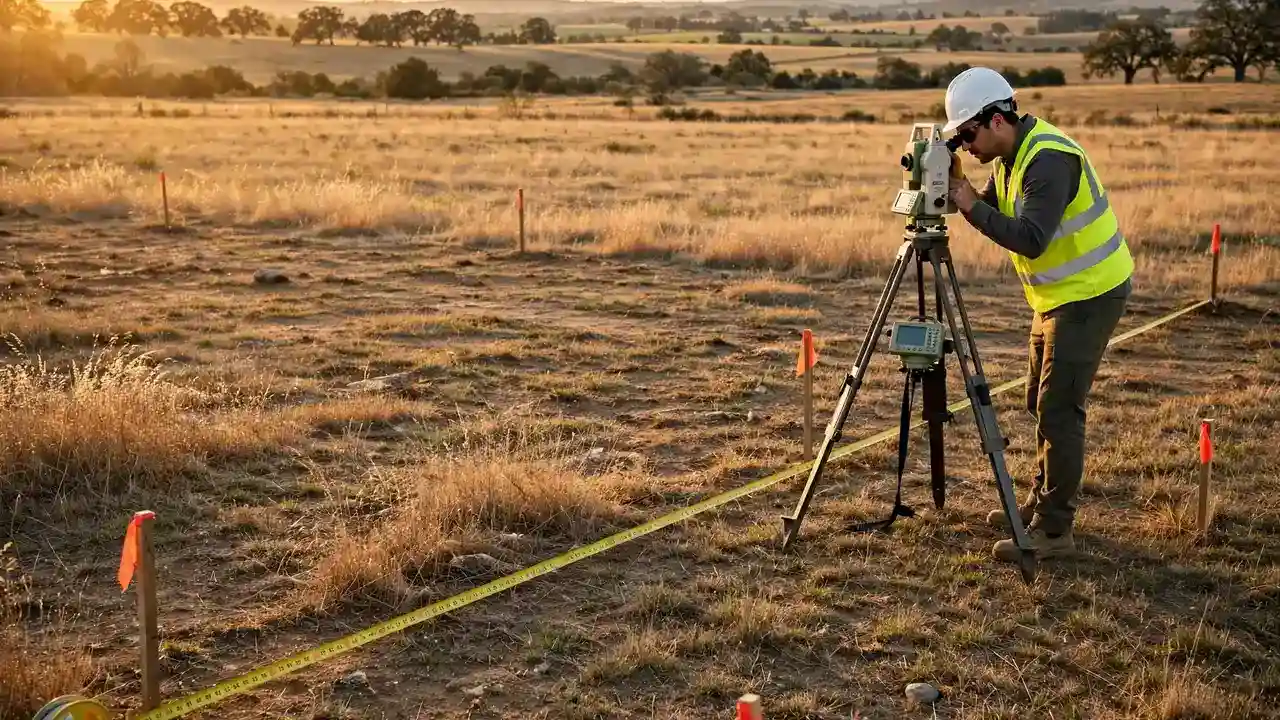
5. Skipping a Current Survey
An old survey, a seller’s sketch, or a fence line is not a boundary. Skipping a current survey risks boundary disputes, encroachments, and acreage that turns out smaller than advertised, which can also change your appraisal and your loan. A new survey typically costs a few hundred to a few thousand dollars depending on acreage and terrain, which is small against the price of a disputed boundary. Order a survey done for you, in your name, and confirm the legal description matches the deed before closing. See our land survey cost guide for typical prices.
6. Skipping Soil, Perc, Water, and Utility Checks
If the parcel will rely on a septic system, a failed perc test can make it unbuildable, and a lender may refuse to finance it at all. The same goes for water: a parcel with no well, no public water, and poor well prospects is a different investment from what the listing suggests. Check soil and perc results, water availability, electric service, and road access early, and get cost estimates for bringing in anything missing. Extending power or drilling a well can cost thousands to tens of thousands of dollars, and those costs belong in your budget before you sign, not after.
7. Ignoring Zoning, Easements, and Restrictions
Zoning decides what you can build, how much you can build, and sometimes whether you can build at all. Easements can let a neighbor, utility, or pipeline cross your land, and deed restrictions can limit use, subdivision, or building size. Mineral rights may be severed, meaning someone else owns what is under your land. Check zoning, easements, deed restrictions, and mineral rights with the county before you close, and confirm your intended use is allowed in writing rather than assumed from the listing.
8. Skimming the Title Commitment or Skipping Title Insurance
The title commitment lists everything that affects ownership: liens, easements, mineral reservations, and old claims. Buyers who skim it can inherit problems that limit use or resale value. Read every exception, ask the title company to explain anything unclear, and get title insurance. Title insurance protects your ownership against defects the search missed, and most lenders require a lender’s policy anyway. An owner’s policy is a separate, one-time cost that protects you, not just the lender.
9. Underestimating the Total Cost
The loan payment is only part of the cost. Closing costs on land purchases commonly run 2% to 5% of the price, and then come property taxes, insurance, survey and appraisal fees, and any improvement costs for access, clearing, utilities, or a well and septic. There is also the appraisal gap: if the land appraises below the purchase price, the lender finances based on the lower value, and you must cover the difference in cash or renegotiate. Budget the full picture, and keep a contingency for the appraisal coming in low. Our closing costs guide breaks down what U.S. buyers actually pay, and our appraisal guide explains how vacant land gets valued.
10. Signing a Balloon Payment or Prepayment Penalty Blind
Many land loans are shorter than home loans, and some end with a balloon payment: a large lump sum due after a few years, with the expectation that you refinance or sell by then. If rates rise, your credit changes, or the land value falls, refinancing may not be available on affordable terms. Similarly, a prepayment penalty punishes you for paying the loan off early or refinancing. Before signing, know the exact balloon amount and date, whether a prepayment penalty applies and for how long, and what your realistic payoff or refinance plan is. If there is no credible plan for the balloon, the loan is a gamble, not a purchase.

11. Making Big Financial Moves Before Closing
A new truck loan, a maxed-out credit card, or a job change between pre-approval and closing can change your debt-to-income ratio or credit score enough to delay, reprice, or kill your loan. Lenders re-check credit and finances before closing. Until the loan funds, avoid new debt, large purchases, and job changes where possible, and tell your lender immediately if a change is unavoidable. A quiet month before closing is worth more than any last-minute purchase.
A Worked Example: What One Point of Rate Really Costs
Consider a $150,000 parcel bought with 25% down ($37,500), leaving a $112,500 loan. At 8.5% over 15 years, principal and interest run about $1,108 per month. At 7.5% instead of 9%, the same loan costs roughly $98 less per month, saving about $17,600 over 15 years. That single shopping decision is worth more than most buyers save by negotiating the purchase price down a few thousand dollars. Shop lenders first, then negotiate price with real financing in hand. Try the numbers yourself on the Land Loan Calculator homepage.
How to Buy Land With a Loan the Right Way: A Short Checklist
- Get pre-approved and confirm how the lender classifies your parcel.
- Compare at least three lenders on rate, term, fees, and prepayment rules.
- Order a current survey, perc and soil tests, and a title search early.
- Confirm zoning, easements, access, utilities, and mineral rights in writing.
- Budget closing costs, taxes, insurance, and improvements, plus an appraisal-gap contingency.
- Read the balloon, term, and prepayment clauses before signing, and keep your finances steady until closing.
Frequently Asked Questions (FAQs)
What is the biggest mistake when buying land with a loan?
The biggest mistake is buying before verifying both the financing and the land: no pre-approval, no lender comparison, and no survey, perc, title, or zoning checks. Any one of those gaps can delay, reprice, or cancel the purchase.
How much down payment do I need for a land loan?
Most land loans require 20% to 50% down, depending on whether the land is raw, unimproved, or improved and on the lender. Improved land with utilities usually qualifies for the lower end of that range.
Can I get a land loan with bad credit?
It is possible but harder: expect a larger down payment, higher rate, and stricter terms, and consider seller financing or a Farm Credit lender alongside traditional banks. Strengthening your credit and saving a bigger down payment improves your odds. The USDA Farm Service Agency farm loan programs page is one place to check government-backed options.
Do I need a survey before buying land with a loan?
Yes. A current survey, done for you, confirms boundaries, acreage, and encroachments, and protects both your purchase and your loan. Skipping it risks disputes that can cost far more than the survey.
Are balloon payments on land loans risky?
Yes, if there is no credible payoff plan. A balloon payment comes due in full after a few years, and refinancing depends on rates, credit, and land value at that time. Know the amount, the date, and your plan before signing.
Does a land loan cover closing costs, taxes, and insurance?
No. A land loan covers the purchase price up to the approved amount. Closing costs, taxes, insurance, survey, appraisal, and improvement costs are usually paid separately, so budget them on top of the down payment.
How long does land loan approval take?
Land loan approval commonly takes 30 to 60 days, longer than a home loan, because appraisals, surveys, and title work on vacant land take more time. Pre-approval and early due diligence shorten the timeline.
Should I get pre-approved before making an offer on land?
Yes. Pre-approval proves you can finance the purchase, sets a realistic budget, and makes your offer stronger with sellers, especially against competing buyers.
By Jameel Noori, Founder & Developer, Land Loan Calculator
About the author: Jameel Noori is the Founder & Developer of Land Loan Calculator. He writes practical, U.S.-focused guides on land financing, loan math, and buyer strategy.
Reviewed by: Jameel Noori, Founder & Lead Developer of Land Loan Calculator, reviewed this article for accuracy.
Disclaimer: This article is for informational purposes only and is not financial advice. Land loan rates and terms vary by lender, property, and market conditions. Consult a licensed loan professional before making financing decisions.
