

Indiana Land Loans: Requirements, Rates & Lenders

Indiana is prime Corn Belt country, and indiana land loans are built around that fact. The short answer is yes, you can finance land in Indiana, and most buyers do it with a land loan from a Farm Credit lender, a community bank, or a credit union, putting 20 to 35 percent down and closing in about 30 to 60 days. The state runs from flat, productive corn and soybean ground in the north and center to wooded hills in the south, and farmland here commands strong prices per acre, which shapes loan sizes and down payments. What changes from parcel to parcel is the down payment, the rate pattern, and the checks a lender runs before it says yes: drainage tile and soil productivity on cropland, floodplain and access questions in the hills, and septic and well checks on rural lots. This guide explains what Indiana lenders look for, what rates and down payments are typical, which lenders serve each kind of land, and the Indiana-specific taxes and rules to check before you close.
Use this guide to compare offers, then run your own numbers before you make an offer. A land loan calculator lets you test price, down payment, rate, and term side by side, so you can see what a parcel really costs each month before you sign a purchase agreement. The sections below follow the order a real purchase follows: requirements first, then rates, land types, lenders, the application, your payment, and the Indiana checks that catch buyers out at closing.
Indiana Land Loan Requirements
Land loans work differently from home mortgages. Because raw land produces no rental income and can take longer to sell, lenders ask for stronger credit, a larger down payment, and clear documentation about the property itself. Expect more questions, a larger down payment, and a shorter term than you would get on a house. That is normal for Indiana land loans, and it applies whether you are buying tillable acres near Lafayette, a wooded hunting tract near Bloomington, or a small hobby farm outside Indianapolis.
Most Indiana land lenders look for a credit score of around 680 or higher. Borrowers with scores above 720 generally qualify for the best rates and the lowest down payments, while scores below 680 may still qualify with a larger down payment or a shorter loan term. Your score is only part of the picture, though. Lenders also review your income, debts, employment history, and cash reserves. Before you apply, pull your credit reports, fix errors, and avoid opening new accounts or running up card balances. A small improvement in your score can be the difference between a Farm Credit approval and a polite no.
Down payments for Indiana land loans typically range from 20 percent to 35 percent of the purchase price, depending on the land type. Tillable farmland with a proven income history usually sits at the lower end of that range, while wooded, recreational, or unimproved land often requires 25 percent to 35 percent down. Lenders also want to see that the cash is seasoned in your account, not borrowed at the last minute, and that you still have reserves left after closing. A buyer who empties every account to make the down payment looks risky, even with a good credit score.
Your debt-to-income ratio (DTI) matters just as much as your score. Lenders add the proposed land payment to your existing debts, including car loans, student loans, credit cards, and any mortgage, and compare the total with your gross monthly income. Farm income counts, but only if you can document it with tax returns, and lenders usually average farm income over two or three years to smooth out a good year and a bad one. If your DTI is high, paying down a small loan before you apply can help more than raising your down payment, because it lowers the monthly debt the lender counts against you.
Documented legal access is non-negotiable. A parcel reached only by crossing a neighbor’s field, with no recorded easement, is very hard to finance, and many lenders will decline it outright. Ask for the legal description and the access easement in writing, confirm road frontage or a recorded easement with the county, and check that power, well water, and septic are possible before you pay for an appraisal. A perc test or a septic feasibility letter is often the document that decides whether a rural lot is buildable, and a lender will not order an appraisal on a lot that cannot be built on.
Finally, expect an appraisal. The lender orders it, and it must support the purchase price. For farmland, the appraiser looks at soil productivity, drainage tile, comparable sales, and any enrolled acres. For recreational land, it looks at timber value, access, buildability, and comparable wooded tracts. If the appraisal comes in below the price, you will need to renegotiate, bring extra cash, or walk away. A survey is also common on larger parcels, and it is worth ordering early if the boundaries are unclear, because a boundary dispute discovered late can delay closing by weeks.
Lenders usually ask for the same set of documents on every Indiana land loan. Having them ready before you apply can cut a week or more off the timeline:
- Two years of tax returns, including farm income schedules if you farm
- Recent pay stubs and two to three months of bank statements
- Photo ID and the signed purchase agreement
- The legal description of the parcel and any access easement
- Farm records for farmland, including a balance sheet and any leases on the land
- Septic feasibility, perc test results, or well records where they exist
Typical Indiana Land Loan Rates
Land loan rates in Indiana run higher than home mortgage rates and vary by land type. The reason is risk: land produces no rent, and a lender that has to resell a failed loan is selling dirt, not a house. The better the land earns income and the easier it is to resell, the better the terms. A lender also prices your credit, your down payment, and the loan term, so two Indiana parcels with the same price can carry very different loans.
As a broad pattern, productive farmland earns the best land-loan pricing. It has a record of income, a deep resale market, and lenders who compete for it, and that competition keeps terms better than for any other kind of land. Recreational and wooded land prices higher, because it earns little income and is harder to value, and unimproved raw land prices highest of all, usually with a shorter term. Your credit score, your down payment, and the loan term move the price in the same direction: stronger credit, more cash down, and a shorter term usually mean better pricing.
For the national picture, and for how rates move with land type, credit, and term, see our guide to land loan rates. Use it as a benchmark, then get a quote on your specific parcel: a lender will price your loan on your credit, your down payment, and the land itself, not on a state average. We do not publish rate numbers here, because land-loan rates move with the market and with the parcel, and a number quoted today can be stale tomorrow. Get three written quotes and compare them on the same term and the same loan amount.
| Indiana land type | Typical down payment | Relative rate pattern |
|---|---|---|
| Productive cropland | 20–30% | Usually the lowest land-loan rates |
| Recreational / timber land | 25–35% | Higher, reflecting seasonal and resale risk |
| Unimproved raw land | 30–35% | Highest, with shorter terms |
Terms also matter. Many land loans run 15 to 20 years, sometimes with a balloon payment, rather than the 30-year fixed terms common for home mortgages. A shorter term means a higher monthly payment but less total interest, and some Farm Credit lenders offer longer fixed terms on farmland. Ask every lender for the same term and the same loan amount, so the quotes are truly comparable, and ask what happens at the end of the term if there is a balloon. A balloon that comes due in a bad crop year can force a refinance on poor terms, so understand it before you sign.
Popular Types of Land in Indiana
Indiana is really three land markets in one state, and lenders treat them differently. Central and northern farmland is an income asset, southern hill country is a lifestyle and timber purchase, and the lake region in the north is a mix of both. Knowing which market your parcel sits in tells you which lenders to call and what down payment to expect.
Central Indiana corn and soybean cropland
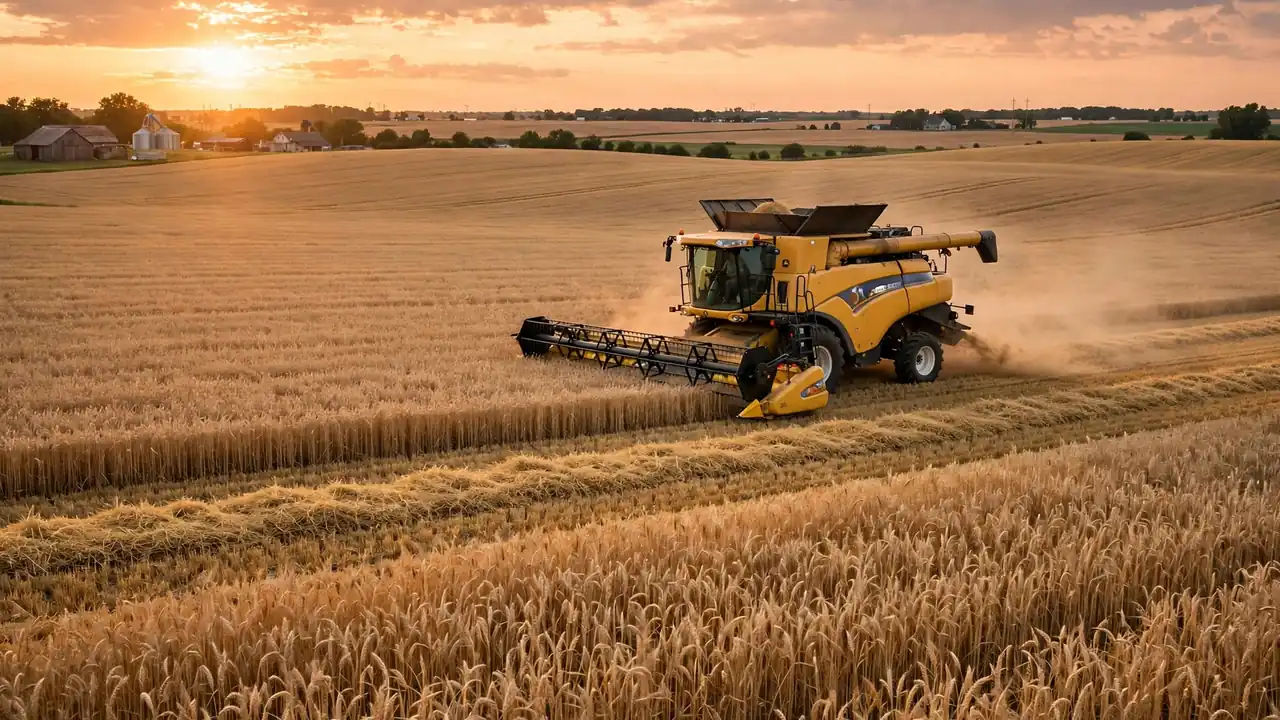
Central Indiana is the heart of the Corn Belt: black-soil flats that grow corn and soybeans at some of the highest yields in the country. This is the easiest Indiana land to finance, because it earns a documented income, it has a deep market of buyers, and Farm Credit lenders compete hard for it. Buyers should still check drainage tile, soil productivity indexes, and whether any acres sit in a floodplain or a wetland. Ask for the farm’s yield history, the tile maps, and any drainage assessments before you make an offer, and confirm whether the acres are enrolled in any conservation or tax program that changes the tax bill after closing.
If the ground is rented to a tenant farmer, ask for the lease, the rent, and the lease end date. A lender will want to know whether the income continues after you buy, and a lease that ends at harvest is very different from one that runs for three more years. Cash-rent history also helps an appraiser support the value, and a farm with a reliable tenant is easier to finance than one that has sat idle. In the strongest farm counties, good tillable ground can sell for a premium over the county average, so an appraisal that comes in below the asking price is a real risk to plan for.
Southern Indiana hills and wooded land

Southern Indiana is a different world: rolling hills, hardwood forest, and small valleys around Bloomington, Nashville, and the Hoosier National Forest. Land here is usually bought for hunting, recreation, or a rural home, not for row crops, and lenders price it that way. A wooded tract with good road access, a buildable site, and a timber inventory is financeable, but expect a larger down payment than on cropland, and expect the lender to ask about timber value, access, and whether the ground can support a septic system.
Southern parcels carry a few extra checks. Floodplains follow the rivers and creeks through the hills, so confirm the flood zone before you make an offer. Septic feasibility matters more here, because the soils are thinner and a perc test can fail on a steep or rocky lot. And access can be an issue on ridge-top parcels reached by a private lane, so confirm a recorded easement. Timber value can support the price, but only if a forester documents it for the appraiser.
Northern Indiana farmland and lake-country land
Northern Indiana mixes strong farmland with a lake region that draws recreational buyers. The farm counties around Fort Wayne and South Bend grow the same corn and soybean rotations as the center of the state, and they finance the same way. Around the lakes of Kosciusko, Steuben, and Noble counties, buyers pay for shoreline, a buildable lot, and a place to keep a boat, and lenders look closely at shoreline rules, septic feasibility, and whether the lot supports a year-round home or only a seasonal cottage.
Lake lots in northern Indiana are easier to finance than remote recreational tracts, because the resale market is deeper and the utilities are closer, but they are also more likely to carry lake association rules, setbacks, and septic requirements. Check the county zoning, the lake association rules, and the septic feasibility before you make an offer, and confirm that the lot is buildable in writing rather than taking a seller’s word for it.
Rural homesites and building lots
A rural homesite is the middle ground between raw land and a house: a lot you buy now and build on later. Some lenders, including Horizon Bank, offer dedicated land loans for residential lots and acreage bought for a future home, whether the lot is improved or unimproved. A lender will still want a perc test or septic feasibility, a survey, and proof of legal access, and it will want to know your building timeline. If you plan to build within a year or two, ask whether a construction loan or a lot loan with a later conversion fits better, because the cheapest lot loan is not always the cheapest route to a finished home.
Building lots near Indianapolis, Fort Wayne, and the suburbs behave differently from remote lots. They are easier to finance, because the resale market is deeper and the utilities are closer, but they are also more likely to carry city or township rules on lot size, setbacks, and septic. Check the zoning, the minimum lot size, and any road or utility assessments before you make an offer, and confirm that the lot is buildable in writing rather than taking a seller’s word for it.
Best Lenders for Indiana Land Loans
No single lender is best for every Indiana parcel, because farm lenders, local banks, and national lenders each have a sweet spot. The right lender for Corn Belt cropland is often the wrong one for a wooded hunting tract, and the right lender for a building lot may not finance timber at all. Start with the lenders below, then compare at least three quotes on the same loan amount and term.
Farm Credit Mid-America
Farm Credit Mid-America is the Farm Credit lender for all of Indiana, and it is a natural first stop for farmland. It makes farm real estate loans for cropland and farm property, and its Rural 1st brand makes rural-living loans for buyers who want land and a home in the country. Farm Credit lenders understand farm income, operating loans, and the way a farm balance sheet works, which makes them a strong fit for working farms and for buyers adding acres to an existing operation. If you farm already, or you are buying your first farm, Farm Credit Mid-America is worth a quote before you talk to anyone else.
Horizon Bank
Horizon Bank is an Indiana bank with a dedicated land-loan product for residential lots and acreage bought for a future home, whether the lot is unimproved or improved. That makes it a useful quote for buyers whose goal is a building site rather than a working farm, including lots around Indianapolis, Fort Wayne, and the northern lake counties. Ask Horizon for its land-loan terms in writing, including the down payment, the term, and whether the rate is fixed or adjustable, and compare them with a Farm Credit quote on the same loan amount.
Community banks
Community banks are a strong second option, especially in rural counties. A local bank knows the soil, the township, and the drainage district, and it can say yes to a parcel a national lender would not understand. Ask for the bank’s land-loan terms in writing, including the down payment, the term, and whether the rate is fixed or adjustable, and ask how many land loans it closes each year. A bank that closes land loans every month will be faster and more predictable than one that does a handful a year.
Credit unions
Credit unions offer another route, often with competitive rates and lower fees for members. They tend to be strongest on smaller parcels and building lots near their membership area. Membership rules vary, so check whether you qualify through your employer, your county, or a community group before you apply. A credit union that already holds your checking account may also be more flexible on a lot loan than a lender meeting you for the first time.
National and online land lenders
National land lenders and online land-loan specialists fill the gaps. They may finance recreational land, larger acreage, or unusual parcels that local lenders decline, and they can be useful when you need a fast answer. Compare their fees carefully, because a low advertised rate can hide origination fees or a short fixed period, and ask whether the loan is serviced by the lender or sold on. A lender that keeps and services its own land loans is usually easier to work with after closing.
Seller financing and government programs
Finally, do not overlook seller financing. An Indiana landowner who offers to carry the note may accept a smaller down payment or a shorter approval process than a bank, but you should still get a title search, a survey, and a written contract reviewed by a lawyer. Government help also exists: the USDA’s Farm Service Agency guarantees some farm loans and lends directly to eligible farmers, and USDA Rural Development Indiana lists the state’s rural housing and community programs. If you are buying in a rural area and plan to live on the land, check the federal programs before you settle on a lender.
How to Apply for an Indiana Land Loan
A land loan follows the same broad steps as a mortgage, but the land checks take longer and matter more. Follow the order below and keep your documents ready, and the process will move faster than it does for most buyers.
- Define the parcel and your budget. Confirm the acreage, the asking price, and how much cash you can put down, then work out the loan amount you need and the monthly payment you can afford.
- Check your credit and your DTI. Pull your reports, fix errors, and pay down small debts so your application shows the strongest picture possible.
- Compare at least three lenders. Ask Farm Credit Mid-America, a community bank, and one national or credit-union lender for a written quote on the same loan amount and term.
- Choose a lender and submit your application with full documents. Include tax returns, pay stubs, bank statements, the purchase agreement, and the legal description of the parcel.
- Complete the appraisal and land checks. The lender orders the appraisal and confirms legal access, zoning, septic feasibility, drainage tile, and floodplain status.
- Review the closing disclosure and the closing costs. Confirm the sales disclosure filing fee, the recording fee, and any prorated taxes or assessments before you sign.
- Close and record the loan. Sign, record the deed with the county recorder, and keep copies of everything for your tax records.
Most Indiana land loans close in about 30 to 60 days. Appraisals, surveys, title work, and drainage checks are the usual delays, so order the survey early and answer the lender’s document requests the same day they arrive. A land purchase with a tight deadline should include a financing contingency in the purchase agreement, so you can walk away if the loan does not come through.
Estimate Your Indiana Land Payment
Before you make an offer, test the payment. A land loan calculator lets you enter the price, down payment, rate, and term to see the monthly payment, and it helps you compare different loan sizes side by side. Use the rate from a lender’s written quote, not a number from a website, because your rate depends on your credit, your down payment, and the land itself.
Start with the loan amount. On a $300,000 purchase with a 25 percent down payment, the loan is $225,000; with 35 percent down, it is $195,000. That $30,000 difference changes the monthly payment and the total interest, and it can also change the rate a lender offers, because a larger down payment is less risky for the lender. Indiana land loans reward cash: the more you put down, the more lenders compete for your loan.
Run at least three scenarios: your expected rate, a rate one point higher, and a shorter term. Then ask what the payment looks like if the appraisal comes in low and you have to bring extra cash, and what your budget looks like with taxes, insurance, and any drainage assessments added in. A payment you can afford in a good year and a bad year is the right target, and the calculator is the fastest way to find it.
Indiana-Specific Things to Check
Indiana has a few rules that surprise out-of-state buyers, and most of them are about taxes and paperwork. Budget for them before you make an offer, because they are part of the real cost of the purchase.
Indiana has no real estate transfer tax. That is good news at closing, but it does not mean the paperwork is free. Every conveyance of real estate in Indiana requires a State Form 46021 Sales Disclosure Form under Indiana Code 6-1.1-5.5. The form reports the sale price and the terms of the sale to the county assessor, and it is part of how the state tracks market values. The filing fee for the form is $20, raised from $10 on July 1, 2021. Recording the deed itself costs a flat $25 under Indiana Code 36-2-7-10. Your title company or closing agent will handle both, but confirm the amounts on your closing disclosure so nothing surprises you.
Indiana farmland is assessed on its productivity, not on its market value, which keeps farm taxes lower than they would be on a pure market basis. The Department of Local Government Finance sets the base rate each assessment year. For assessment year 2025, the base rate is $2,120 per acre, revised in a memo dated May 9, 2025, and revised down from $2,390 after Senate Enrolled Act 1, under Indiana Code section 6-1.1-4-4.5. The base rate is adjusted for soil productivity, so the actual assessed value of a parcel depends on its soils. Ask the county assessor for the current assessment and the soil productivity factors before you make an offer, because the tax bill follows the assessment, not the purchase price.
Indiana also caps homestead property taxes at 1 percent of gross assessed value. That cap applies to an owner-occupied home and the land it sits on, and it is the figure to use when you budget the tax bill on a homesite. A farmhouse on acreage can benefit from the cap on the homestead portion, while the rest of the land is taxed under the farmland rules. Ask the assessor how the parcel is split between homestead and agricultural use before you close, because the split changes the tax bill.
Drainage is the other Indiana reality. The state is laced with regulated drains, and a parcel can carry drainage assessments that show up on the tax bill. Ask for the assessment history, any pending ditch projects, and whether the parcel has a legal drainage outlet before you close. An assessment that arrives after closing is still your bill, and a field with no outlet is a problem a lender will notice.
Flood risk matters more in Indiana than many buyers expect. The Wabash, White, and Ohio river valleys flood, and the southern hills carry flash-flood risk along their creeks. Check the flood zone, the flood history, and whether the lender will require flood insurance before you make an offer. A parcel in a floodplain can still be financed, but the insurance cost changes the monthly budget and the lender will want to see it.
Septic and well rules can decide whether a rural lot is buildable at all. A lot that cannot pass a perc test may need an expensive mound system, or it may not be buildable at all. Ask for the septic feasibility, the well log, and the county health department’s requirements before you make an offer, and get a quote for the system you would need.
If you are buying in a rural area and plan to live on the land, check the federal programs too. USDA Rural Development Indiana lists the state’s rural housing and community programs, and it is a good place to start if you want to see whether a USDA-backed loan fits your plans.
Indiana Land Loans FAQs
How much down payment do I need for Indiana land?
Most Indiana land buyers need 20 to 35 percent down. Tillable farmland is usually at the lower end, around 20 to 30 percent, while wooded, recreational, or unimproved land often requires 25 to 35 percent. A larger down payment can also improve the rate and the term a lender offers, so it is worth testing a few down payment levels in a land loan calculator before you make an offer.
Who are the best lenders for land loans in Indiana?
Farm Credit Mid-America suits farmland best, with farm real estate loans across all of Indiana and rural-living loans through its Rural 1st brand. Horizon Bank suits building lots and acreage bought for a future home, with a dedicated land-loan product. Community banks suit local and unusual parcels, credit unions suit smaller lots near their membership area, and national lenders suit recreational land that local lenders decline. Compare at least three written quotes before you choose.
Where is the cheapest land in Indiana?
Land prices in Indiana vary widely by county and by land type. Central and northern farmland is usually the most expensive per acre, because it earns a strong farm income. Southern Indiana hill country and wooded recreational tracts are usually cheaper per acre, but they also need a larger down payment and carry higher financing costs, so the cheaper sticker price does not always mean a cheaper purchase. Compare the total cost, including the down payment, the loan terms, and the carrying costs, before you decide.
What credit score do I need for an Indiana land loan?
Most lenders look for a credit score around 680 or higher for Indiana land loans, and scores above 720 generally qualify for the best rates and the lowest down payments. Lower scores are possible with a larger down payment, extra reserves, or a shorter term, but the rate and the terms will be less generous. Check your reports, fix errors, and pay down small debts before you apply, because a stronger score widens the lenders who will say yes.
Can I finance lake land in Indiana?
Yes, lake land in northern Indiana can be financed, but lenders look closely at shoreline rules, septic feasibility, and whether the lot supports a year-round home or only a seasonal cottage. A buildable lot with a perc test, legal access, and power nearby is far easier to finance than a remote lot with no septic option, so confirm those points before you pay for an appraisal.
Does Indiana have a real estate transfer tax?
No, Indiana has no real estate transfer tax. Every conveyance does require a State Form 46021 Sales Disclosure Form under Indiana Code 6-1.1-5.5, with a filing fee of $20, raised from $10 on July 1, 2021. Recording the deed costs a flat $25 under Indiana Code 36-2-7-10. Your title company or closing agent handles both, and the amounts should appear on your closing disclosure.
How is Indiana farmland taxed?
Indiana farmland is assessed on its productivity, not on its market value. The Department of Local Government Finance base rate for assessment year 2025 is $2,120 per acre, revised down from $2,390 after Senate Enrolled Act 1, and the base rate is adjusted for soil productivity. Homestead property is also capped at 1 percent of gross assessed value. Ask the county assessor for the current assessment and the homestead split before you close, because the tax bill follows the assessment, not the purchase price.
How long does an Indiana land loan take to close?
Most Indiana land loans close in about 30 to 60 days. Appraisals, surveys, title work, and drainage checks are the usual delays, so order the survey early, answer document requests the same day, and include a financing contingency in the purchase agreement if your deadline is tight.
By Jameel Noori, Founder & Developer, Land Loan Calculator
About the author: Jameel Noori is the Founder & Developer of Land Loan Calculator. He writes practical, U.S.-focused guides on land financing, loan math, and buyer strategy.
Reviewed by: Jameel Noori, Founder & Lead Developer of Land Loan Calculator, reviewed this article for accuracy.
Disclaimer: This article is for informational purposes only and is not financial advice. Land loan rates and terms vary by lender, property, and market conditions. Consult a licensed loan professional before making financing decisions.
