

Buying Land at Auction: Tips & Financing Options

Short answer: Buying land at auction can mean below-market prices and unique parcels, but nearly every auction sells land as-is with no financing or inspection contingencies — and most require a deposit on the spot and full payment within 30 to 90 days. That makes financing and due diligence happen before bidding day, not after. Get pre-approved for a land loan or line up hard-money bridge financing, run a title search, verify zoning, and set a hard maximum bid that includes the buyer’s premium and closing costs. Never bid at a land auction without liquid, provable funds.
Table of Contents
- Why Buy Land at Auction? The Real Upside
- Types of Land Auctions (Know Which One You’re Entering)
- Auction Formats: Absolute, Reserve, and Minimum Bid
- How to Find Land Auctions
- Financing an Auction Land Purchase
- Registration and Financial Preparation
- Due Diligence Checklist Before You Bid
- How Bidding Works — and How to Win Without Overpaying
- What Happens After You Win
- There Is No Cooling-Off Period — and Defaulting Is Expensive
- 7 Mistakes to Avoid When Buying Land at Auction
- Frequently Asked Questions (FAQs)
Why Buy Land at Auction? The Real Upside
Land auctions attract buyers for one main reason: motivated sellers and competitive bidding can push prices below retail market value. Government agencies liquidate tax-foreclosed and surplus land, banks sell repossessed parcels, and private sellers use auctions to guarantee a fast sale. For buyers willing to do the homework, that can mean real deals — and access to parcels that never reach the traditional MLS market.
The transparency is another plus: auction terms, bid increments, and timelines are published upfront, so there is less guessing about the seller’s bottom line than in a private negotiation. But that transparency cuts both ways — the terms also spell out that the sale is final, as-is, and non-contingent. Understanding exactly what you’re signing up for is what separates a good auction buy from an expensive lesson.
Types of Land Auctions (Know Which One You’re Entering)
Not all land auctions work the same way. The two main categories follow very different rules:
Tax deed and tax lien sales are run by county or municipal governments to recover unpaid property taxes. A tax deed sale auctions the property itself; a tax lien sale auctions the lien, giving the buyer the right to collect the debt (and potentially foreclose). Title quality at tax sales is often rough — prior liens, unresolved claims, and other encumbrances can survive the sale. Many jurisdictions also give the original owner a redemption period during which they can reclaim the property by paying the back taxes plus fees — meaning you can win the bid and still lose the land months later.
Private auctions run by licensed auction companies generally offer cleaner title and transfer ownership immediately with no redemption period. The tradeoff: private auctions typically charge a buyer’s premium (a fee on top of your winning bid) and may have stricter financial qualification requirements.
One important caveat applies to both: if a federal tax lien exists on the property, the federal government retains a right to redeem it within 120 days of the sale or the period allowed under local law, whichever is longer — regardless of auction type. That’s per 26 U.S. Code § 7425, so a clean-looking title can still carry a federal shadow.
Auction Formats: Absolute, Reserve, and Minimum Bid
The format determines how much pricing risk you’re taking:
- Absolute auction (no reserve): the land sells to the highest bidder no matter the final price. Best shot at a bargain — and the format that generates the most aggressive bidding.
- Reserve auction: a confidential minimum price is agreed between seller and auction house. If bidding doesn’t reach it, the seller can reject all offers. Most private real-estate auctions use this format by default, and you never learn the reserve amount.
- Minimum bid auction: the floor price is published upfront; nothing below it is accepted. Common in government and bank-owned sales.
Auctions also differ in how bids are placed — live in-person, live online, or sealed bid. Online platforms may extend the bidding window over days and use auto-extend features that add time when bids arrive near the deadline, preventing last-second sniping. The financial obligations after winning are identical either way.
How to Find Land Auctions
- County treasurer / tax collector websites publish auction calendars and property lists for tax sales.
- Federal sources: the IRS and U.S. Treasury auction seized real property periodically — see the IRS’s auction pages for bidder guidance.
- Auction platforms and auction houses maintain searchable databases of private and government land sales.
- Bank and lender REO lists sometimes route repossessed land through auction partners.
Always confirm listings through the original source before trusting a third-party aggregator — auctions can be announced, postponed, or pulled on short notice.
Financing an Auction Land Purchase
This is the single biggest practical barrier — and the part most buyers get wrong. Most land auctions demand cash or certified funds on a short timeline, and financing contingencies are not allowed. If your financing falls through after the hammer falls, you still owe the money. The auction house doesn’t care where the funds come from — only that they arrive on time.
Here’s how buyers actually fund auction land purchases:
Cash is the simplest route: the full bid amount plus fees, sitting in an accessible account, with a bank letter proving it. “Accessible” matters — money locked in retirement accounts or pending loan approvals doesn’t count.
Pre-approved land loans. You can use a land loan for an auction purchase, but the pre-approval must be complete before auction day, and the lender’s timeline must fit the auction’s closing deadline (often 30 days). Land loans typically require down payments of 20% to 50% and carry higher rates than home mortgages. Start the process early — land loan approval commonly takes 30 to 45 days. Review the full picture of land loan requirements and the typical land loan approval timeline before you register.
Hard money or bridge loans are the most common non-cash route for auctions. These short-term loans are secured by the property itself, approve in days, and typically carry interest rates of roughly 6% to 14% for terms of six months to three years. The standard play: close the auction purchase with hard money, then refinance into a conventional land loan once you’ve had time for appraisal and underwriting. The math has to work — high rates erode your margin fast if the refinance takes longer than expected. Once you’ve closed, here’s how refinancing a land loan works.
HELOC on existing property is another option for buyers who own other real estate — it delivers fast access to cash at rates usually far below hard money.
Whatever the source, your funds must be verified and accessible before you register. Winning a bid you can’t fund is worse than never bidding — you’ll forfeit your deposit and may face a lawsuit. Compare all of your financing options for a land purchase before choosing.
Registration and Financial Preparation
You can’t just show up and bid. Every auction requires advance registration that proves your identity and your ability to pay:
- Photo ID and bidder number. Bring valid government-issued ID. The auction house registers you and assigns a bidder number — the card you raise to place bids. If bidding as an LLC or on behalf of someone else, bring entity paperwork or a notarized power of attorney.
- Earnest money deposit. Typically 10% of the expected purchase price, paid as a cashier’s check or certified check at registration (some accept wires). Personal checks and credit cards almost never qualify. The deposit becomes part of the purchase price if you win; it’s returned if you don’t.
- Proof of funds. Many auction companies require a bank letter confirming liquid assets covering your intended bid range. If you’re relying on a lender, have the commitment letter in hand — a “pre-qualification” estimate won’t satisfy most auctioneers.
For online auctions, registration usually adds credit-card verification (a small temporary authorization) plus uploaded ID documents and electronic acceptance of the terms of sale.
Due Diligence Checklist Before You Bid
Nearly every land auction sells as-is, where-is: no warranties about condition, boundaries, environmental status, or suitability for your plans. All homework happens before auction day — there is no inspection period after you win. Check at least these items:
- Title search and liens. Order an independent title commitment from a title company before you bid — outstanding mortgages, tax liens, judgment liens, easements, and deed restrictions all survive to you. Start from the auction house’s property packet, but don’t stop there.
- Title insurance. Arrange the commitment beforehand so a policy can be issued after closing; auction properties often have complicated ownership histories.
- Zoning and land use. Confirm with the county planning department that your intended use (residential, agricultural, commercial) is allowed — and check setbacks, lot coverage, and height limits. Converting land out of an agricultural tax assessment can trigger rollback taxes covering years of savings plus interest.
- Environmental. A Phase I Environmental Site Assessment (typically $3,500 to $6,000+) investigates contamination history. Wetlands, flood zones, and endangered-species habitats can restrict development in ways a site visit won’t reveal.
- Deed type. A general warranty deed gives the strongest protection; a special warranty deed covers only the seller’s ownership period; a quitclaim deed offers essentially none. Tax sales frequently deliver quitclaim or special warranty deeds — making your title search even more critical.
- Physical inspection. Walk the land: confirm legal access (public road or recorded easement), check topography and drainage, and note utility proximity. Landlocked parcels and steep or flood-prone tracts can be nearly worthless for your purpose.
- Redemption rights. Verify whether the original owner has a redemption period and for how long.
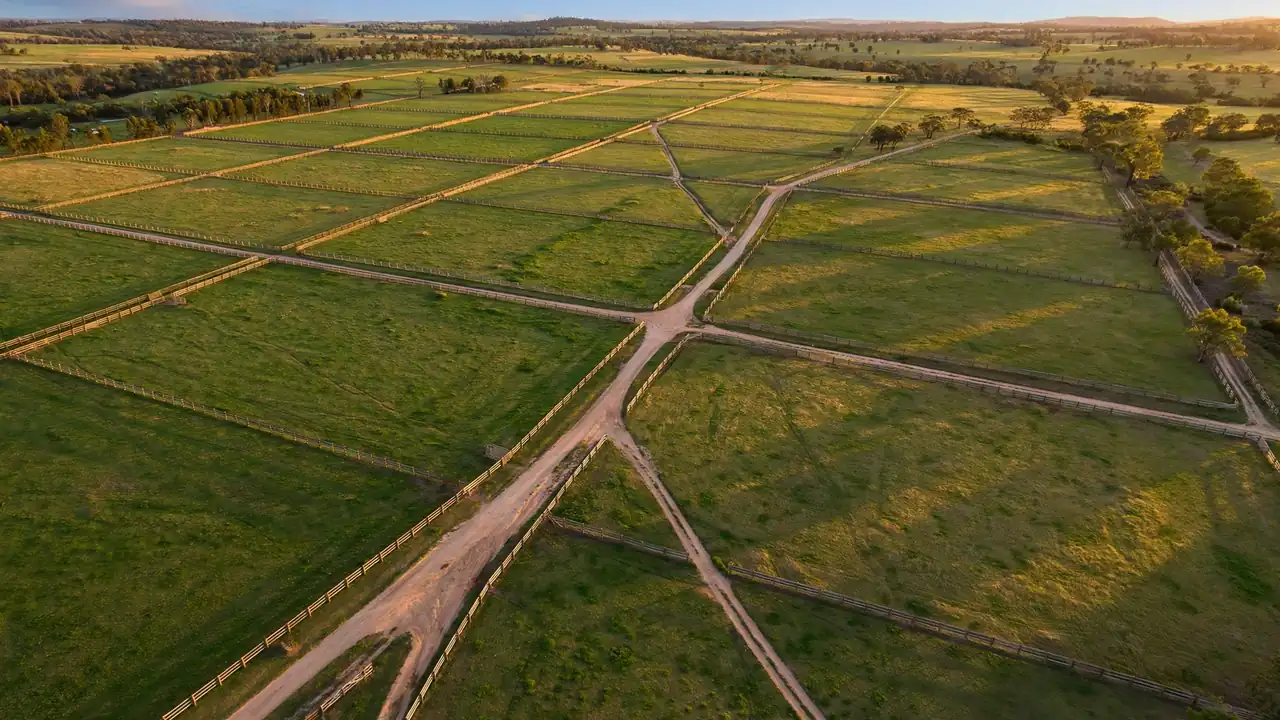
A professional vacant land appraisal before bidding tells you what the parcel is actually worth — the foundation of your maximum bid. And run the affordability math early: how much land you can afford sets a ceiling your emotions can’t override in the heat of bidding.
How Bidding Works — and How to Win Without Overpaying
At a live auction, the auctioneer calls price increments and you bid by raising your numbered card. The pace is fast — hesitation reads as disinterest. Online, you get a click-to-confirm interface with the current high bid, minimum increment, and countdown timer.
Two discipline rules from experienced bidders:
Set a hard ceiling before the auction starts — and stop when you hit it. Your maximum bid must include the buyer’s premium (typically 5% to 10% on top of the hammer price) and estimated closing costs. On a $150,000 winning bid with a 7% premium, you’re already at $160,500 before any other fee. Work backward from your all-in number: if your total budget is $170,000 and costs run ~$12,000, your hammer ceiling is about $158,000.
Don’t collude. Agreeing with other bidders to suppress prices or split parcels is bid rigging — a federal crime under the Sherman Antitrust Act, carrying up to $1 million in fines and 10 years in prison for individuals. The FTC actively pursues bid-rigging cases. If someone suggests “working together” on bids, walk away.
What Happens After You Win
The legally critical moment is the auctioneer’s “sold” — a binding contract forms instantly, and you’ll sign a memorandum of sale documenting the final price. Then:
- Deposit is due immediately — the earnest money you posted (often non-refundable at this point) applies to the purchase.
- Balance deadline: settlement typically runs 30 to 90 days for private auctions; government auctions often demand full payment within 10 to 30 days. The memorandum of sale spells out the exact deadline — miss it and you’re in default.
- Closing costs on top of your bid: the buyer’s premium (5–10% of the hammer price), state transfer taxes (zero in some states, up to ~3% in the highest-tax jurisdictions), deed recording fees ($5–$100), title insurance premiums, and prorated property taxes. Budget these before bidding — see our full breakdown of land closing costs.
- Deed and recording: the seller delivers the deed at closing; recording it at the county recorder’s office creates the public record of your ownership. Until it’s recorded, third parties have no legal notice you own the land.

There Is No Cooling-Off Period — and Defaulting Is Expensive
This surprises first-time auction buyers most: once the hammer falls, you cannot cancel, rescind, or renegotiate. The FTC’s three-day cooling-off rule does not cover real estate auction purchases. Discovering a title problem, a flood zone, or simple buyer’s remorse gives you no legal exit — your only protection was the research you did before bidding.
Walking away after winning means forfeiting your earnest money deposit (treated as liquidated damages) — $20,000 on a $200,000 parcel at a 10% deposit. Depending on the terms, the seller may also cancel the contract, claim additional damages, or sue for specific performance (a court order forcing you to complete the purchase). Inability to obtain financing does not excuse you from the contract — auction terms say this explicitly.
7 Mistakes to Avoid When Buying Land at Auction
- Bidding without verified funds — the #1 auction killer. Pre-approval or cash in hand, provable in writing.
- Skipping the title search — liens and encumbrances become yours at the fall of the hammer.
- Ignoring the buyer’s premium and closing costs — they can add 10–15% on top of your bid.
- No maximum bid — auction fever inflates offers past what the land is worth; there is no undo button.
- Assuming you can build — zoning, deed restrictions, and rollback taxes can kill your plans.
- Trusting tax-sale title — redemption periods and surviving liens make these the highest-risk auctions.
- Forgetting the timeline — if your lender needs 45 days and the auction demands payment in 30, you’ll default through no fault of the property.
Frequently Asked Questions (FAQs)
Can you get a land loan to buy land at auction?
Yes, but the loan must be pre-approved before auction day — auctions don’t allow financing contingencies and typically require full payment within 30 to 90 days. Land loans usually need 20%–50% down and 30–45 days for approval, so start early. Many buyers instead close with a hard money loan and refinance into a land loan afterward.
How much deposit do you need to bid at a land auction?
Most auctions require an earnest money deposit of around 10% of the expected purchase price, paid by cashier’s check or certified check at registration. It’s applied to the purchase if you win, returned if you don’t, and typically non-refundable if you win and then default.
What is a buyer’s premium at a land auction?
A fee the auction house charges on top of the winning bid — typically 5% to 10%. On a $150,000 winning bid, a 7% premium adds $10,500. Always include it in your maximum-bid calculation.
Are tax deed auctions risky for land buyers?
Yes — they’re among the riskiest. Title quality is often poor, prior liens may survive the sale, many deeds are quitclaim (no warranty), and the original owner may have a redemption period to reclaim the property. Independent title research is essential before bidding.
Can you back out after winning a land auction?
No. There is no cooling-off period for real estate auction purchases — the sale is final once the hammer falls. Backing out means forfeiting your deposit and possibly facing a lawsuit to complete the purchase.
How long do you have to pay after winning a land auction?
Private auctions typically allow 30 to 90 days to close; government auctions often require full payment within 10 to 30 days. The exact deadline is in the memorandum of sale you sign on auction day.
What closing costs come with buying land at auction?
Beyond your winning bid, budget for the buyer’s premium (5–10%), state transfer taxes, deed recording fees, title insurance, and prorated property taxes. Together these commonly add 10–15% on top of the hammer price.
What is the difference between absolute and reserve land auctions?
In an absolute (no-reserve) auction, the land sells to the highest bidder at any price — the best chance of a bargain. In a reserve auction, the seller sets a confidential minimum and can reject all bids below it. Minimum-bid auctions publish the floor price upfront.
By Jameel Noori, Founder & Developer, Land Loan Calculator
About the author: Jameel Noori is the Founder & Developer of Land Loan Calculator. He writes practical, U.S.-focused guides on land financing, loan math, and buyer strategy.
Reviewed by: Jameel Noori, Founder & Lead Developer of Land Loan Calculator, reviewed this article for accuracy.
Disclaimer: This article is for informational purposes only and is not financial advice. Land loan rates and terms vary by lender, property, and market conditions. Consult a licensed loan professional before making financing decisions.
