
Land Loans for Bad Credit: Options That Work

Yes, bad credit land loans exist — but the deal changes in important ways. If your credit score is low, expect a much larger down payment, often 30–50%, higher interest rates, and fewer lender choices than a borrower with strong credit. That does not mean buying land is out of reach. It means you need a more focused strategy.
The realistic paths for most buyers in this position are local portfolio lenders, seller financing, a qualified co-signer, and credit repair first. Each path has trade-offs, and the right one depends on the parcel, your income, your savings, and how quickly you need to buy.
This guide explains what lenders usually look for, which options are genuinely worth pursuing, what bad credit costs you, and how to build a practical six-month plan to improve your approval odds. It is general guidance, not a promise of approval, because every lender and every parcel is different.
What Credit Score Do You Need for a Land Loan?
There is no single national minimum score for a land loan, and any guide that quotes one as a hard rule should be treated with caution. Land is generally seen as higher risk than a home purchase, because raw land produces no rental income and can be harder to resell quickly. For that reason, many traditional lenders look for scores in the high 600s or better for land, especially for unimproved parcels.
That range is general guidance, not a cutoff that applies everywhere. A local bank that keeps loans in its own portfolio may weigh your whole file differently from a large lender with stricter, standardised rules. Income, employment stability, debts, down payment, and the parcel itself can matter as much as the score alone.
The parcel matters because lenders ask practical questions: Is there road access? Are utilities available or nearby? Is the land zoned for your intended use? Can it be appraised at a value that supports the loan? A smaller, accessible, utility-ready parcel is usually easier to finance than a remote tract with unclear access.
Your credit history matters too, not just the number. Recent missed payments, unpaid collections, or a recent bankruptcy can concern a lender more than an older problem that has since been resolved. Before you apply, understand what is actually on your reports — and correct anything that is wrong.
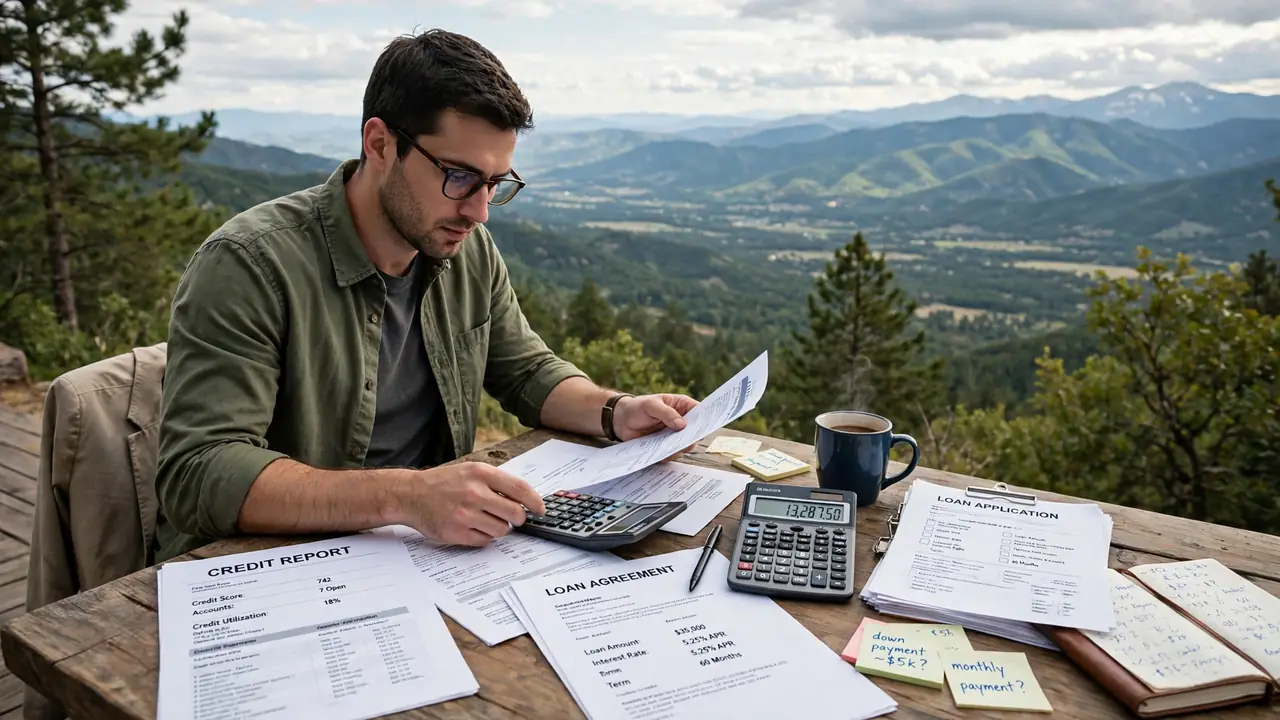
Your Real Options With Bad Credit Land Loans
When traditional financing is difficult, the options below are the ones most often worth exploring. None is a shortcut, and none should be chosen without reading the terms carefully. Start with the option that fits your savings, timeline, and tolerance for risk.
Bring a bigger down payment
A larger down payment is often the single most effective way to offset weak credit. It reduces the lender’s risk, lowers the amount you need to borrow, and can improve your monthly payment. For buyers with bad credit, a down payment in the 30–50% range is a realistic planning figure in many cases, although the exact amount depends on the lender and parcel.
If you cannot reach that range yet, that is useful information rather than a dead end. It may mean choosing a less expensive parcel, saving for a few more months, or combining a larger down payment with another option below.
Local banks and credit unions that keep loans in portfolio
Local banks and credit unions can be a better fit than large national lenders for land, because some keep loans in portfolio instead of selling them. A portfolio lender can, in some cases, look beyond a score and consider your relationship with the institution, local employment, savings, and knowledge of the area.
That flexibility does not mean looser standards. Portfolio lenders still assess risk carefully and may still require a strong down payment and clear documentation. But a conversation with a local loan officer can tell you quickly whether your file is worth submitting. Before you approach any lender, review the land loan requirements so you know which documents and parcel details to have ready.
Seller financing
With seller financing, the person selling the land acts as the lender. You typically make a down payment and then make regular payments to the seller under a written agreement, rather than borrowing from a bank. Some sellers check credit and some do not, and terms vary widely, so compare the interest rate, payment schedule, balloon payment, and what happens if you miss a payment.
Seller financing can open doors a bank would close, but it is not automatically safer. Get the agreement reviewed by a real estate attorney, confirm who holds title during repayment, and make sure taxes, insurance, and association fees are clearly addressed.
A qualified co-signer
A co-signer with stronger credit and stable income can improve an application, because the lender can consider that person’s ability to repay as well. This is a serious commitment: the co-signer’s credit can be affected if payments are missed. Both parties should understand the full obligation before anyone signs.
FSA farm loans for eligible farm buyers
The U.S. Department of Agriculture’s Farm Service Agency (FSA) offers farm ownership loans for eligible buyers, including some borrowers who cannot obtain commercial credit on reasonable terms. Eligibility depends on farm experience, intended farm use, and the applicant’s overall situation, so FSA is not a general alternative for every land buyer.
If you genuinely plan to farm the land and meet the program’s requirements, it is worth checking whether an FSA loan fits. If the land is for a future home, recreation, or investment only, FSA farm loans are unlikely to be the right route.
Land contracts, with a clear caution
A land contract, sometimes called a contract for deed, is another form of seller financing in which you make payments over time and receive the deed after the contract terms are met. It can help a buyer with bad credit get onto a parcel sooner, but the details matter enormously.
Read the forfeiture terms carefully before signing. In some contracts, missing payments can lead to losing both the land and the money already paid, depending on the contract language and state law. Check the payment schedule, interest rate, balloon payment, and tax and insurance responsibilities, and seek independent legal advice.
How to Improve Your Approval Odds
Improving your approval odds is not about finding a trick. It is about presenting a file a lender can say yes to: cleaner credit reports, lower revolving balances, documented income and reserves, a sensible parcel, and a down payment that shows commitment.
Start by pulling your free credit reports and reviewing every account. Look for accounts that are not yours, wrong balances, duplicate collections, and payments marked late that you paid on time. Dispute errors in writing and keep copies of everything you send. The Consumer Financial Protection Bureau’s guidance on credit reports and scores explains how to check your reports and correct errors.
Next, pay down revolving balances where you can. High balances relative to your credit limits can weigh on your score and on a lender’s view of your monthly obligations. Reducing the most expensive or most heavily used balances first is a sensible place to start.
Document your income and reserves clearly. Lenders want stable income, bank statements that match your application, and reserves showing you can handle taxes, insurance, and unexpected costs after closing. Gather pay stubs, tax returns, and bank statements early.
Choose a smaller or utility-ready parcel if that fits your goals. A lower purchase price means a smaller loan, a smaller down payment in dollar terms, and often a simpler appraisal. Road access, a survey, and available utilities can also reduce lender concerns about the property.
Bring the largest down payment you can manage without emptying your emergency savings. Finally, apply with one strong file instead of many weak applications. Talk to lenders first, understand what they need, and submit a complete application to the lender most likely to consider your situation.

What Bad Credit Costs You: Rates and Down Payments
Bad credit usually costs you in two ways: a higher interest rate and a larger down payment. Lenders price risk, and a lower score signals a higher chance of missed payments from the lender’s perspective. That higher risk pricing can mean a noticeably higher monthly payment for the same loan amount, and more total interest over the life of the loan.
A bigger down payment offsets some of that risk. When you put more of your own money into the purchase, the lender’s exposure falls and your loan-to-value ratio improves. That can help with approval even if it does not fully remove the rate difference caused by a low score.
Before you commit, run the numbers for different down payments, rates, and loan terms. A land loan calculator can help you compare monthly payments and see how a larger down payment changes the amount you borrow. For a broader view of how rates are structured for land, see the guide to land loan interest rates.
Also look beyond the rate: the loan term, whether the rate is fixed or adjustable, any balloon payment, prepayment terms, closing costs, and requirements for insurance and taxes. A loan that looks affordable in year one can become difficult later if a balloon payment or rate adjustment arrives before your finances improve.
A 6-Month Plan to Qualify for a Land Loan
A six-month plan gives you time to fix what can be fixed, save what you can save, and approach lenders with evidence rather than hope. Adjust the timeline to your situation, but keep the order: reports first, debts second, savings third, and lender conversations last.
Month 1: Reports and disputes
Pull your free credit reports, list every negative item, and dispute any errors in writing. Note which accounts are in collections, which balances are highest relative to their limits, and which payments are actually late. Keep copies of all correspondence.
Month 2: Debt paydown targets
Choose realistic paydown targets for revolving balances. Focus first on accounts costing the most interest or using the largest share of their limit. Avoid opening new credit accounts unless there is a clear reason.
Month 3: Down-payment saving
Open or label a separate savings account for your down payment and closing costs, and set a weekly or monthly contribution you can maintain. Review your parcel budget at the same time: a smaller parcel may bring your target within reach sooner.
Month 4: Keep paying down and saving
Continue the debt paydown and saving habits from months two and three, and check whether disputed items have been corrected. Gather income and asset documents, including pay stubs, tax returns, and bank statements, and shortlist local lenders — but do not submit formal applications yet.
Month 5: Lender conversations
Have informal conversations with local lenders about your situation, the parcel type you are considering, and the down payment you will have. Ask what documentation they need, what concerns they have, and what would make your application stronger.
Month 6: Pre-approval and a careful application
If your reports are cleaner, balances lower, and down payment in place, pursue pre-approval or submit a complete application to the lender best suited to your file. Compare offers on rate, term, fees, and balloon terms — not just the monthly payment — and do not rush into seller financing or a land contract without legal review.
FAQs
Can I get a land loan with a 550 credit score?
It may be possible through a local portfolio lender, seller financing, or a land contract, but traditional lenders will often find it difficult. A score around 550 usually means a much larger down payment, documented income, and a parcel a lender is comfortable financing.
How much down payment do I need with bad credit?
Many buyers with bad credit should plan for 30–50% down, although the exact amount depends on the lender, parcel, and overall file. A larger down payment reduces the lender’s risk and the amount you borrow.
Does seller financing check your credit?
Sometimes, but not always. Some sellers check credit, request proof of income, or ask for references, while others focus mainly on the down payment and payment history under the agreement. Always ask what checks will be made and read the full agreement.
Can a co-signer help me qualify for a land loan?
Yes, a qualified co-signer with stronger credit and stable income can strengthen an application. The co-signer shares responsibility for repayment, so missed payments can affect both borrowers’ credit. Discuss the obligation and term before signing.
Will applying for a land loan hurt my credit score?
A formal application usually involves a hard credit inquiry, which can lower your score slightly for a short period. Checking your own credit reports does not have the same effect. Prepare a strong file first and avoid many separate applications over a long period.
Can I get an FSA loan with bad credit?
FSA farm loans are designed in part for eligible farm buyers who cannot obtain commercial credit on reasonable terms, so credit history alone does not automatically rule you out. Eligibility still depends on farm experience, intended farm use, and other program requirements.
How long after bankruptcy can I get a land loan?
There is no single waiting period for every lender or loan type, and land loans are generally stricter than home loans. Some lenders may want several years of rebuilt credit, stable income, and a strong down payment after bankruptcy.
Is a land contract a good idea if I have bad credit?
It can be a useful path onto a parcel, but only if the terms are fair and clearly written. Check the interest rate, payment schedule, balloon payment, and forfeiture terms, and get independent legal advice before signing.
By Jameel Noori, Founder & Developer, Land Loan Calculator
About the author: Jameel Noori is the Founder & Developer of Land Loan Calculator. He writes practical, U.S.-focused guides on land financing, loan math, and buyer strategy.
Reviewed by: Jameel Noori, Founder & Lead Developer of Land Loan Calculator, reviewed this article for accuracy.
Disclaimer: This article is for informational purposes only and is not financial advice. Land loan rates and terms vary by lender, property, and market conditions. Consult a licensed loan professional before making financing decisions.
