

Can an LLC Get a Land Loan? Rules, Docs & Approval Tips

Yes — an LLC can get a land loan. An llc land loan works much like a personal land loan in one important way: the lender still wants to be repaid, and vacant land is harder to sell than a finished home if a borrower defaults.
What changes is who the lender underwrites. With an LLC land loan, the lender underwrites both the LLC and its owners. Expect a personal guarantee, business documentation, and often a larger down payment than a personal borrower would pay.
That does not make an LLC loan impossible. It does mean preparation matters more. A clean entity file, a solid guarantor, and a realistic down payment can turn a cautious lender into a willing one.
In this guide to the llc land loan, you will learn how LLC land loans work, why investors buy land in an LLC, what lenders require, which documents to gather, and how to improve your approval odds.
How Land Loans Work for an LLC
When an LLC buys land with a loan, the LLC is the borrower and the title holder. The loan and the deed are in the company name, not in any individual member’s name. That separation is the whole point for many investors.
At the same time, most lenders will ask members — especially members who own 20% or more — to sign a personal guarantee. A personal guarantee means the guarantor is personally responsible for the debt if the LLC does not pay. For that reason, personal credit still matters a great deal, even though the LLC is the borrower.
Expect the lender to review the guarantors’ credit scores, income, debts, and assets. A strong guarantor can carry an application for a young LLC. A weak guarantor, or one with heavy debts, can hold it back even if the land itself looks attractive.
Two kinds of lenders dominate this market. Commercial lenders treat the loan as a business loan and focus on the LLC, the guarantors, and the property’s value. Portfolio lenders, often community banks and credit unions, keep the loan on their own books instead of selling it. That flexibility can help with an llc land loan when the file does not fit a standard checklist.
Some lenders say no to brand-new LLCs because a new company has no tax returns, no bank history, and no track record. The lender cannot see how the business handles money. That is not a permanent problem, but it does mean a brand-new LLC usually needs stronger guarantors and a larger down payment to offset the unknown.
Land itself adds another layer of caution. Raw land produces no rent, and its value depends heavily on location, access, utilities, and zoning. A lender will order an appraisal and may lend only against a conservative value, especially for undeveloped parcels.

Why Buy Land in an LLC?
Liability separation is the most common reason investors form an LLC. If someone is injured on the property or a dispute arises, the LLC — rather than the owner’s personal assets — is generally the first target. That separation is not absolute, and a personal guarantee still exposes the guarantor to the loan, but for day-to-day liability it is a meaningful layer of protection.
An LLC also makes partnership and ownership shares easier to manage. Members can own different percentages, new members can be added, and interests can be transferred under the operating agreement. For a group buying land together, that structure is far cleaner than holding the deed in several personal names.
Estate and tax flexibility is another draw, although the details depend on how the LLC is taxed and on the owners’ circumstances. Some owners like the ability to pass membership interests to family members. Others value the choice between tax treatments. These points are general information only, not tax advice, and an accountant should review the choice before you buy.
Finally, an LLC keeps investment property separate from personal assets. Business income, expenses, and records sit in the company. That separation can make bookkeeping simpler and can help an investor present a clear financial picture to a lender at the next purchase.
The trade-off is paperwork and cost. Forming and maintaining an LLC takes filing fees, an operating agreement, and annual state requirements. For a single small parcel you plan to hold briefly, those costs may outweigh the benefits. For a long-term investment or a partnership, they often pay for themselves. For many investors, an llc land loan is the financing step that makes that separation practical.
LLC Land Loan Requirements
Lenders want proof that the LLC is real, active, and able to support the loan. The exact checklist varies, but the core land loan requirements for an LLC borrower are consistent across most community banks and portfolio lenders. Every llc land loan application is judged on the same core questions: is the company legitimate, who guarantees the debt, and is the land worth the loan?
First, the entity must be in good standing in the state where it was formed. A lapsed registration, unpaid state fees, or a missing annual report can delay or block approval. Check the status before you apply, and renew anything that is out of date.
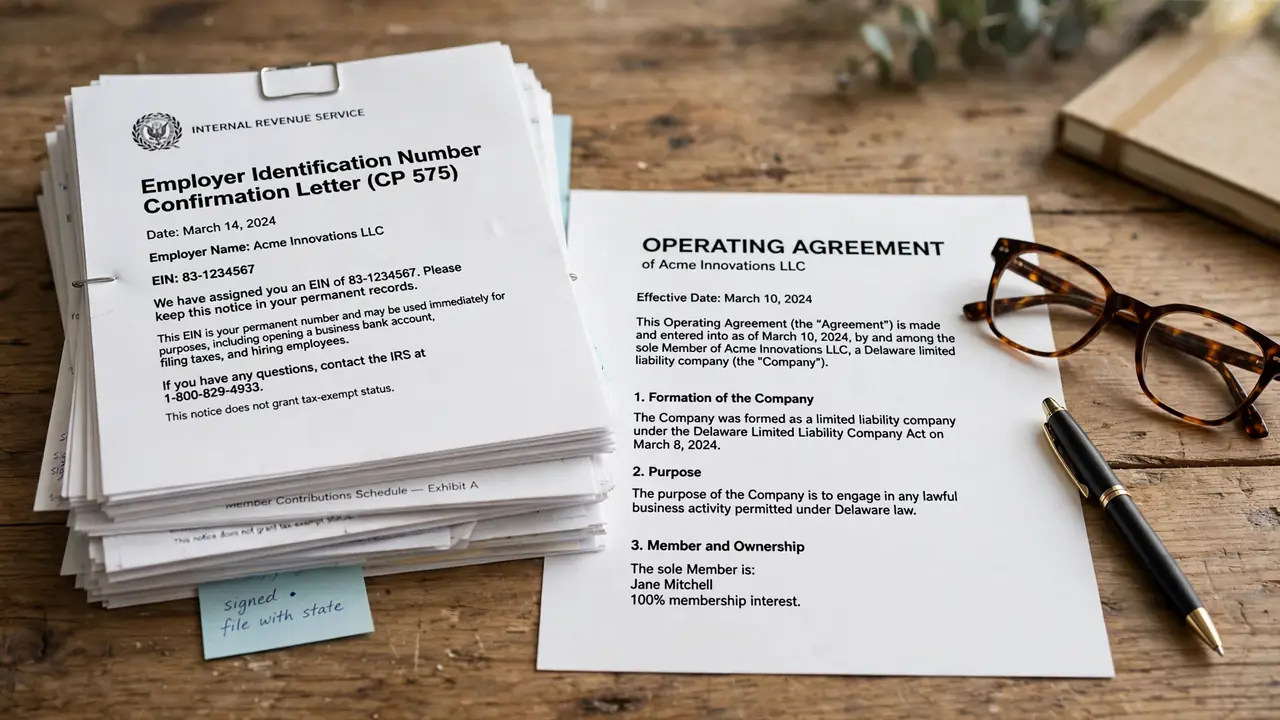
Second, the LLC needs an operating agreement. This document names the members, their ownership percentages, and who can sign for the company. Lenders read it to confirm that the person signing the loan documents actually has authority to bind the LLC.
Third, the LLC needs an Employer Identification Number, or EIN, from the IRS. Even a single-member LLC usually needs an EIN for a business loan, and the lender will ask for the EIN letter as proof.
Fourth, the LLC should have a business bank account and some history behind it. A few months of clean statements — with no unexplained large deposits or overdrafts — help a lender see the company as a real operating business rather than a shell created for one purchase.
Fifth, members’ credit matters. Many lenders look for guarantor credit scores of 680 or higher, although some portfolio lenders will consider lower scores with a larger down payment. Income, existing debts, and available cash reserves all factor into the decision.
Sixth, plan for a down payment of often 25% to 35% or more. Land loans already carry larger down payments than home mortgages, and an LLC borrower is often asked for more equity up front. On a $200,000 parcel, that means $50,000 to $70,000 or more in cash at closing.
Finally, the property must appraise. The lender will order an appraisal based on comparable land sales, access, zoning, and utilities. If the appraisal comes in below the purchase price, the lender will lend against the appraised value, and the LLC must cover the gap.
Documents Lenders Ask an LLC For
Gathering documents before you apply for an llc land loan saves weeks of back-and-forth. Lenders typically ask an LLC for the following file, and having it organized in advance signals that the company is well managed.
- Articles of Organization, filed with the state
- Operating Agreement, signed by all members
- EIN letter from the IRS
- Certificate of Good Standing from the state
- Business tax returns, if the LLC has filed any
- Members’ personal tax returns and personal financial statements
- Business bank statements, usually for the last two to six months
- A business plan for development land, including the intended use, timeline, and budget
For development land, the business plan deserves extra attention. A lender wants to know what will be built, when, and at what cost, and how the finished project will repay the loan. A vague plan — “we will develop it someday” — rarely passes underwriting. A clear plan with zoning confirmation, utility access, and cost estimates gives the lender something concrete to evaluate.
For a broader view of how business structures work, the U.S. Small Business Administration explains how to choose a business structure and what each structure means for taxes, liability, and paperwork. It is a useful starting point before you form or restructure an LLC.
Personal-Buying vs. LLC-Buying: Which Is Better?
There is no single right answer. Personal buying is usually simpler and cheaper. LLC buying offers separation and flexibility, but at the cost of more paperwork and often stricter loan terms. Comparing an llc land loan with a personal loan side by side makes the trade-offs clear.
| Factor | Buying personally | Buying through an LLC |
|---|---|---|
| Liability | Personal assets are directly exposed | LLC provides a layer of separation, though a personal guarantee still covers the loan |
| Loan terms | Broader lender choice and often lower rates | Fewer lenders, often commercial or portfolio terms |
| Down payment | Often lower for personal borrowers | Often 25% to 35% or more |
| Paperwork | Personal ID, income, and credit documents | Entity documents plus personal documents for each guarantor |
| Tax treatment | Reported personally in most cases | Depends on the LLC’s tax election; general information only, not tax advice |
If you are choosing between structures, compare the land trust vs LLC options as well, because a trust and an LLC solve different problems. A trust focuses mainly on privacy and estate transfer, while an LLC focuses on liability separation and shared ownership.
Your employment situation matters too. A borrower who runs a business or works for themselves faces extra income checks, and the land loan for self-employed angle is worth reading before you apply, since lenders often average variable income over two years.
As a rule of thumb, buy personally if the land is a single personal-use parcel and simplicity matters most. Buy through an LLC if partners are involved, liability separation is a priority, or you plan to hold several investment parcels under one entity.
How to Improve an LLC’s Approval Odds
Start by seasoning the LLC. Open a business bank account, run normal business transactions through it, and keep it in good standing for several months before you apply. A small business credit card, paid on time, can also start a modest credit history for the company.
Offer a bigger down payment. More equity lowers the lender’s risk and can offset a short company history or a lower guarantor score. If you can put down 35% instead of 25%, say so early in the conversation with the lender.
Choose strong guarantors. A guarantor with a credit score above 700, steady income, and cash reserves can carry the application. If one member has weak credit, consider whether another member with a stronger profile should guarantee the loan, where the lender allows it.
Shop community banks and portfolio lenders first. These lenders can judge the whole picture — the land, the LLC, and the guarantors — rather than rejecting a file that misses one automated cutoff. Our guide to the best land loan lenders is a good starting point for that search.
Estimate the payment before you apply. A realistic monthly payment shows the lender, and yourself, that the purchase fits the LLC’s cash flow. Run the numbers with a land loan calculator first, so you can talk to lenders with a clear budget rather than a guess.
Finally, prepare a clean document package for your llc land loan and answer lender questions quickly. Underwriters handle many files at once, and a complete, well-organized application often moves faster than a larger but messier one.
Can an LLC Get a Land Loan? FAQs
These llc land loan questions come up most often in lender conversations.
Can a brand-new LLC get a land loan?
Yes, but it is harder. A brand-new LLC has no tax returns or bank history, so the lender leans heavily on the guarantors and the down payment. A larger cash contribution and a strong guarantor profile make approval much more likely.
Does an LLC land loan require a personal guarantee?
In most cases, yes. Lenders usually require personal guarantees from members who own a significant share of the LLC. That means personal credit and finances remain central to the decision, even though the LLC is the named borrower.
What credit score does an LLC need for a land loan?
There is no single LLC credit score requirement, because lenders focus on the guarantors. Many look for scores of 680 or higher, while some portfolio lenders accept lower scores with a larger down payment or additional reserves.
How much down payment does an LLC need for land?
Plan for 25% to 35% or more of the purchase price or appraised value, whichever the lender uses. The exact figure depends on the lender, the land type, and the strength of the guarantors.
Can an LLC get a USDA or FSA land loan?
Government-backed farm and rural programs have their own eligibility rules, and they often focus on individual farmers or specific entity structures. An LLC may qualify in some cases, but you should confirm eligibility directly with the program or an approved lender before assuming the loan is available.
Should I buy land in my name or an LLC?
Buy in your own name if simplicity and the widest lender choice matter most. Buy through an LLC if liability separation, shared ownership, or holding several investment parcels is the priority. Weigh the extra paperwork and costs against those benefits before you decide.
Can a single-member LLC get a land loan?
Yes. A single-member LLC can borrow, and the sole member will normally sign a personal guarantee. The lender will still require entity documents, an EIN, and the member’s personal financial information.
Can I transfer land I own personally into an LLC after buying?
Often, yes, but check the loan first. Many mortgages include a due-on-sale clause that can be triggered by a transfer, even to your own LLC. Ask the lender for written permission before transferring, and confirm the tax and title consequences with a professional.
By Jameel Noori, Founder & Developer, Land Loan Calculator
About the author: Jameel Noori is the Founder & Developer of Land Loan Calculator. He writes practical, U.S.-focused guides on land financing, loan math, and buyer strategy.
Reviewed by: Jameel Noori, Founder & Lead Developer of Land Loan Calculator, reviewed this article for accuracy.
Disclaimer: This article is for informational purposes only and is not financial advice. Land loan rates and terms vary by lender, property, and market conditions. Consult a licensed loan professional before making financing decisions.
